Osprey House Environmental Centre Visual Story

1. Arrival and Parking
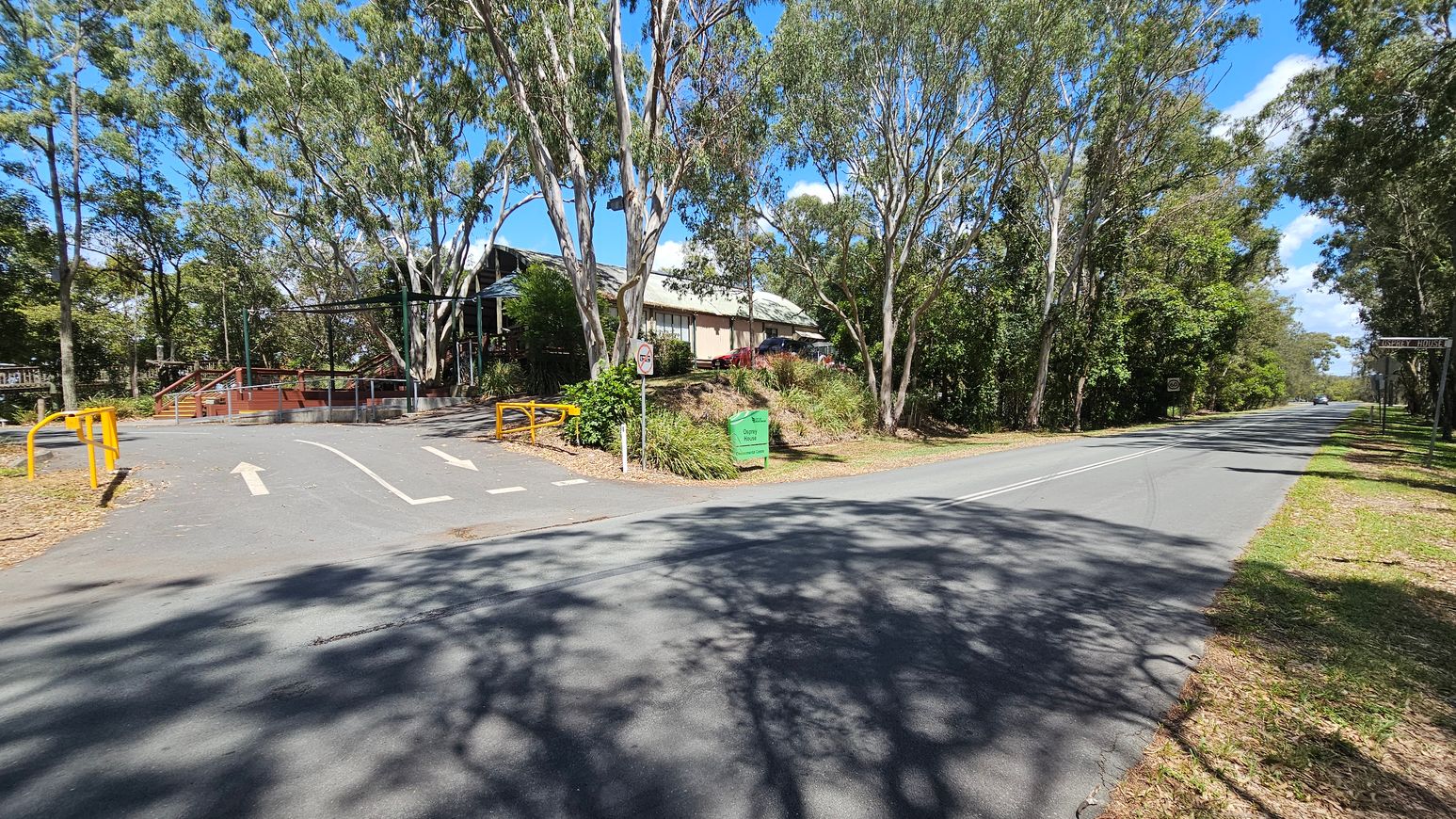
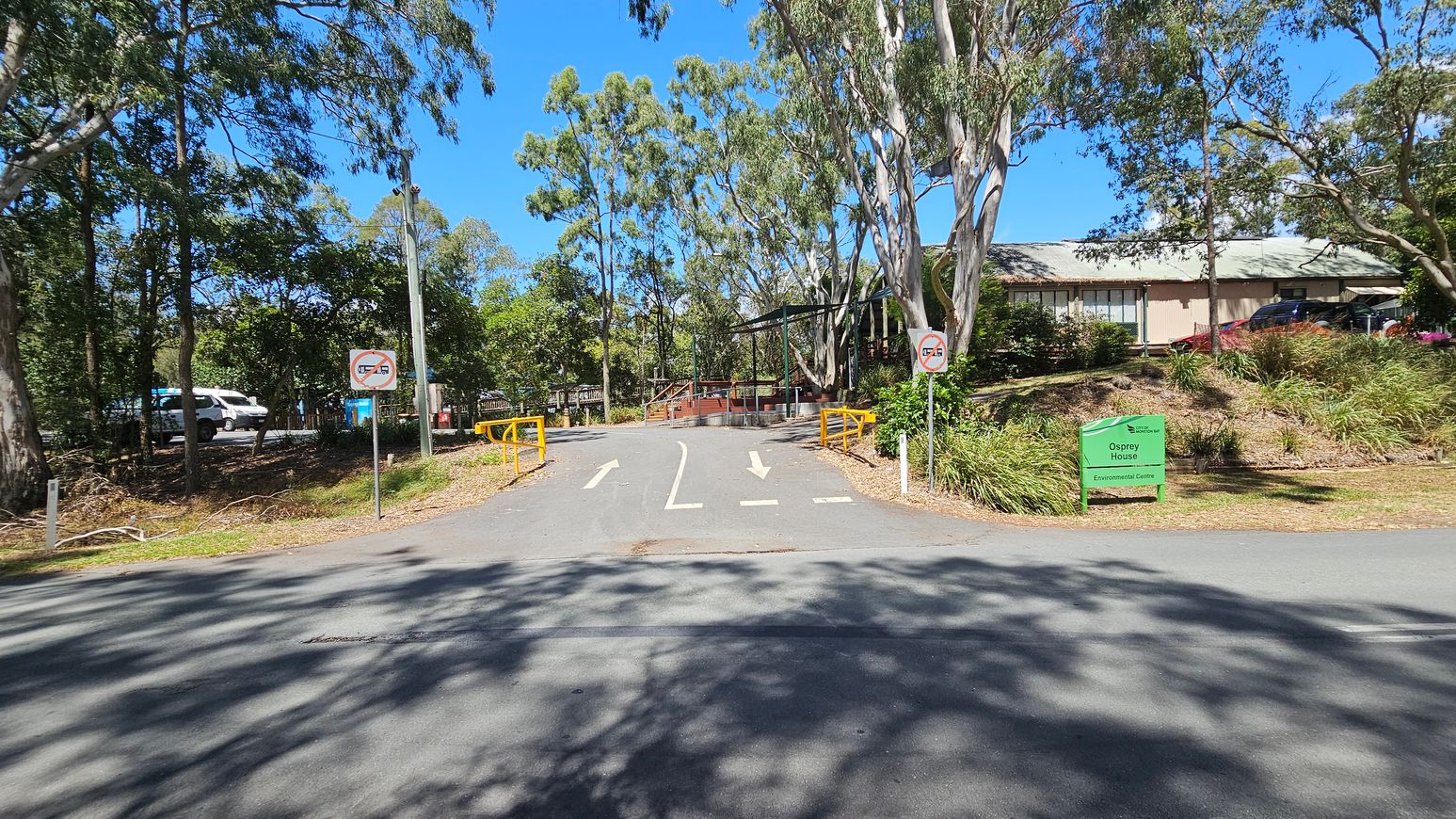
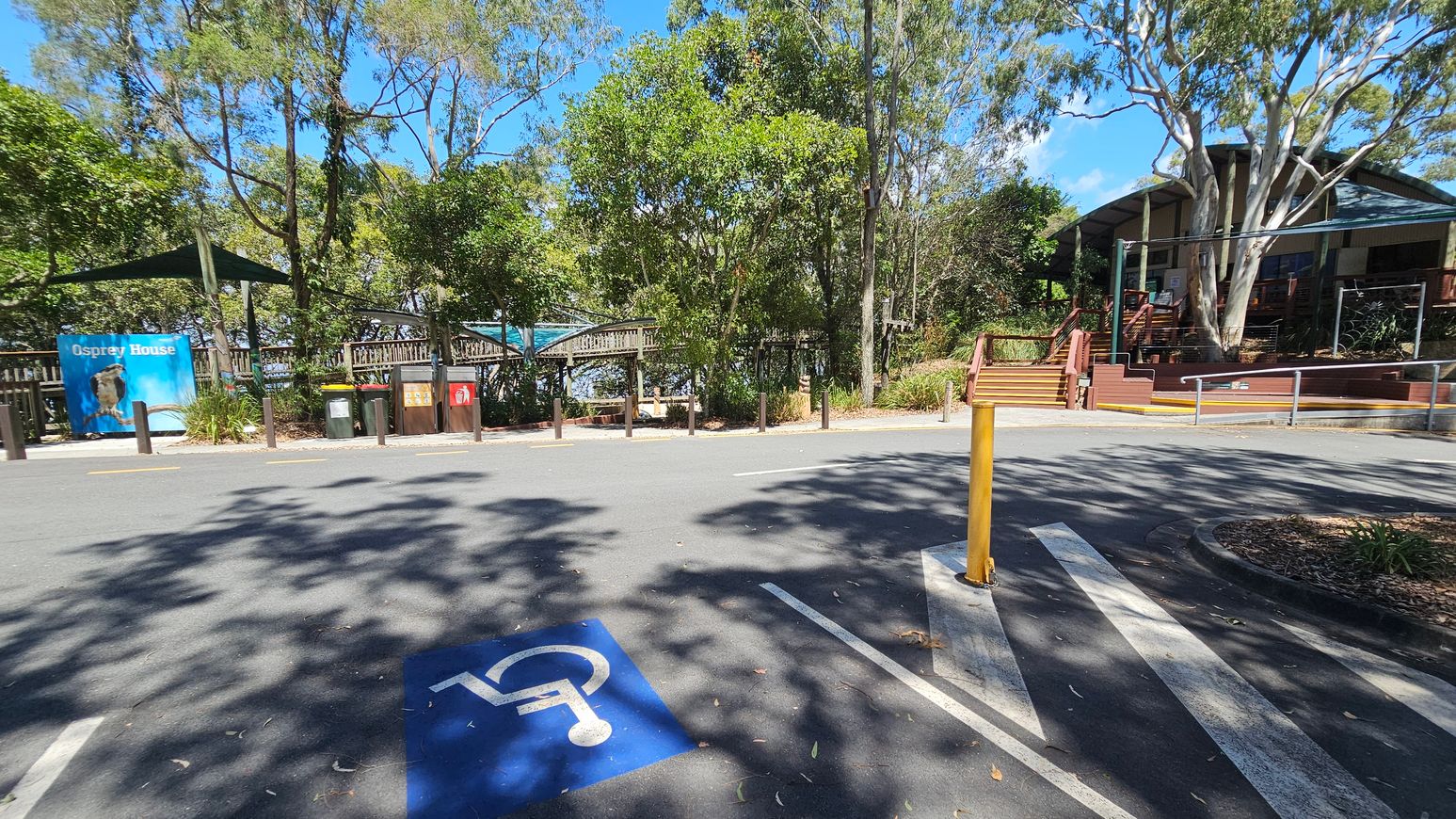
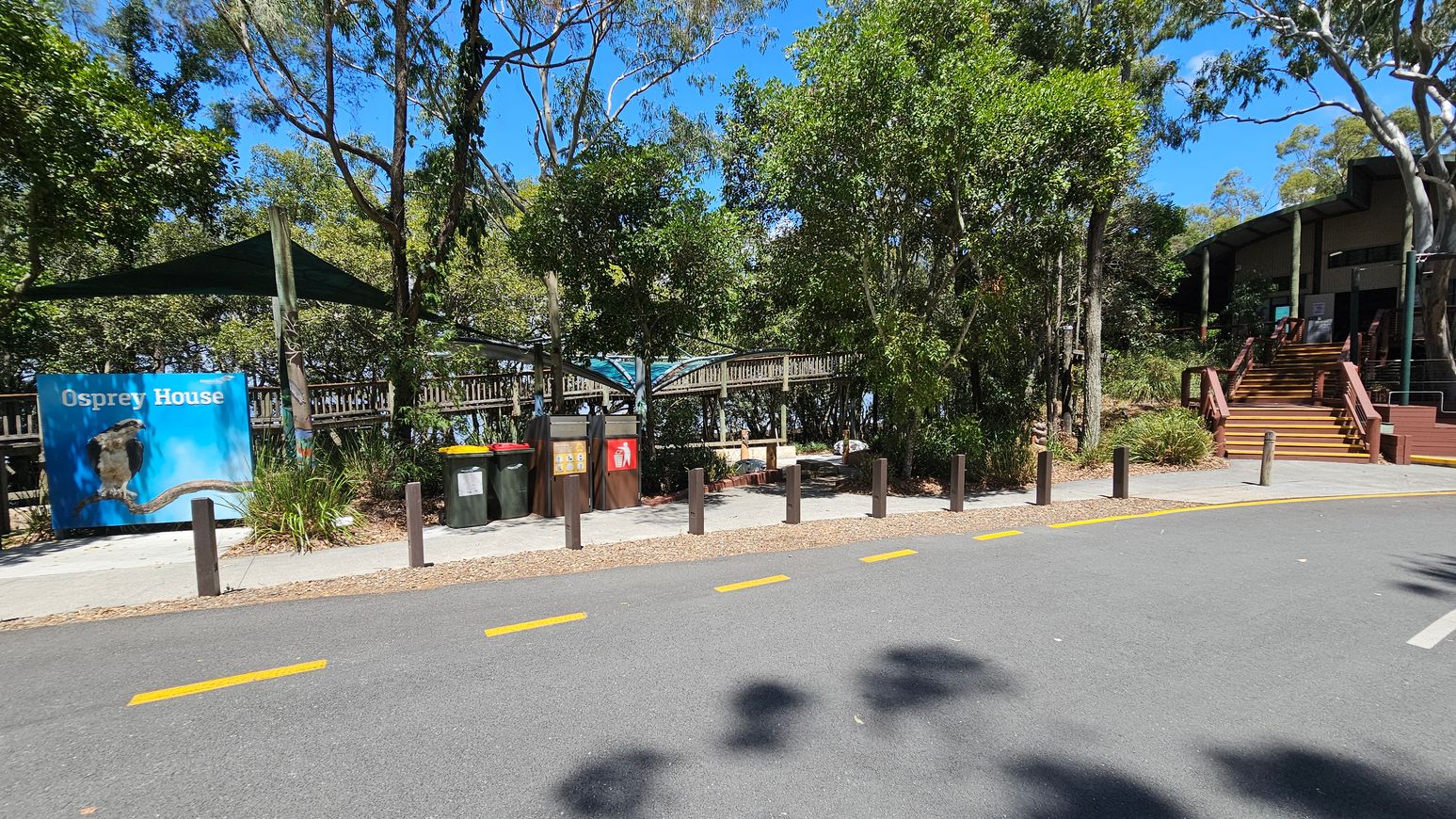
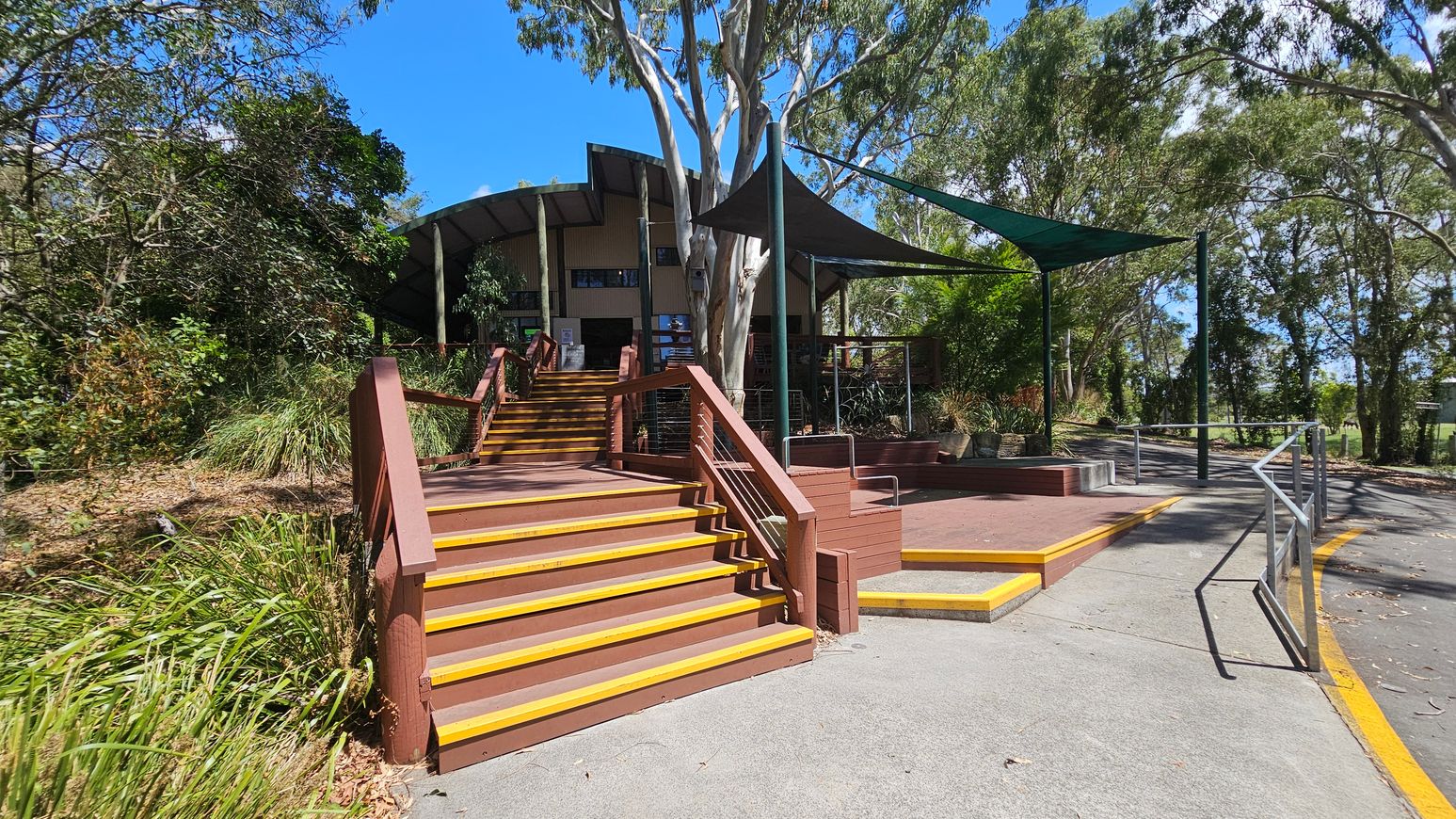
The arrival and parking area at Osprey House is surrounded by native plants including tall gum trees, providing natural shade. The building is partially hidden by vegetation. The ground is paved with asphalt, and there are accessible car parking spaces marked with clear signage. Dedicated drop-off points are available.
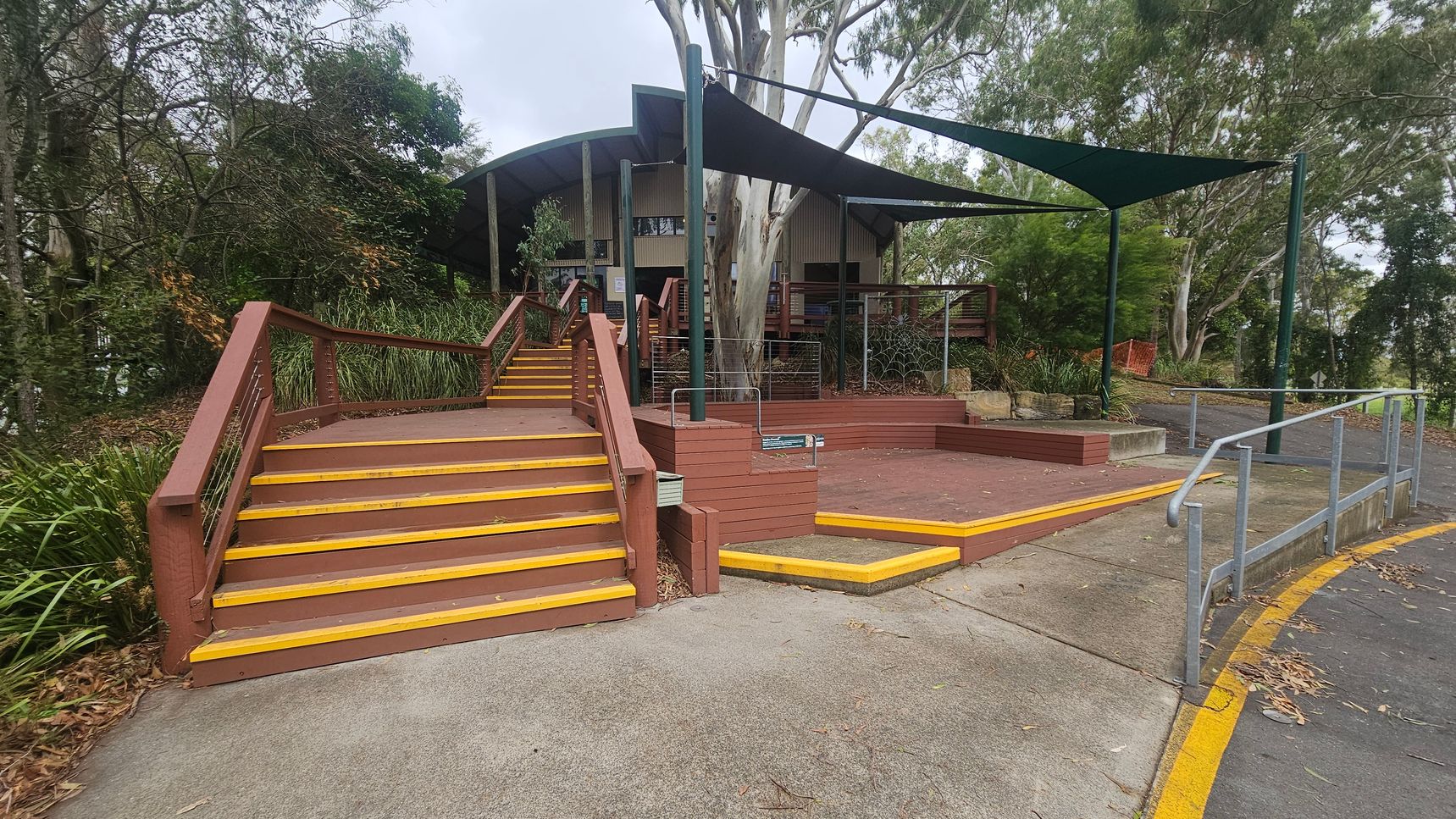
Pathways connect the parking area to the main building, with steps and handrails visible. A wheelchair friendly ramp connects the parking area to the side access of the centre. The area is bordered by low fencing and bollards, guiding vehicle and pedestrian flow.

Sounds
- Bird calls
- Leaves rustling
- Cars passing
- Footsteps on pavement
- Wind in trees

Smells
- Estuarine scent
- Fresh foliage
- Earthy undertones
- Vehicle exhaust (occasional)
- Damp wood

Feel
- Cool shade
- Smooth pavement
- Gentle breeze
- Firm handrails
- Warm sun

Sight
- Gum trees
- Accessible car parking spaces
- Cars driving past
- Building entrance
- Osprey nest pole
2. Picnic and Barbecue Area
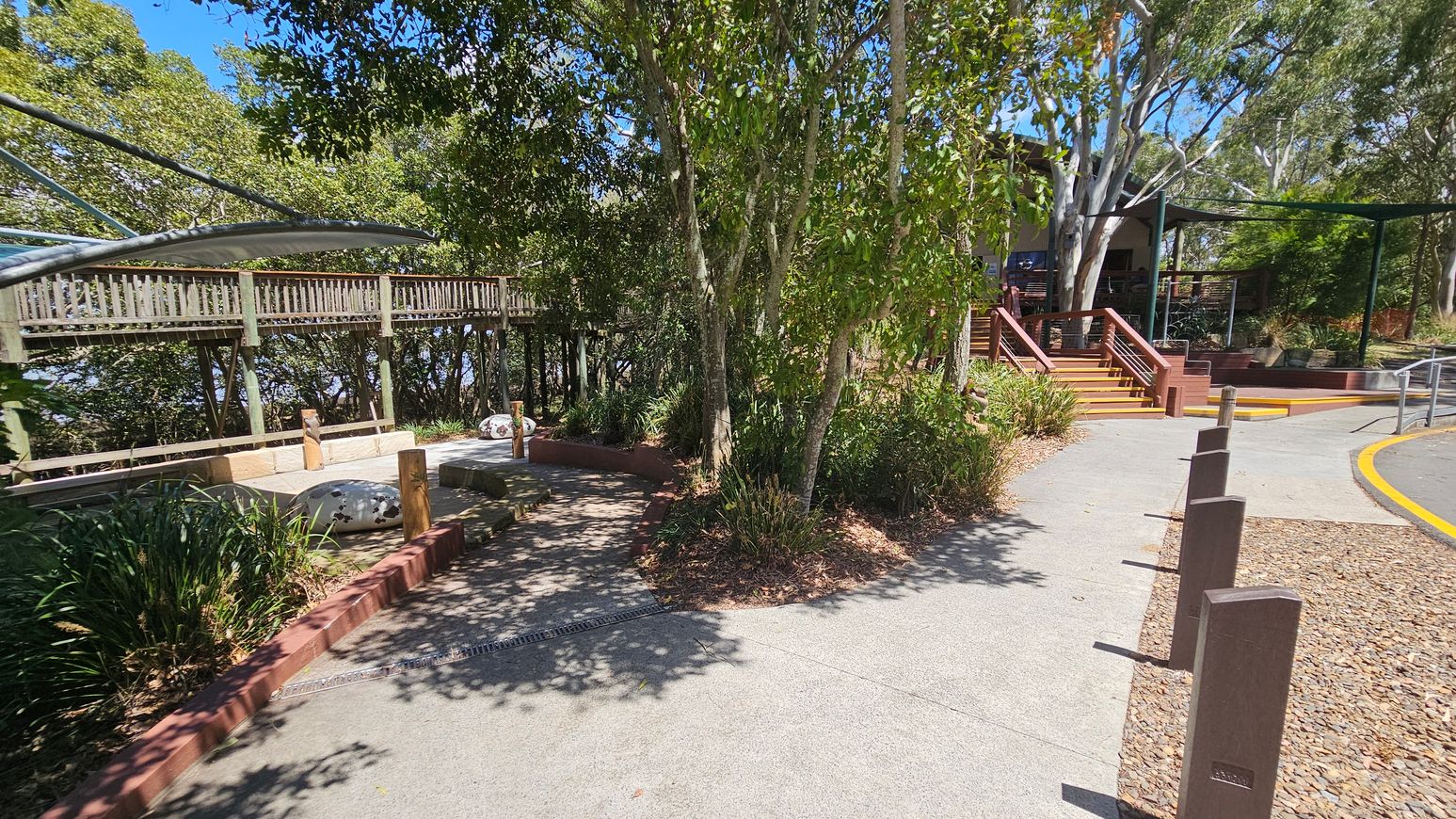
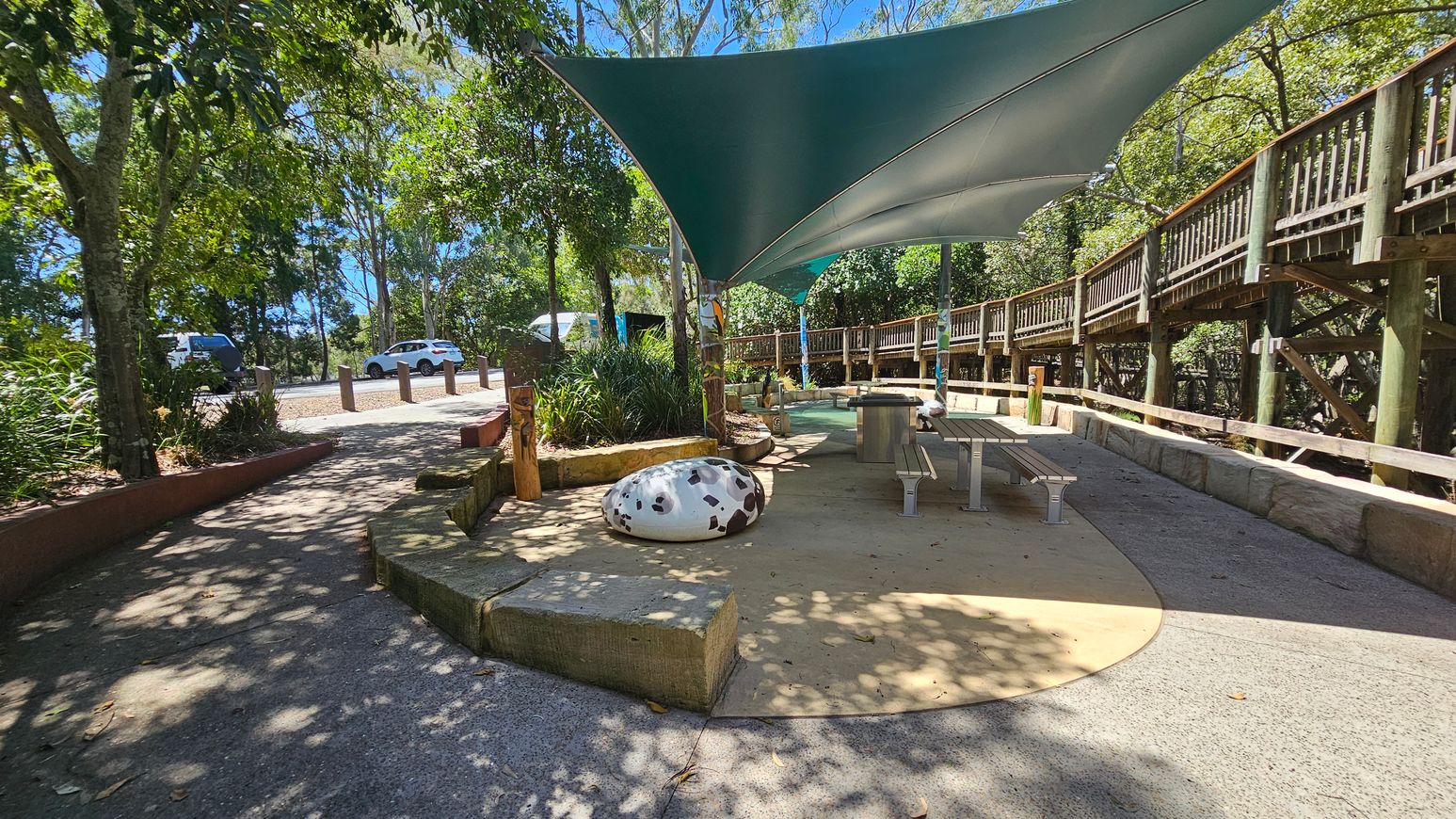
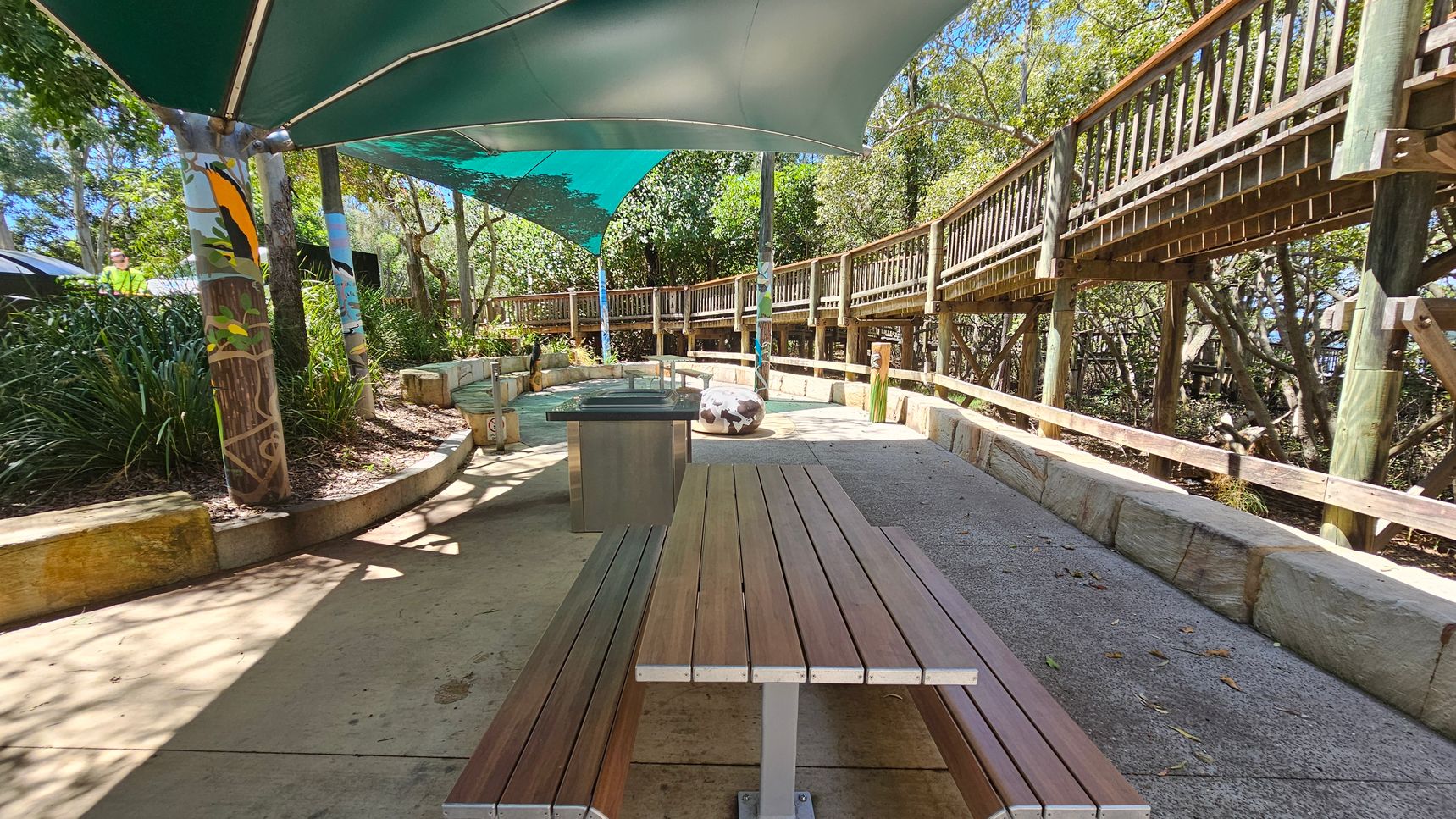
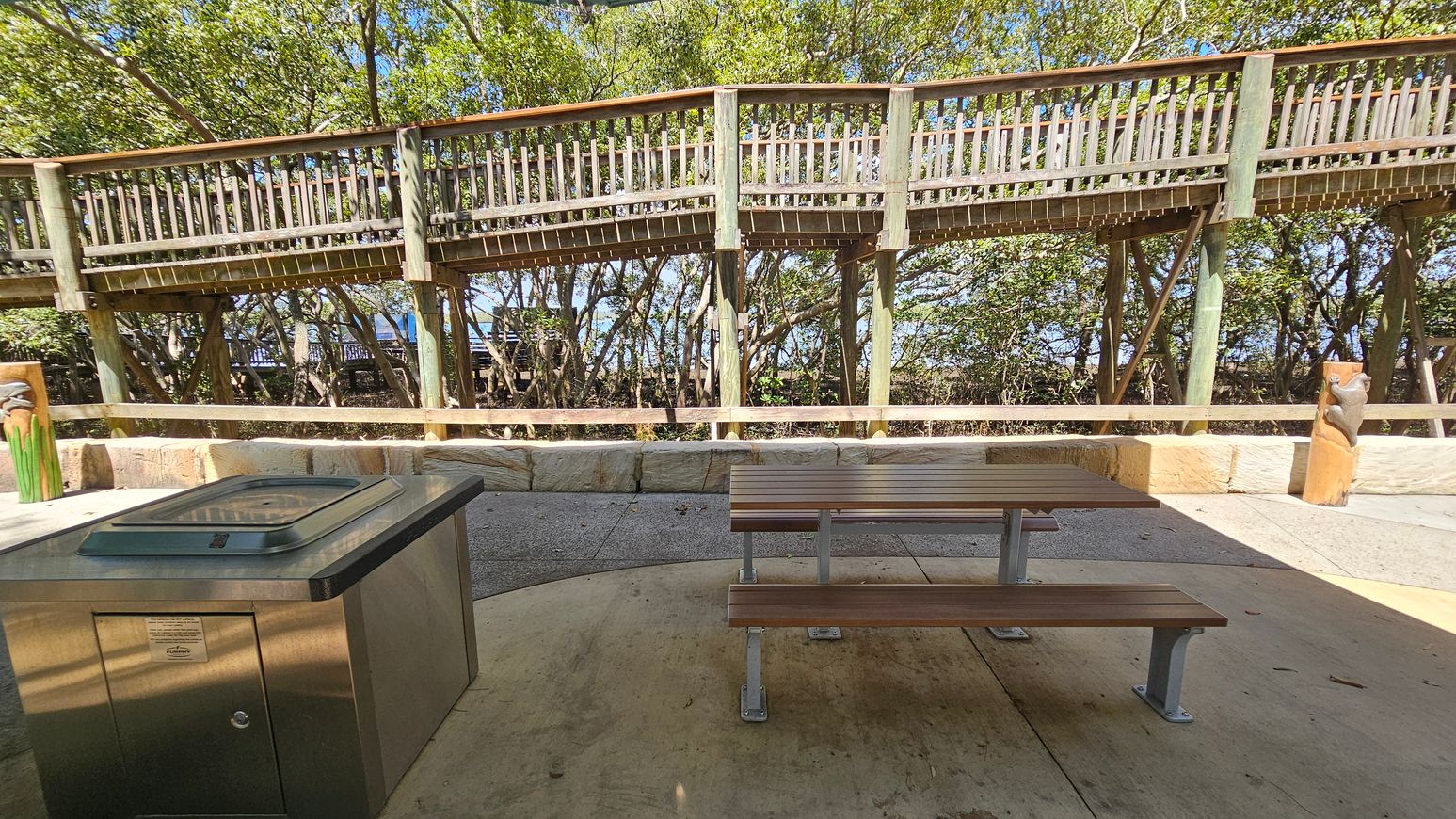
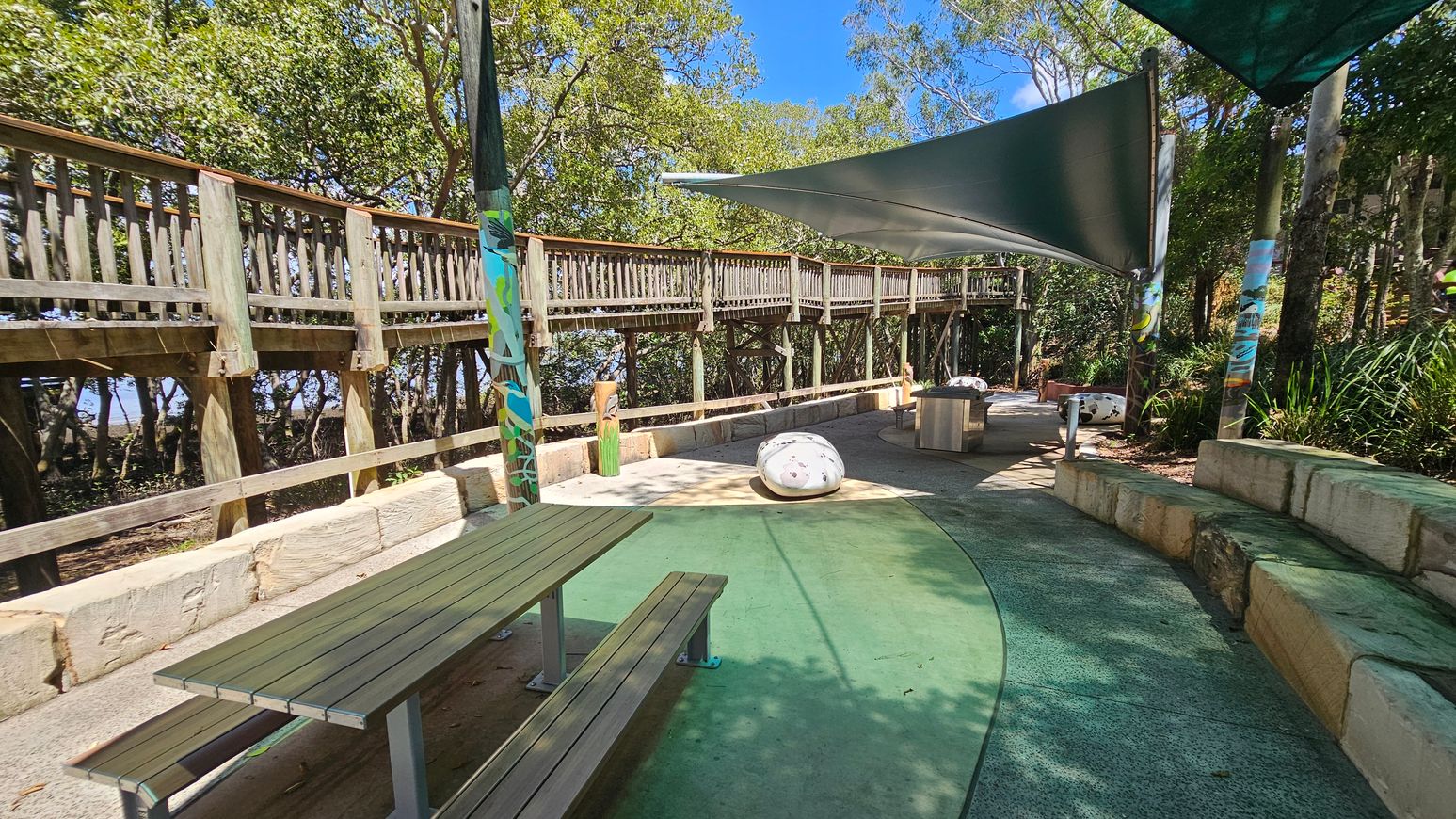
The picnic and barbecue area is located beneath a boardwalk structure, close to the water's edge. The area features concrete pathways and is shaded by a large canopy. Picnic tables and metal barbecues are available for use. The ground is a mix of concrete and bark, with some landscaped garden beds. Large concrete boulders have been painted to look like Osprey eggs.
The area is bordered by wooden railings and stone walls, providing clear boundaries. Pathways connect the area to the nearby drop-off point and other sections of the venue.
Sounds
- Water lapping
- Bird calls
- Whistling kites
- Footsteps on boardwalk
- Barbecue sizzling
Smells
- Cooking from barbecues
- Fresh air
- Trees and flowers
- Mangrove wetland
- Salt water
Feel
- Cool shade
- Smooth concrete
- Breezy near water
- Hungry and thirsty
- Eating and drinking
Sight
- Boardwalk above
- Picnic tables
- Barbecue units
- Trees and plants
- People cooking and eating
3. Boardwalks and Walkways
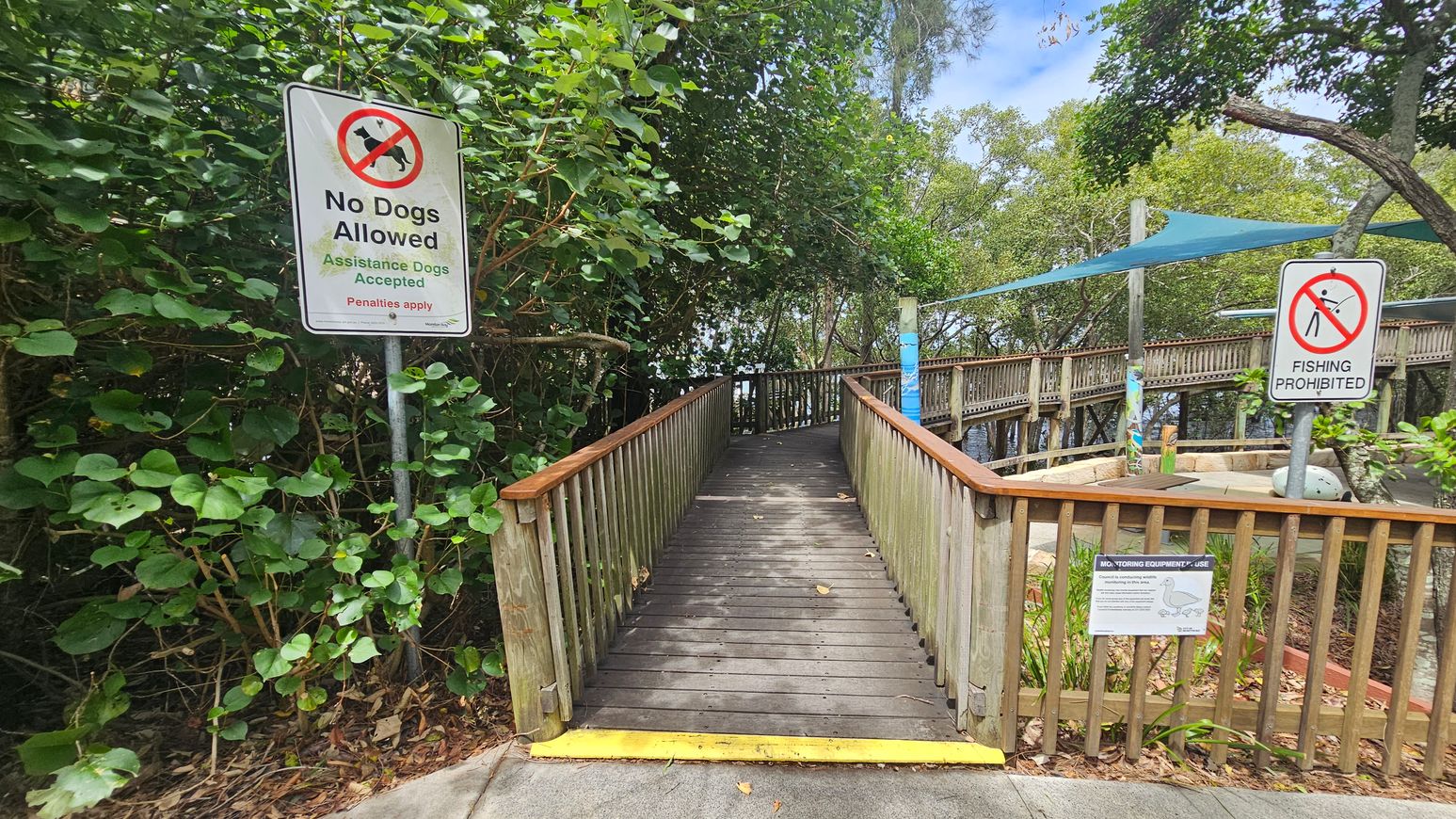
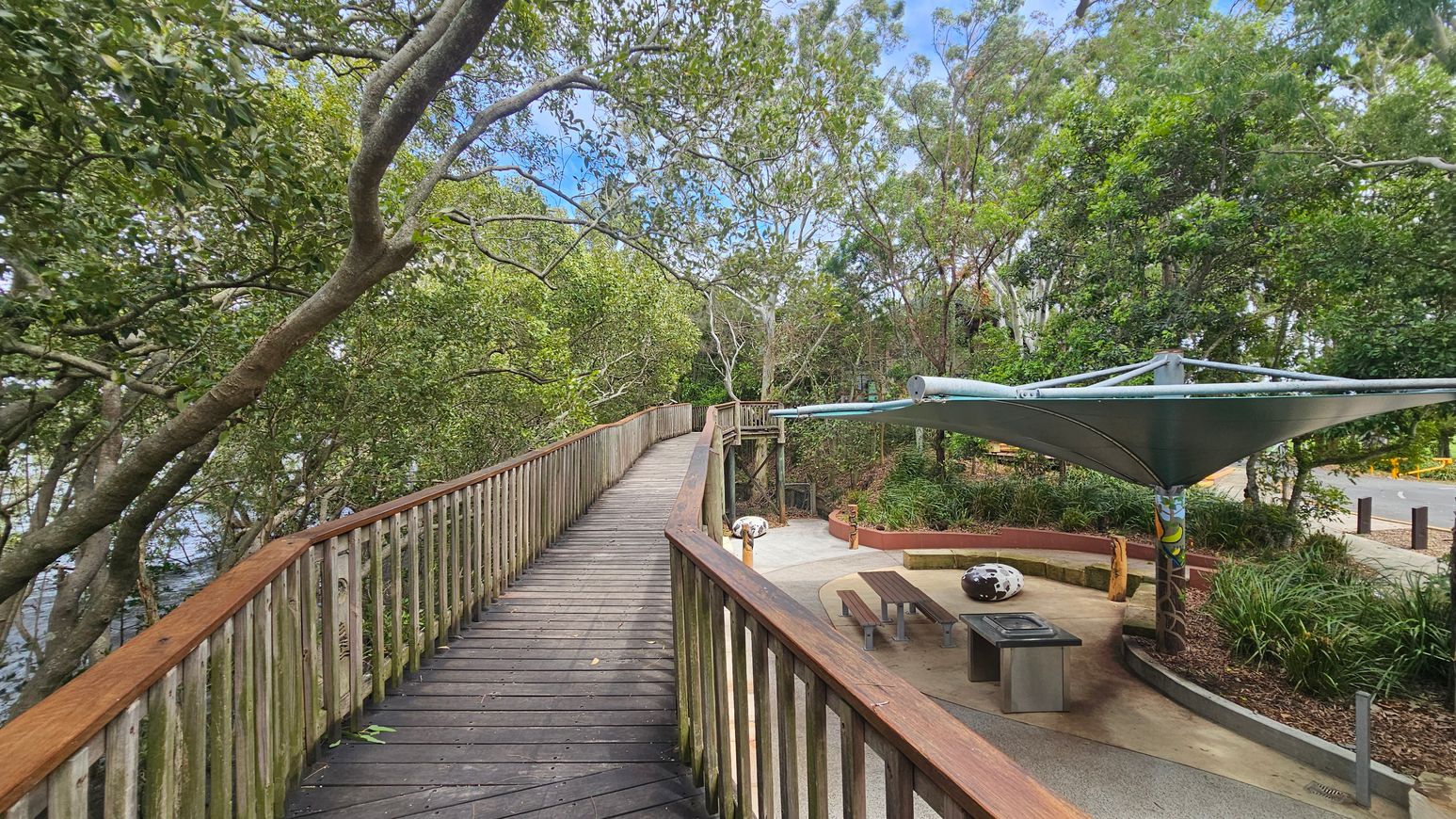
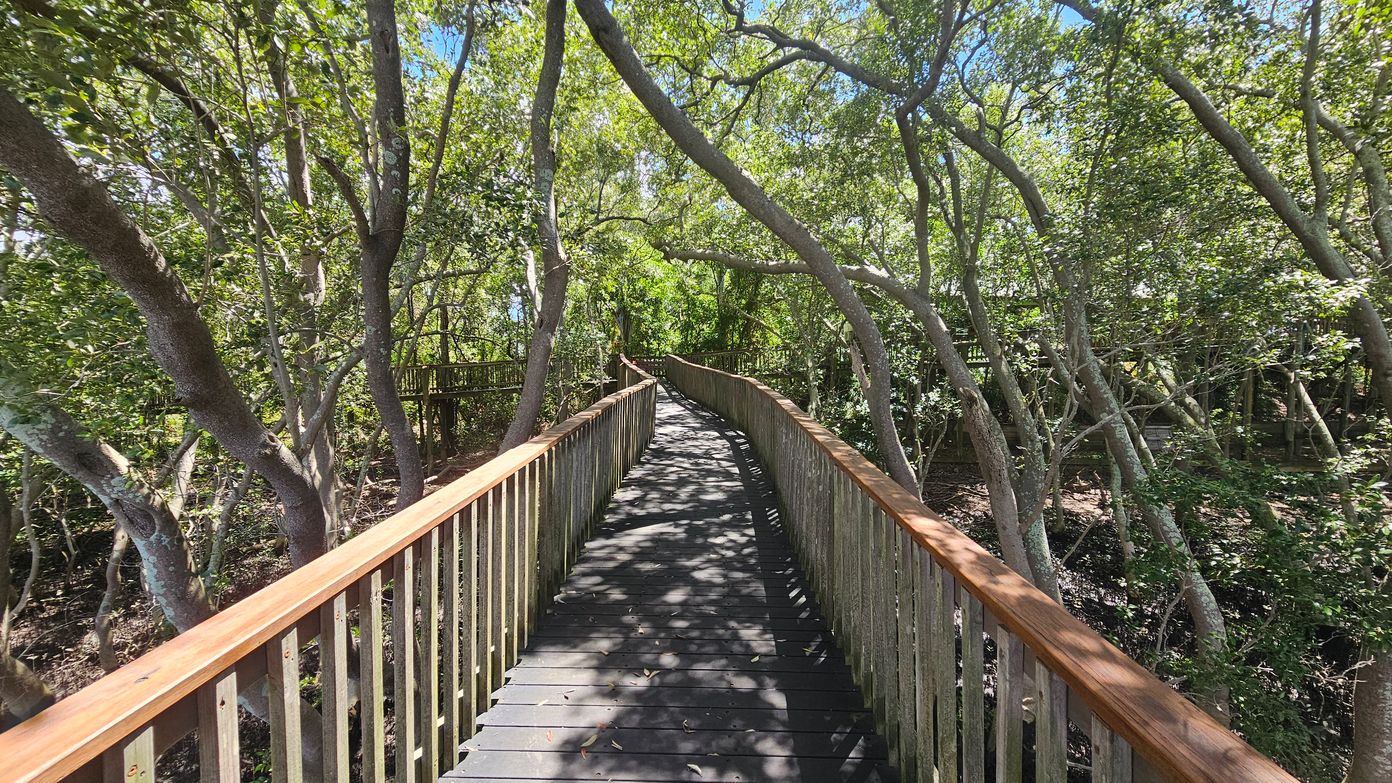
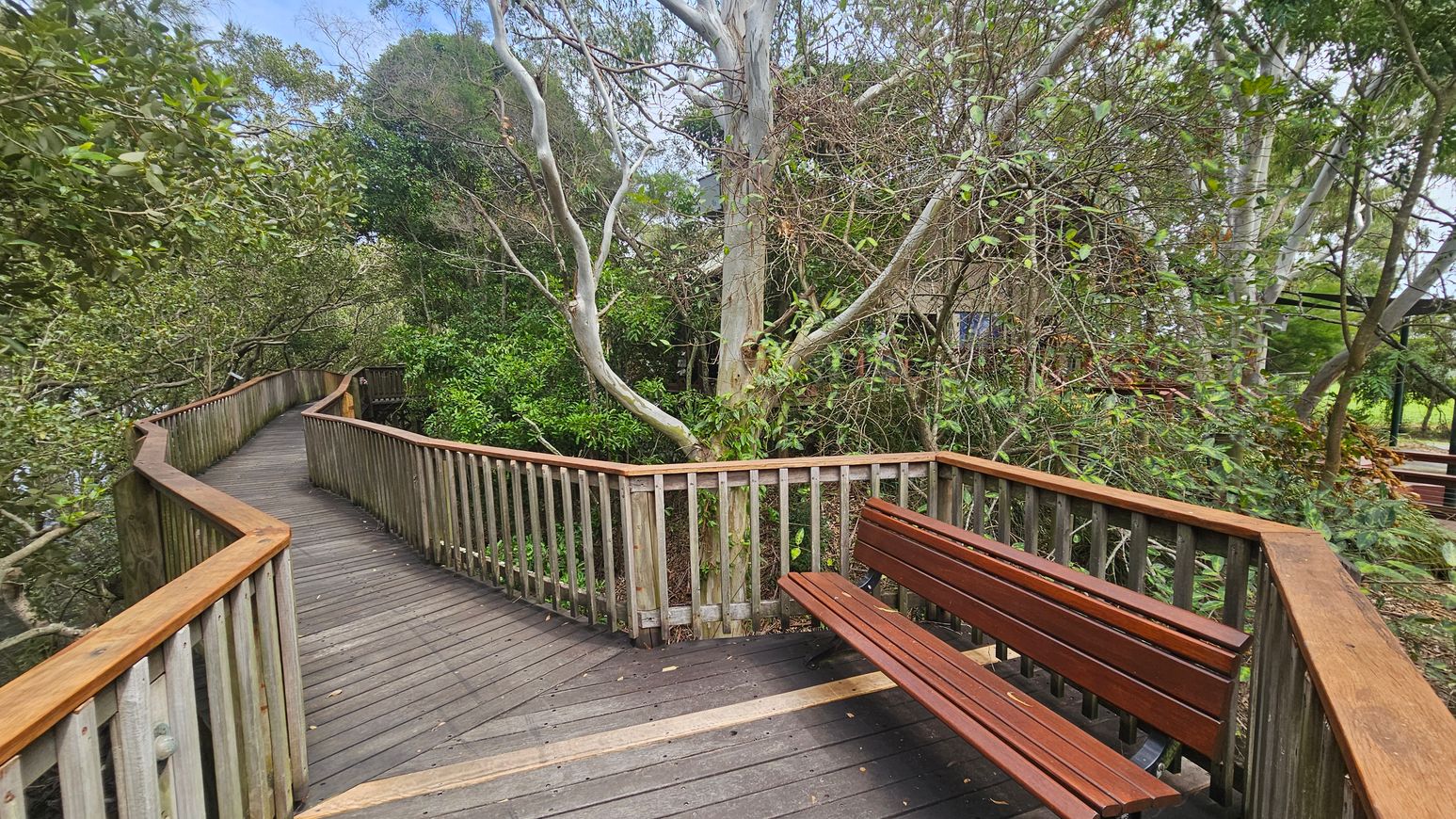
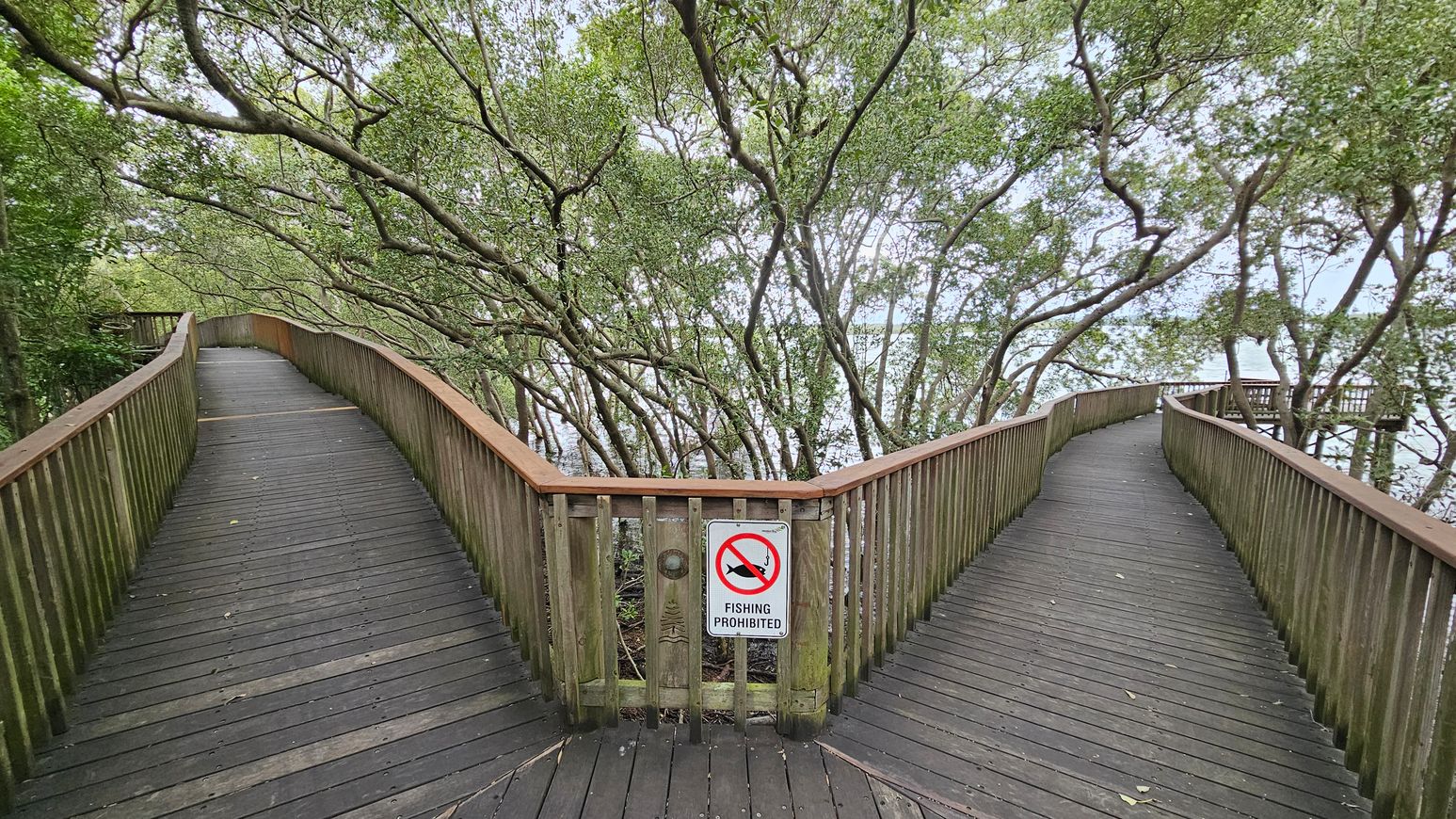
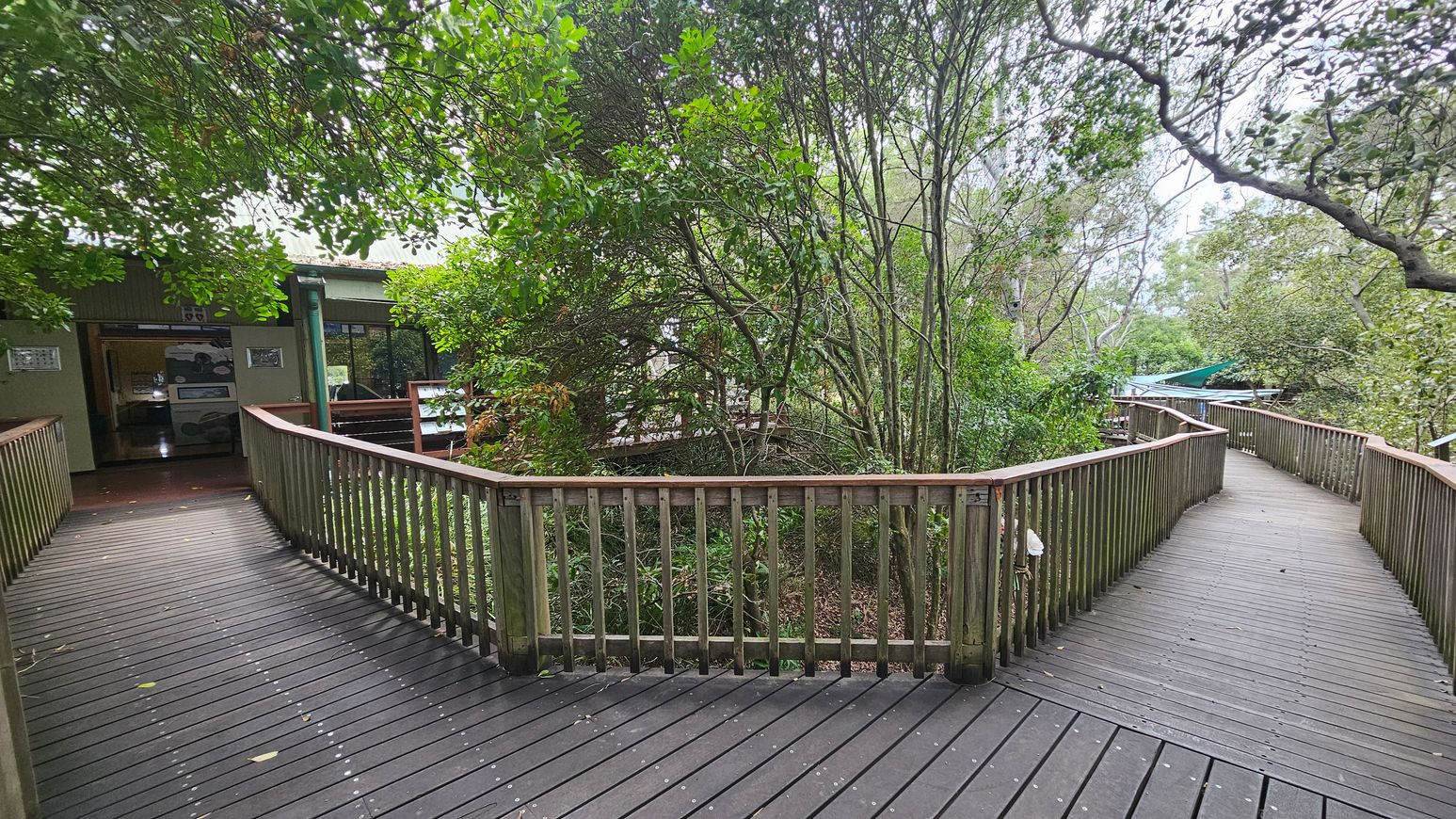
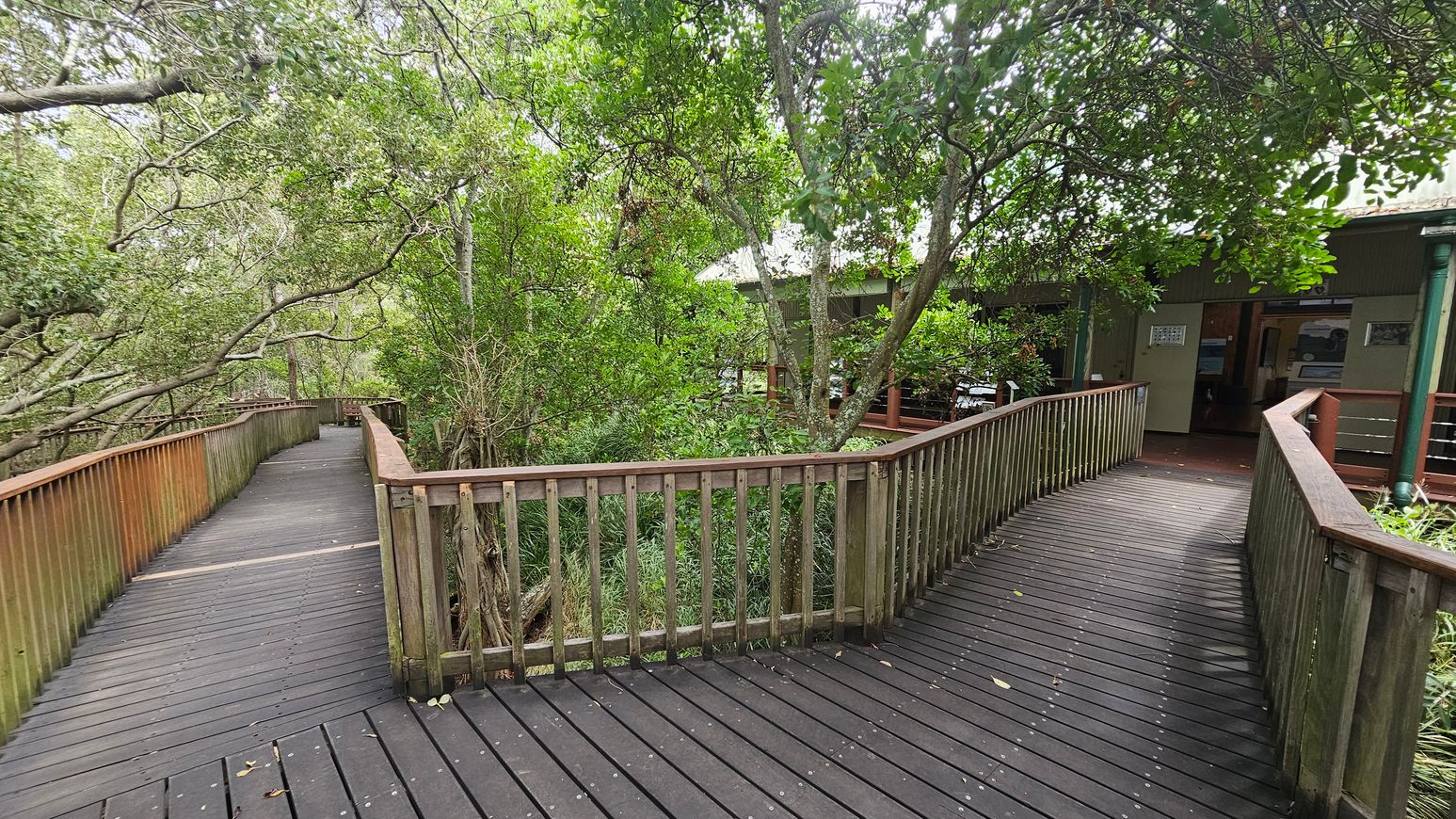
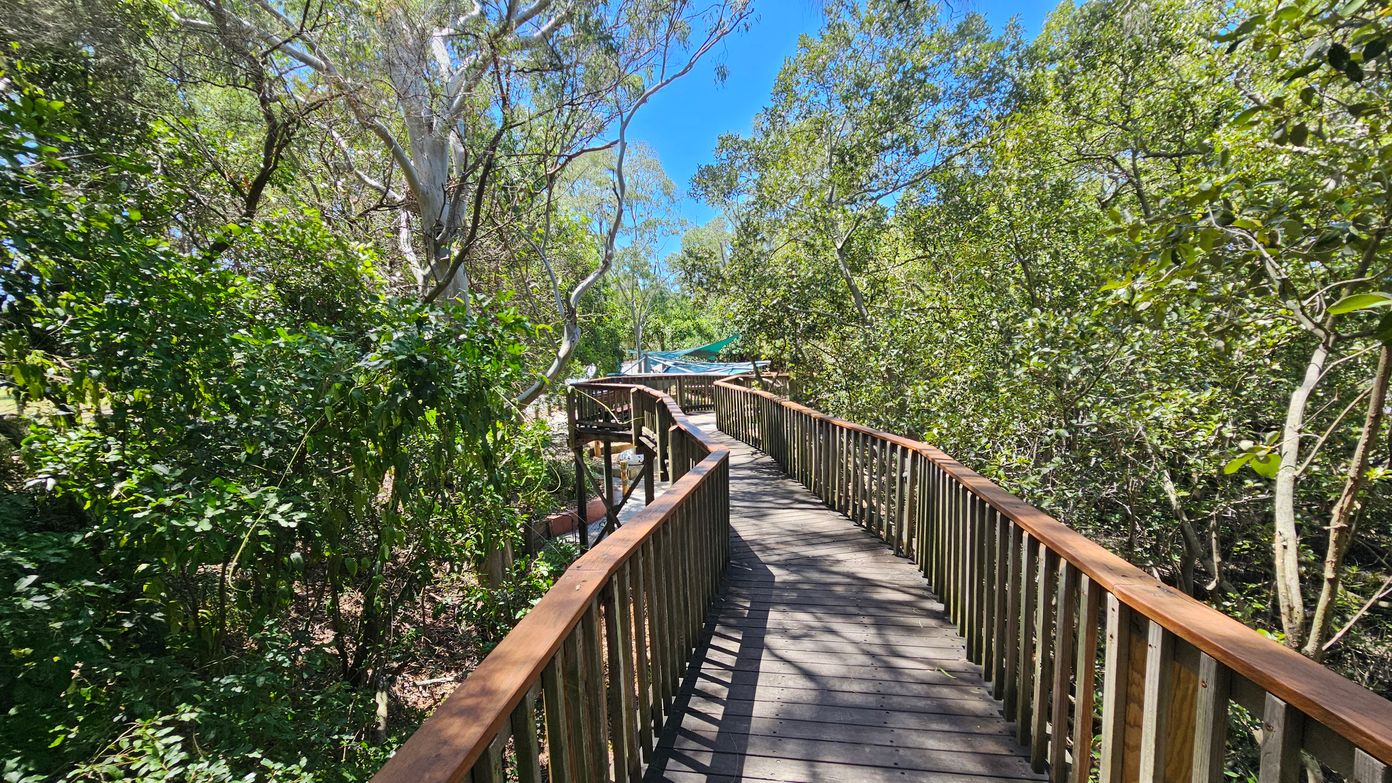
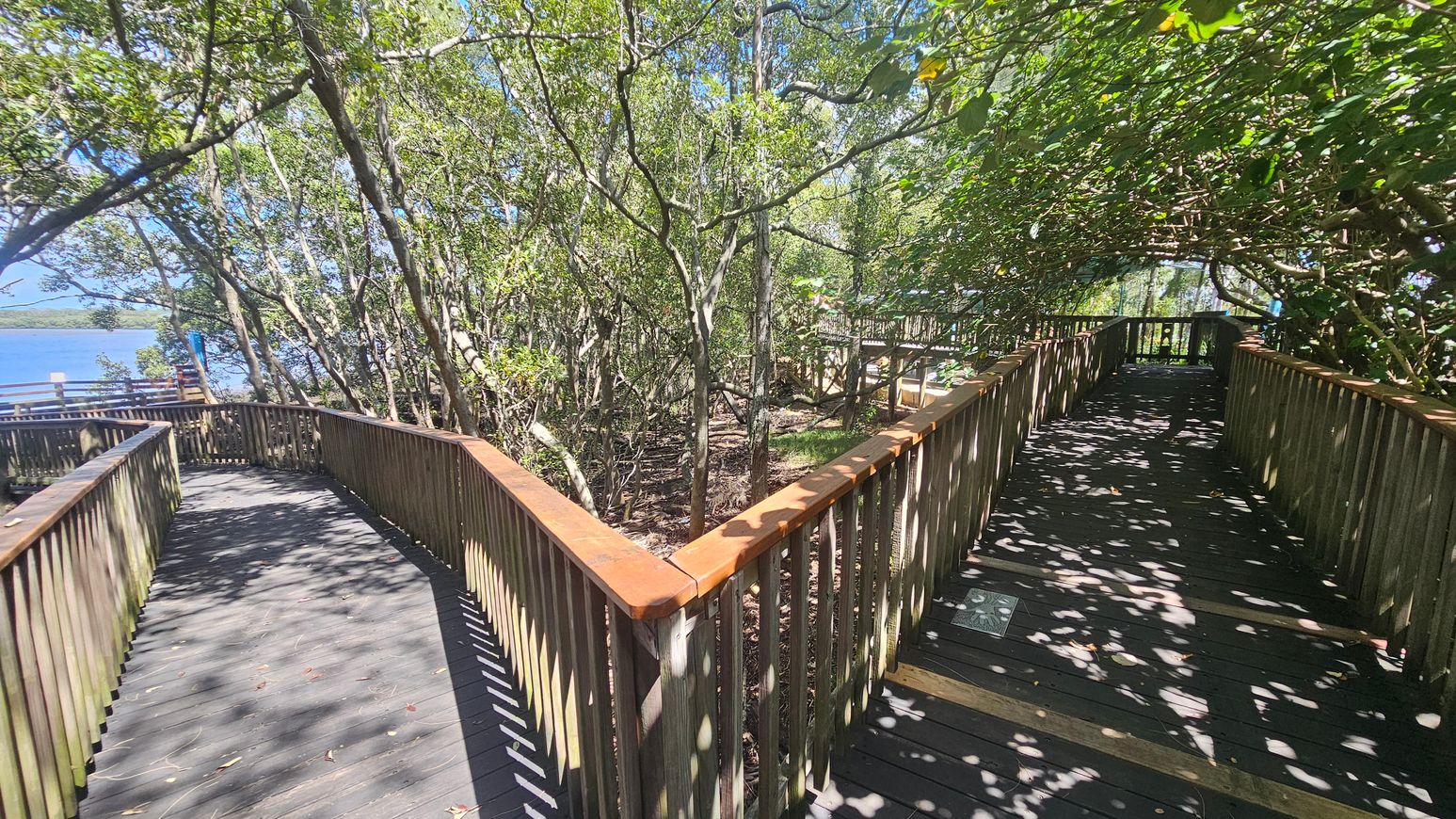
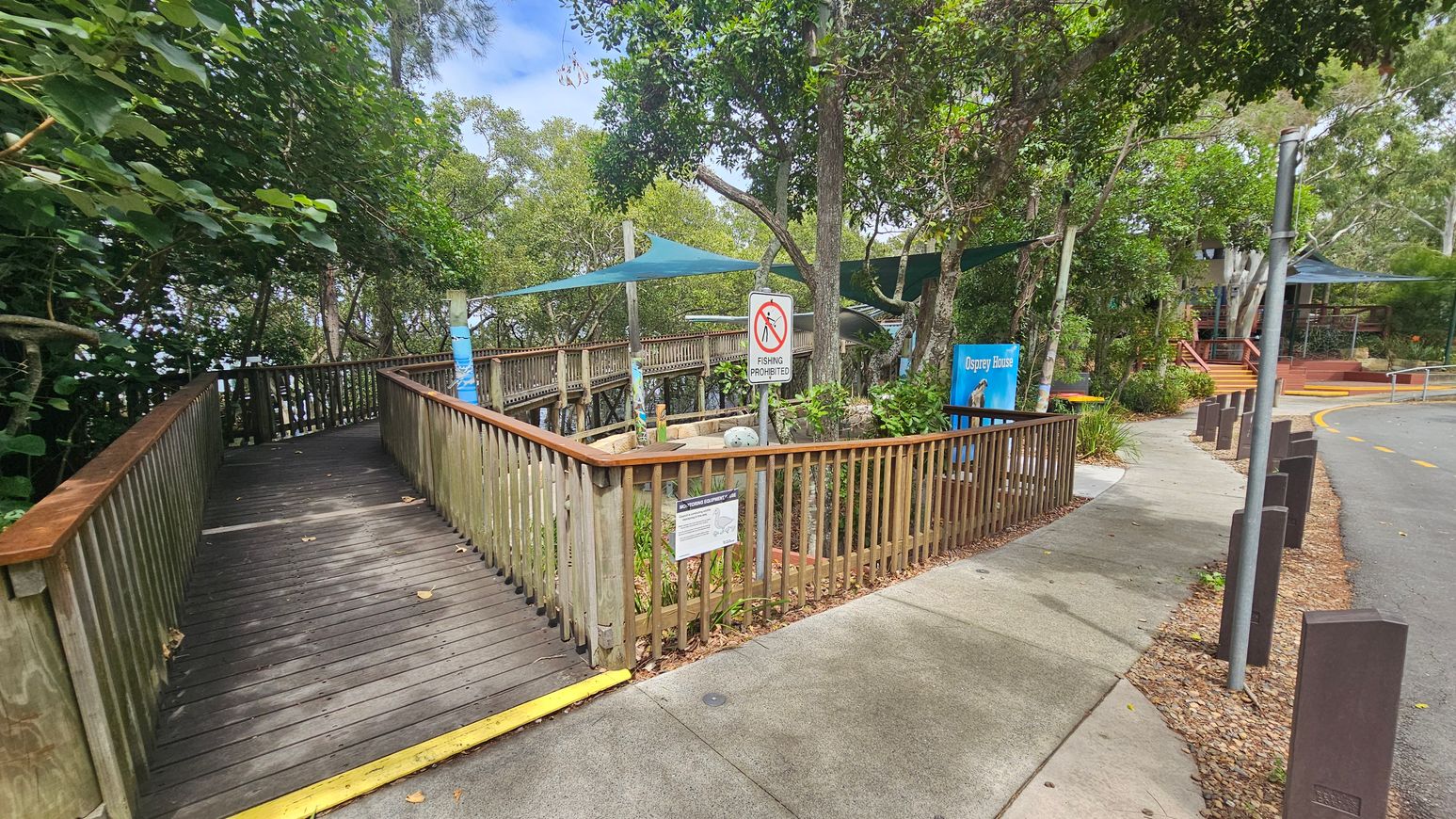
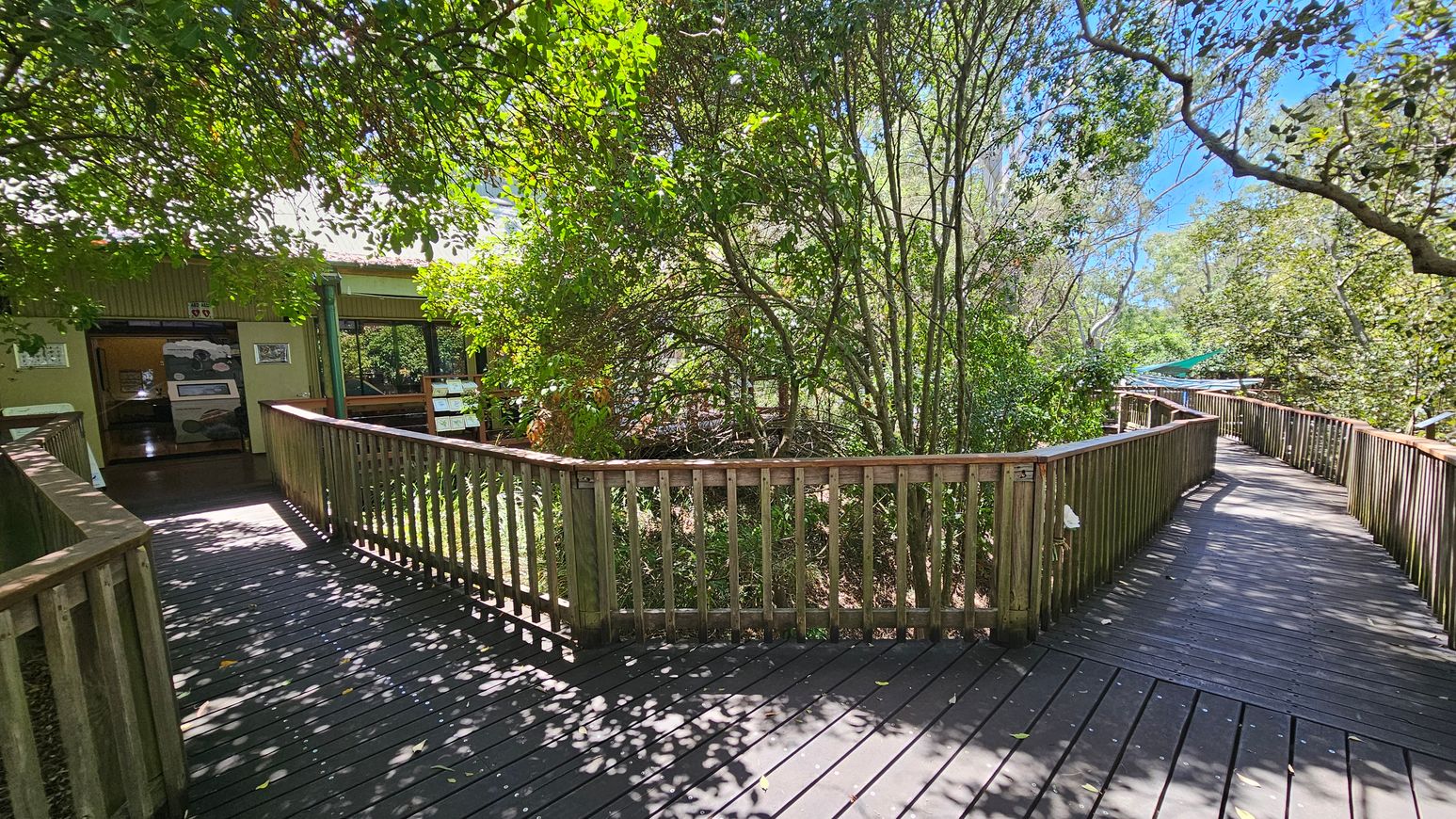
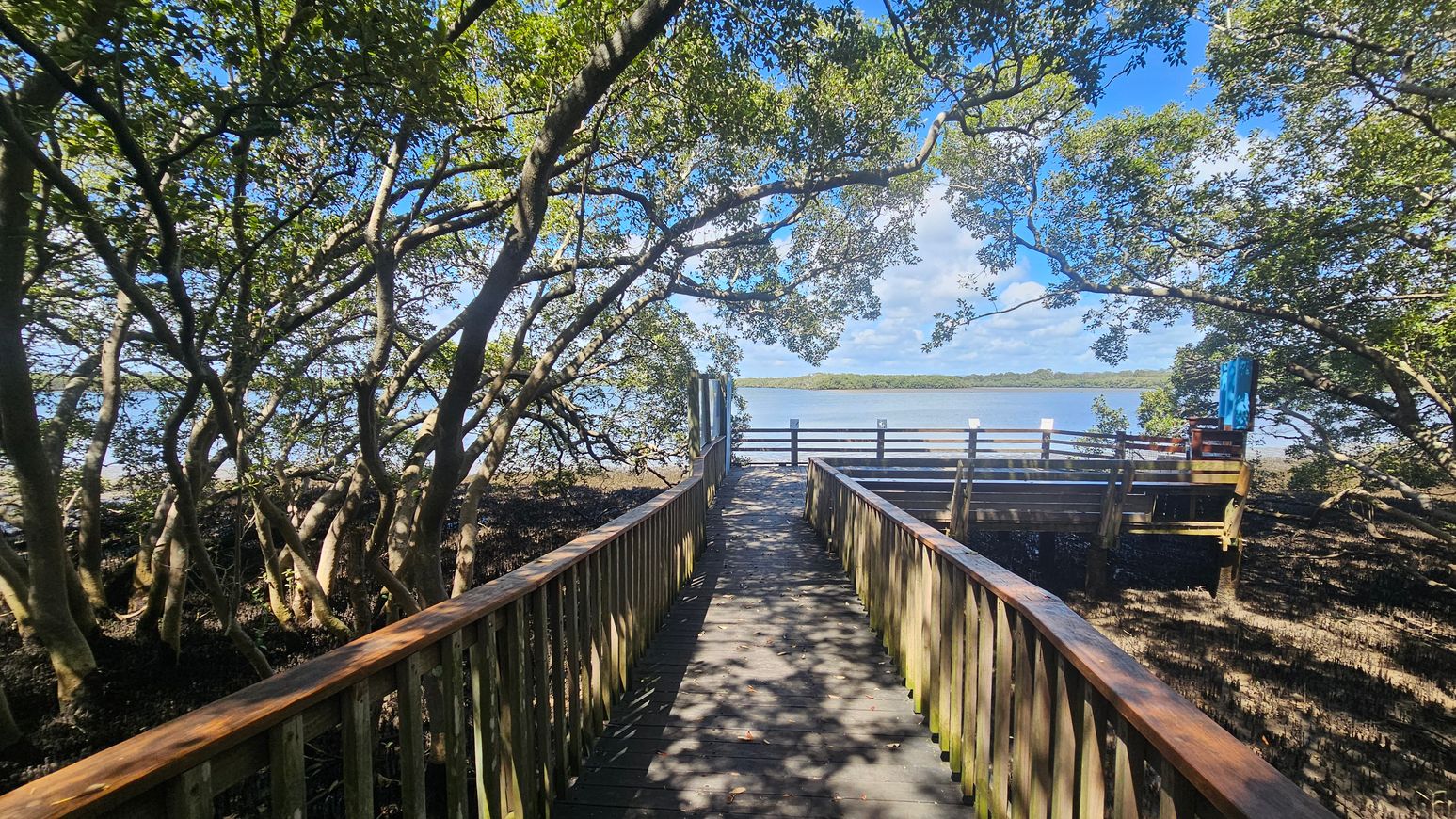
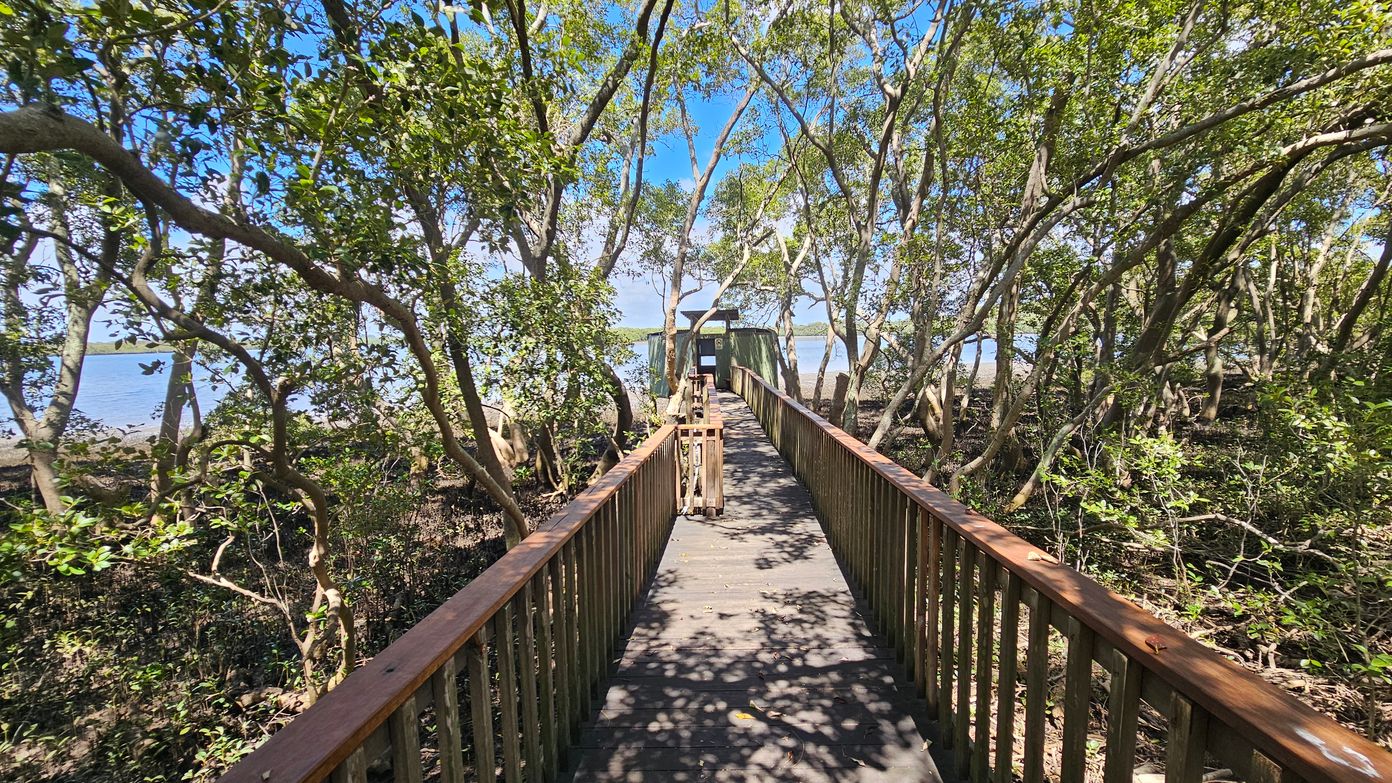
The boardwalk is made of wood and connects the drop-off area to Osprey House. It extends through mangroves and is over one metre wide. The surface is step-free but has small lips and slight uneven sections. The gradient is slight, and there are carved-out sections with bench seating for resting.
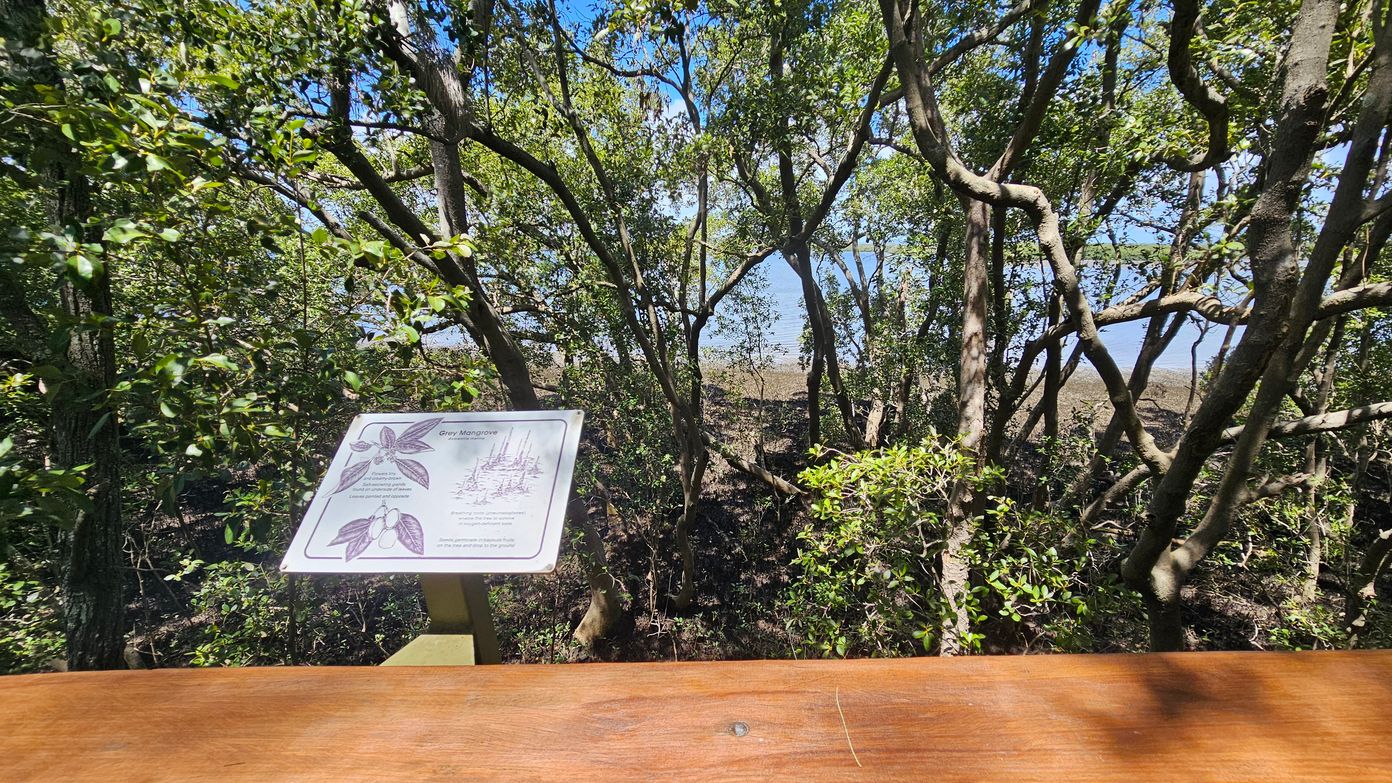
Signage along the pathway provides information about mangroves, birds, and the natural environment. The boardwalk connects to bird lookout areas. Visitors may be standing, sitting, or speaking quietly along the walkway.
Sounds
- Bird calls
- Rustling leaves
- Footsteps on wood
- Distant voices
- Wind in trees
Smells
- Fresh wood
- Mangrove scent
- Earthy tones
- Saltwater
- Fresh air
Feel
- Wooden texture
- Slight breeze
- Warm sunlight
- Cool shade
- Uneven surface
Sight
- Wooden railings
- Mangrove trees
- Informative signs
- Bench seating
- Pathway curves
4. Osprey House Building
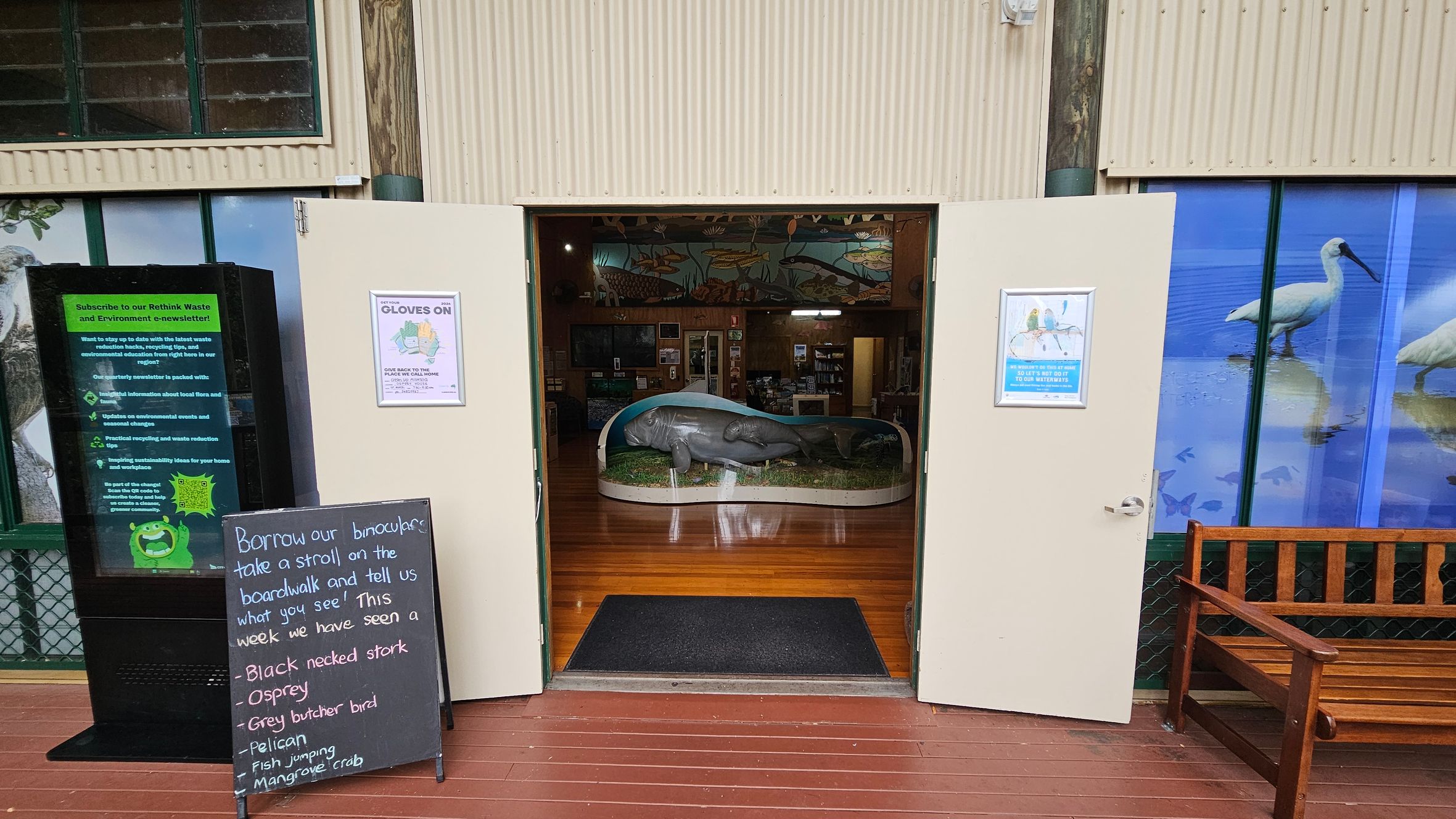
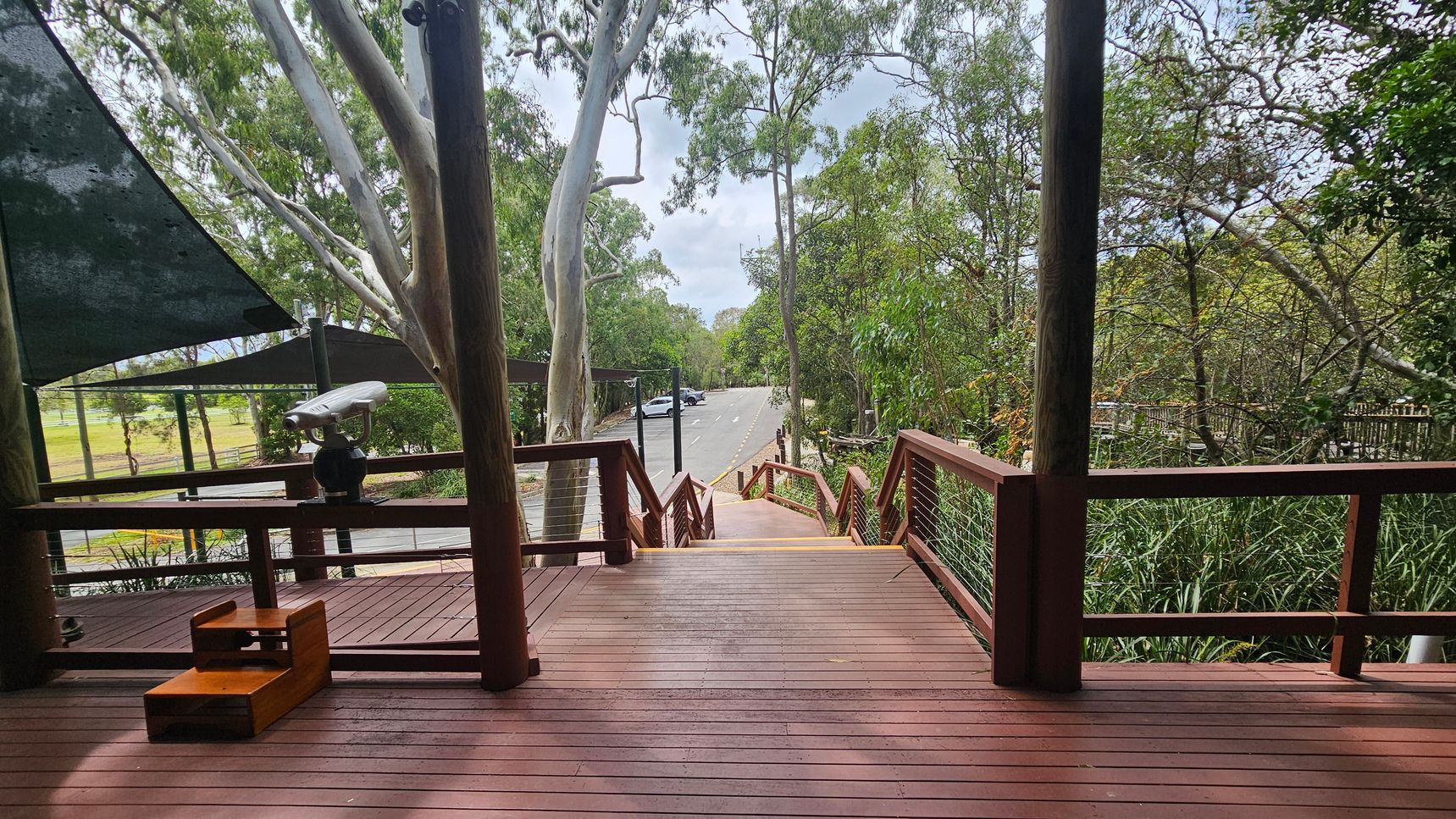
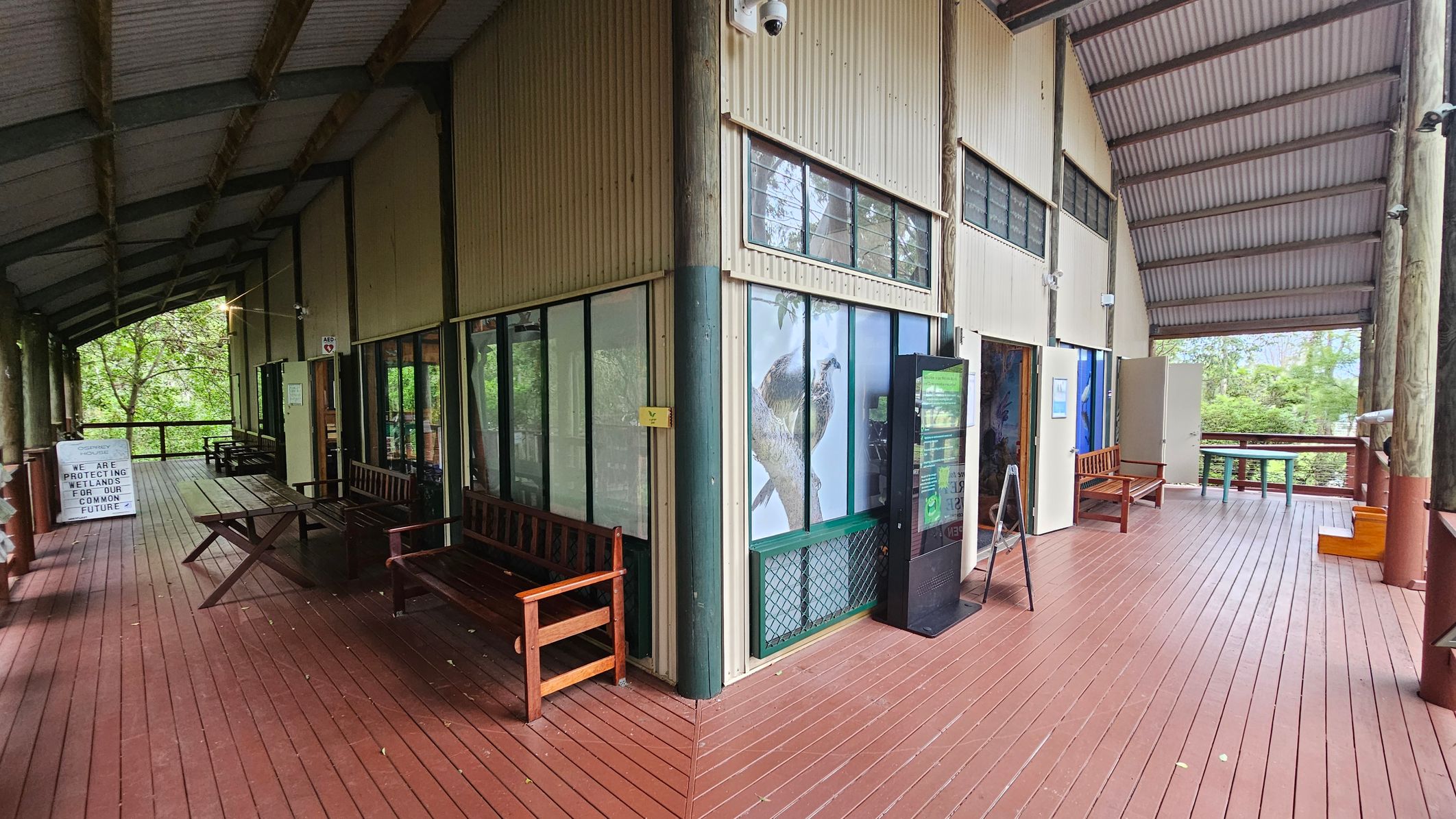
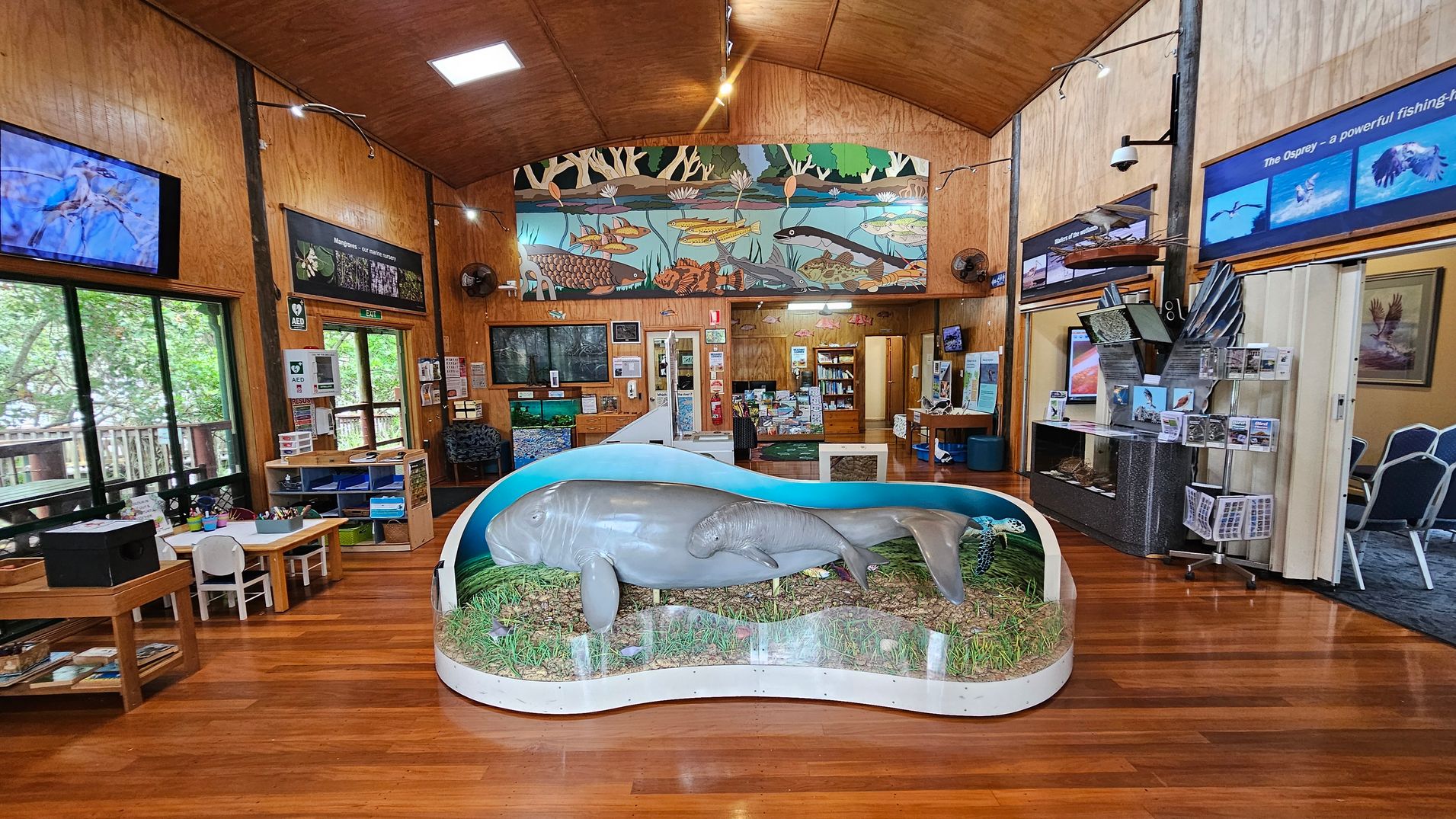
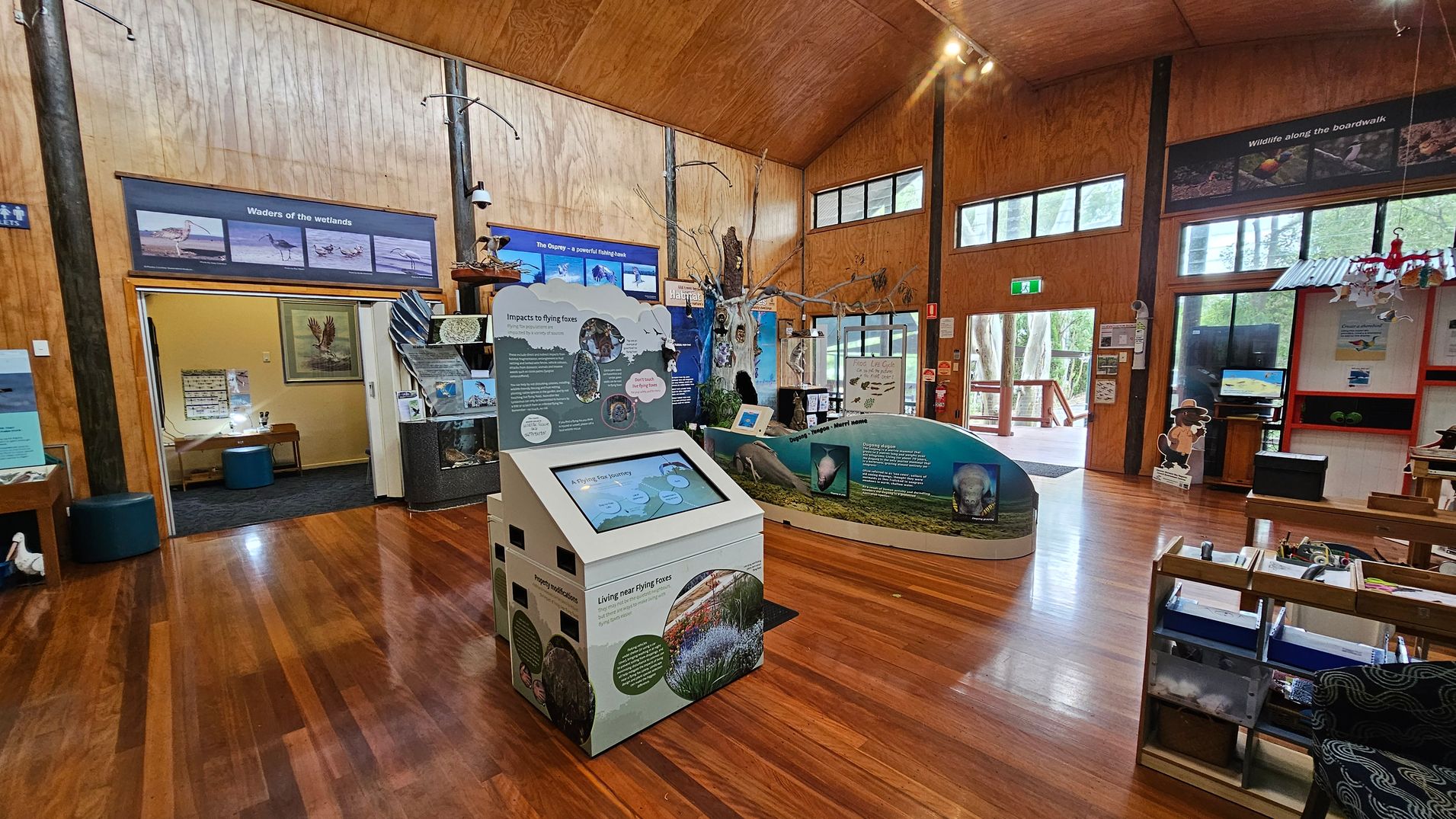
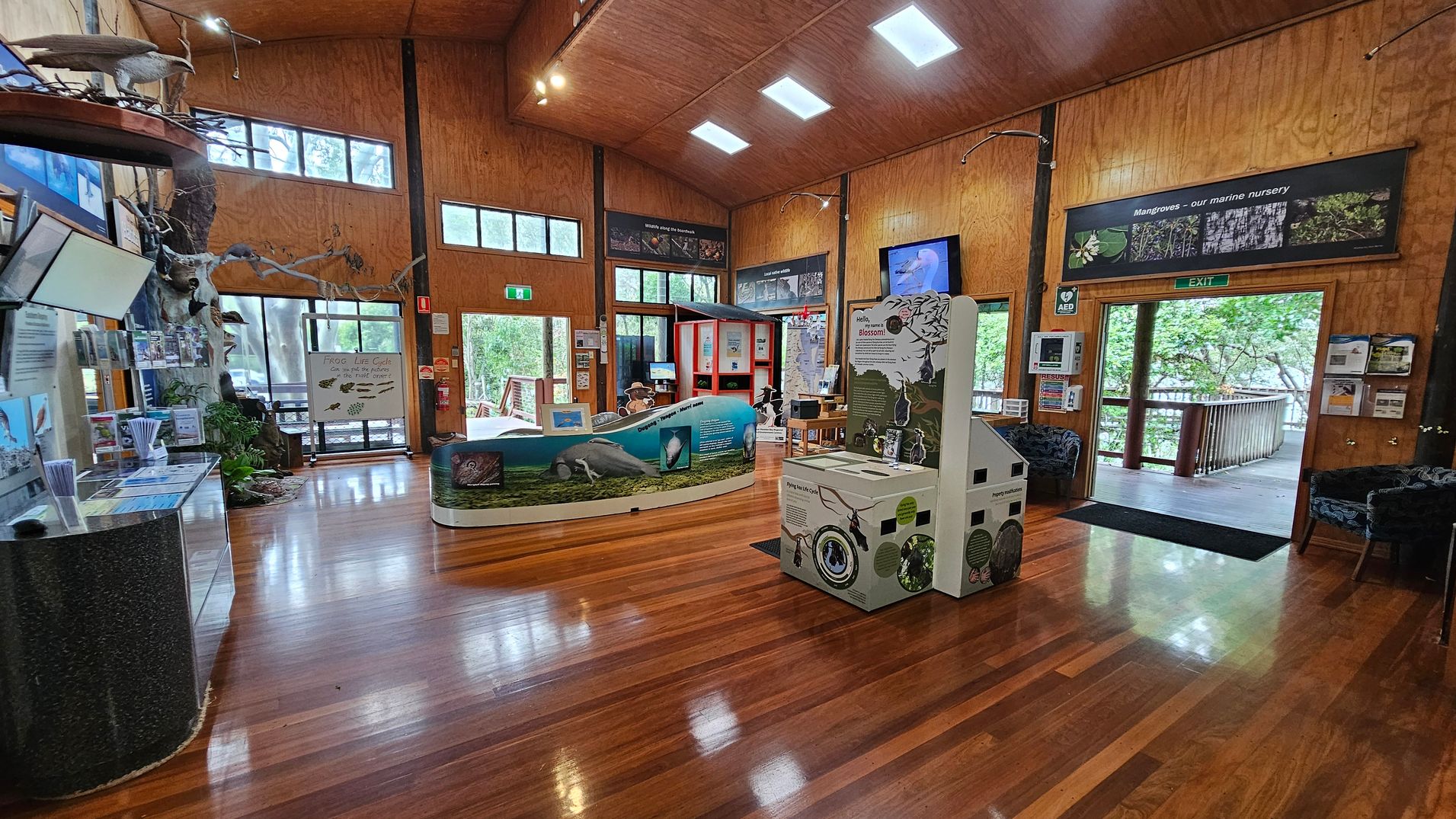
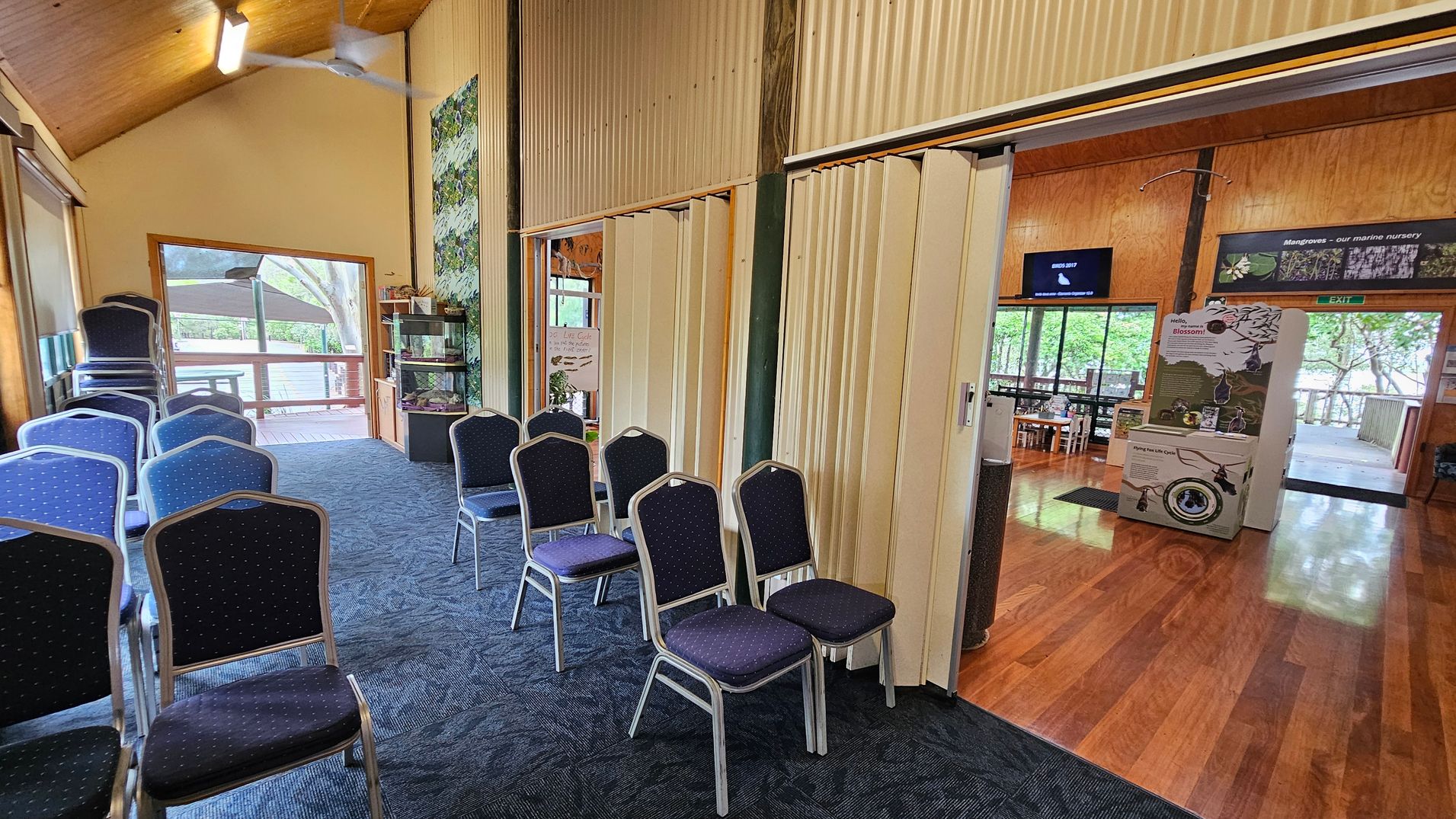
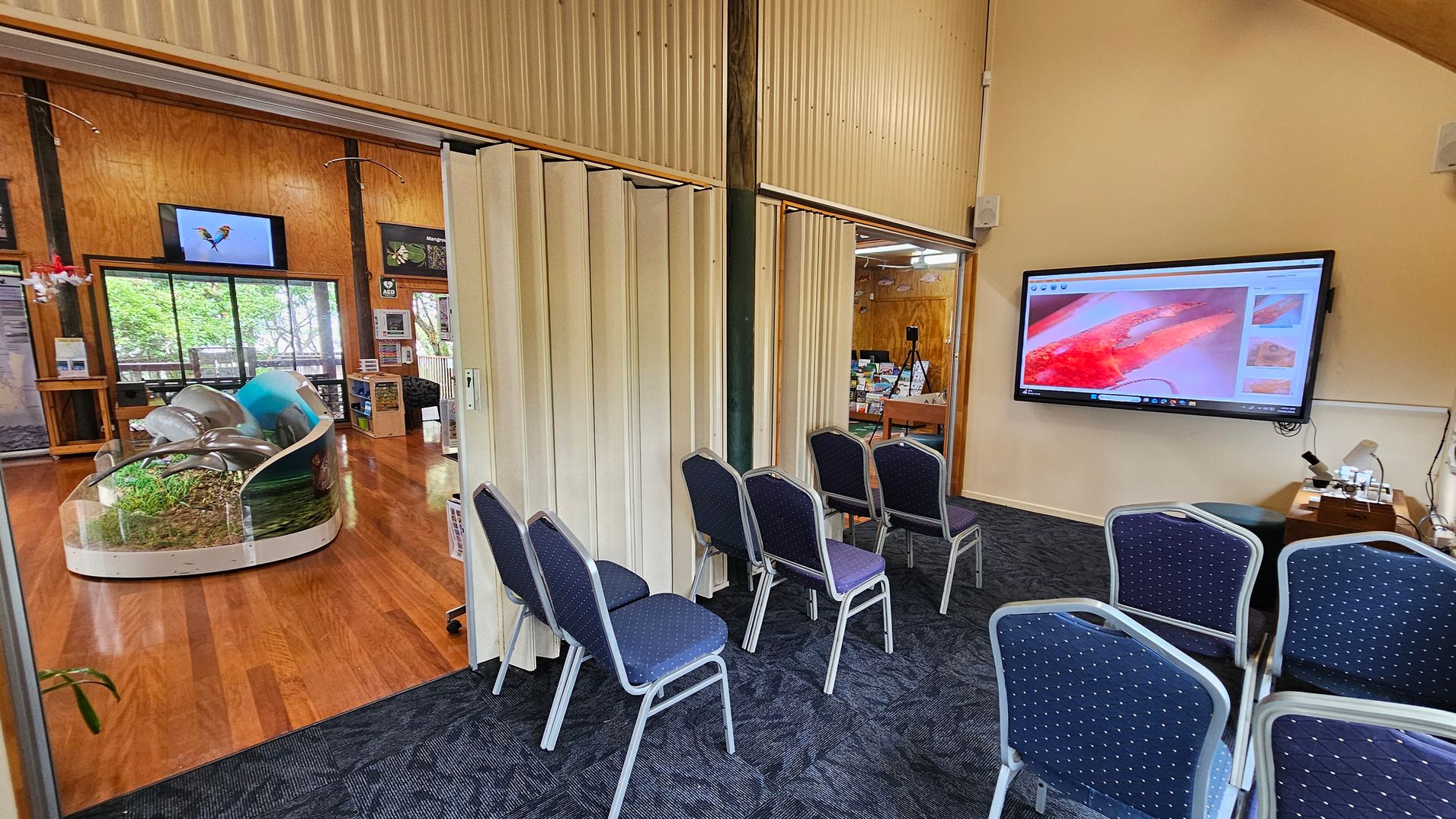
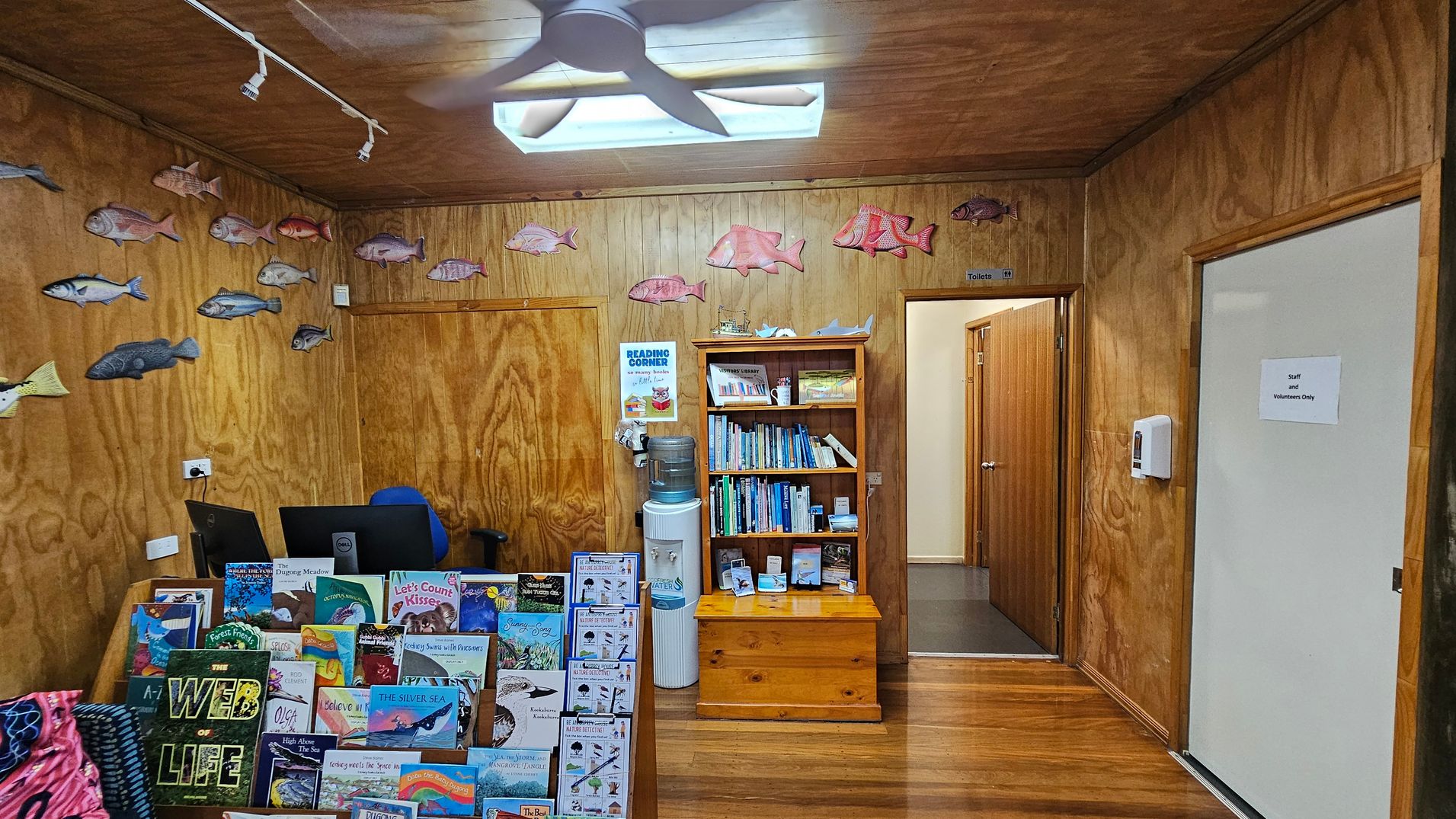
The Osprey House Building is a small timber structure with high ceilings and wooden floorboards. It is surrounded by foliage, providing natural shade. The building features step-free pathways and ramps, with railings for support. There are interactive audio-visual displays and a dedicated viewing area inside.
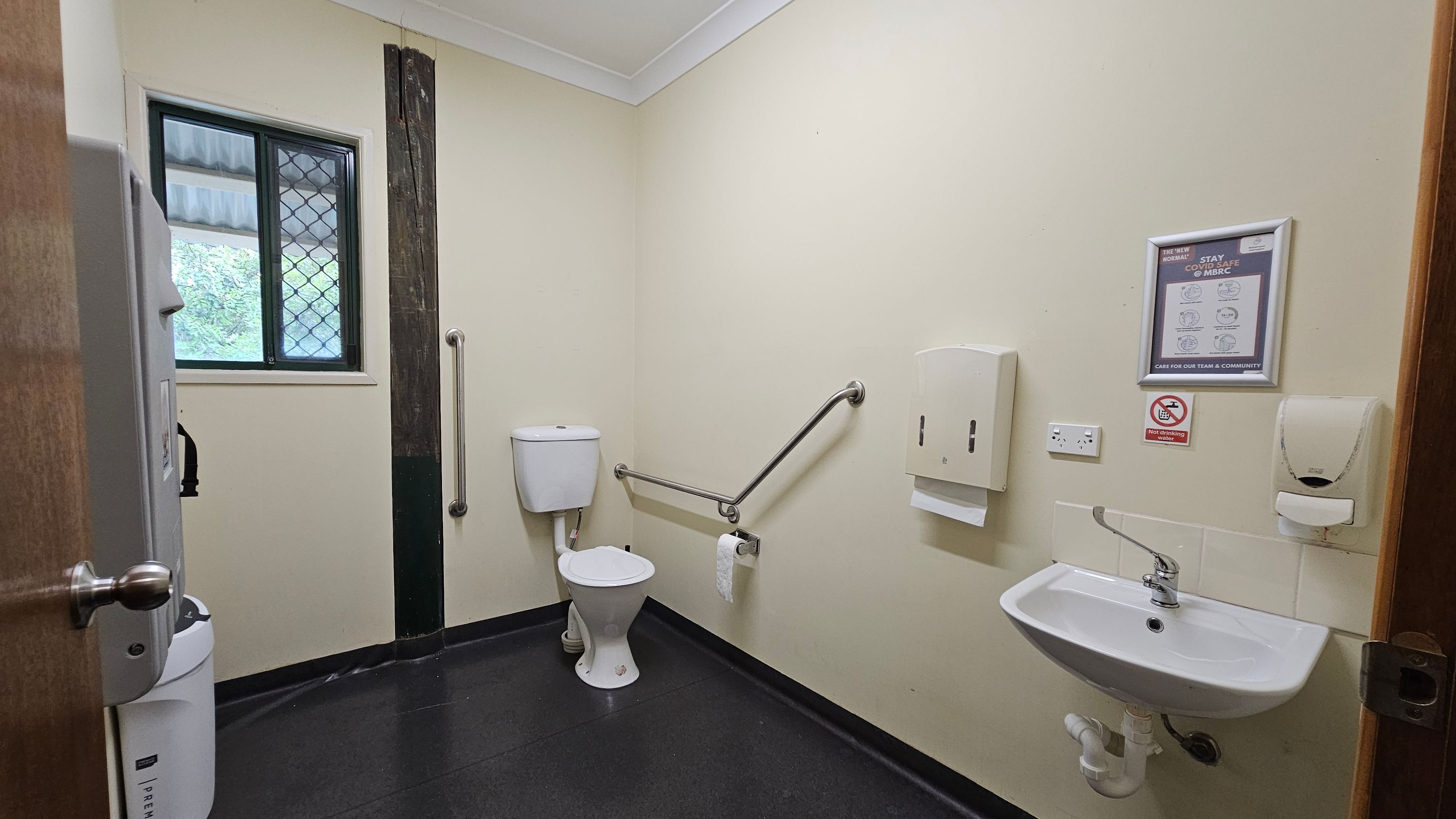
Basic accessible amenities are available, including a bathroom with handrails. The space is used for educational purposes, with local guides providing information. Narration and recorded audio may be heard, and activity levels may increase during events.
Sounds
- Narration audio or music
- People talking
- Local guides
- Footsteps on wood
- Birds chirping
Smells
- Craft supplies
- Wood scent
- Fresh foliage
- Nearby water
- Fresh air
Feel
- Wooden floorboards
- Close proximity to others
- Smooth railings
- Open space
- Interactive displays
Sight
- Timber building
- People viewing displays
- Audio-visual displays
- Colourful pictures and murals
- Informative signage
5. Birdwatching Lookouts
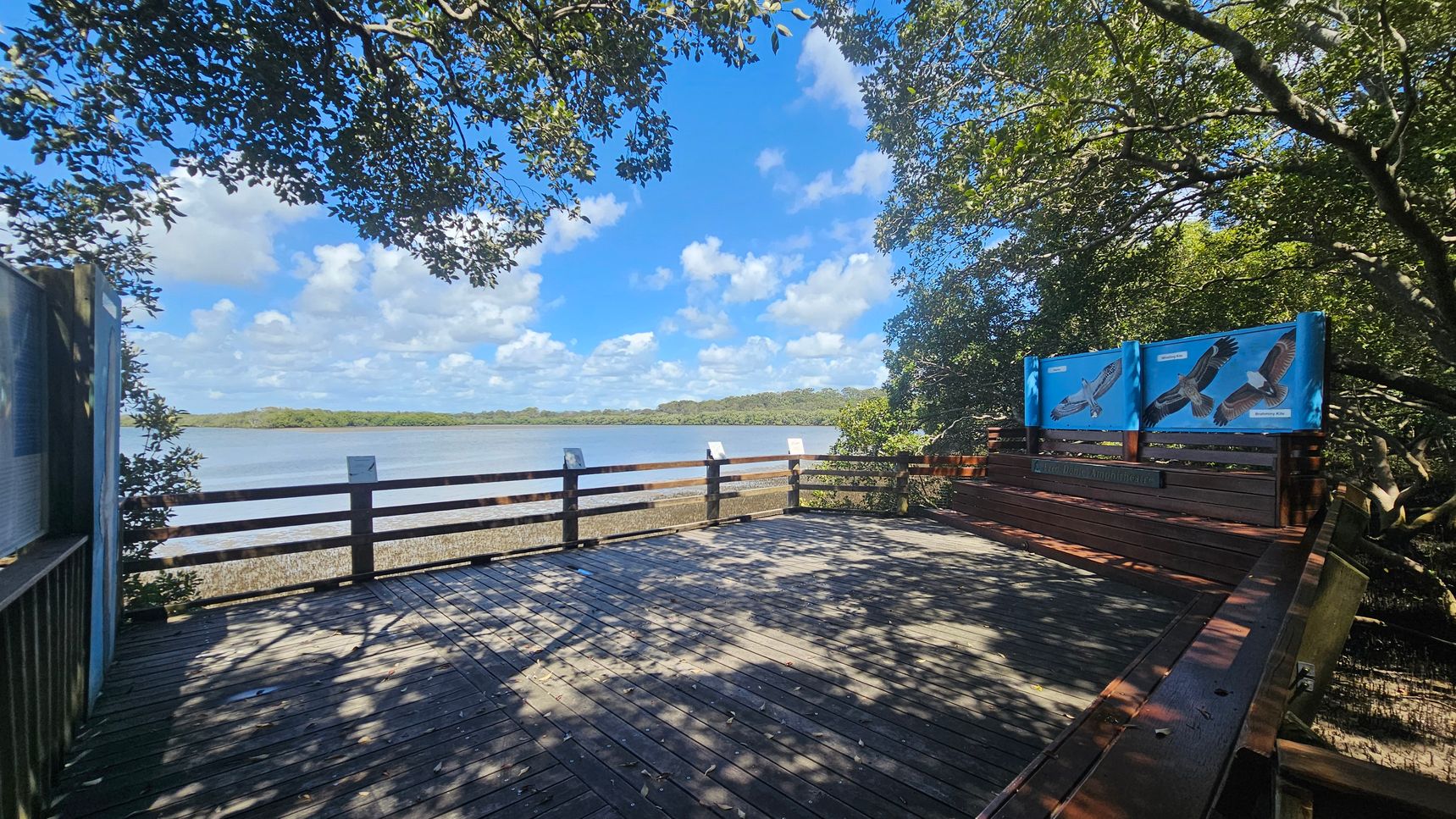
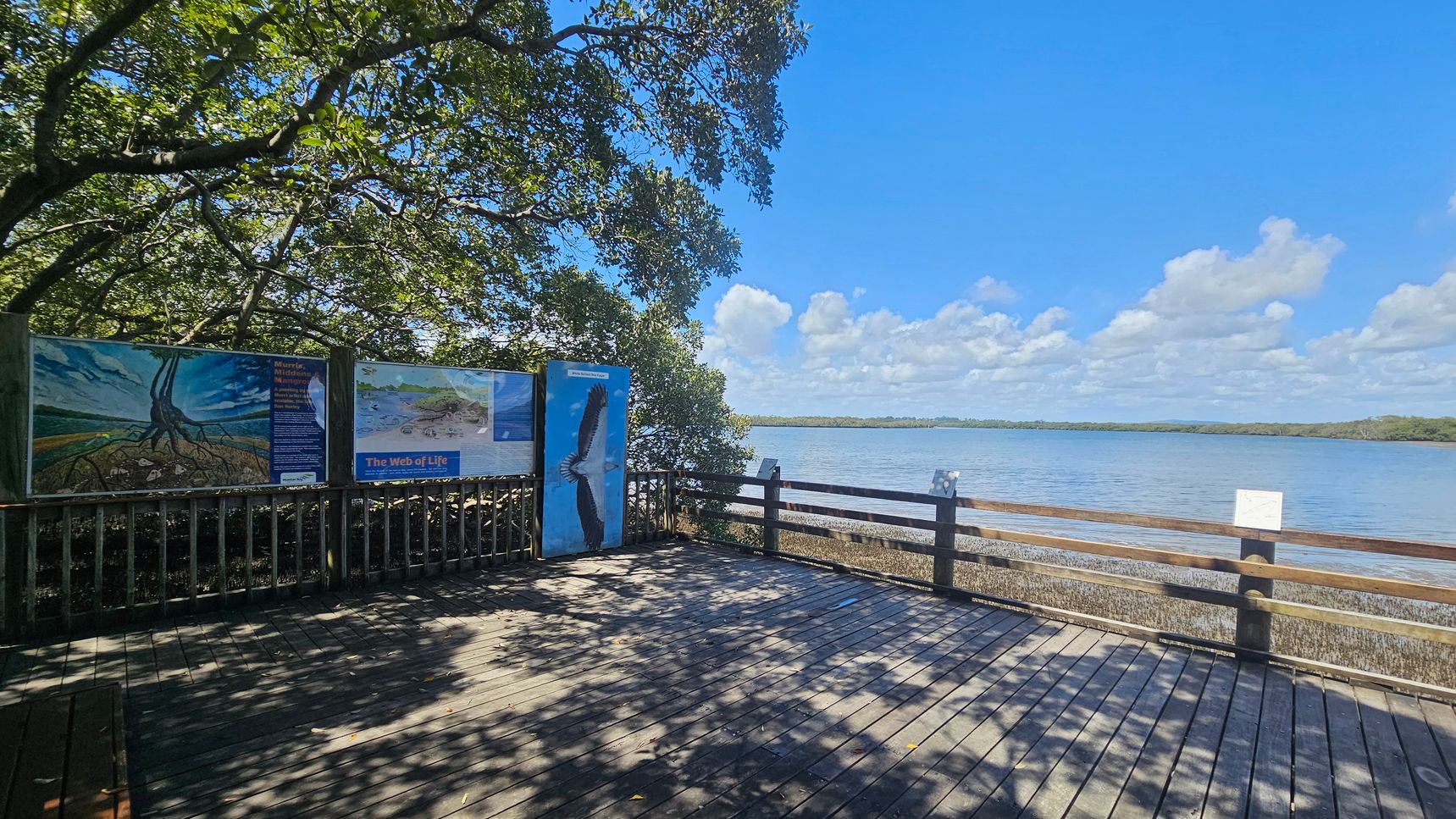
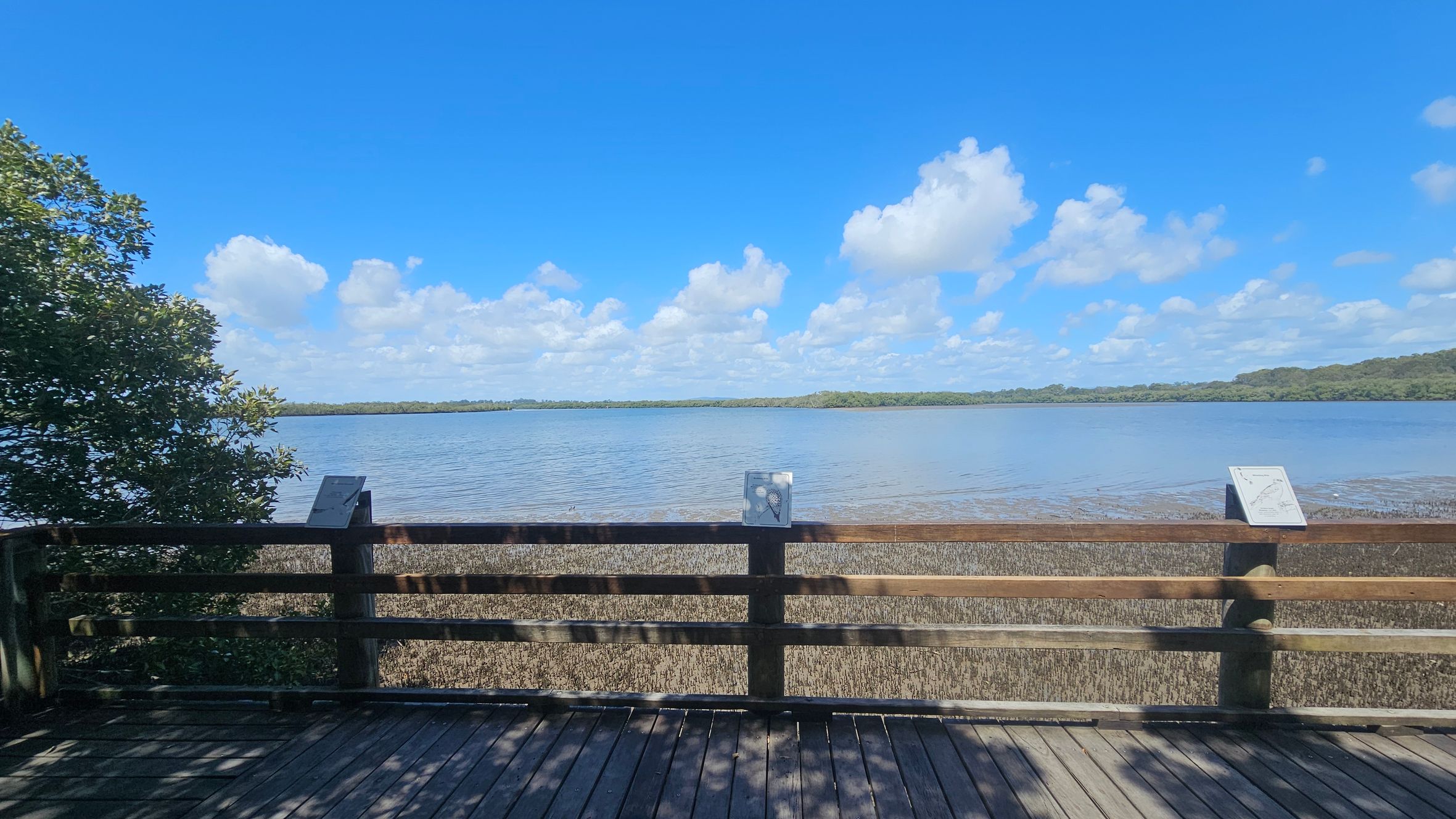
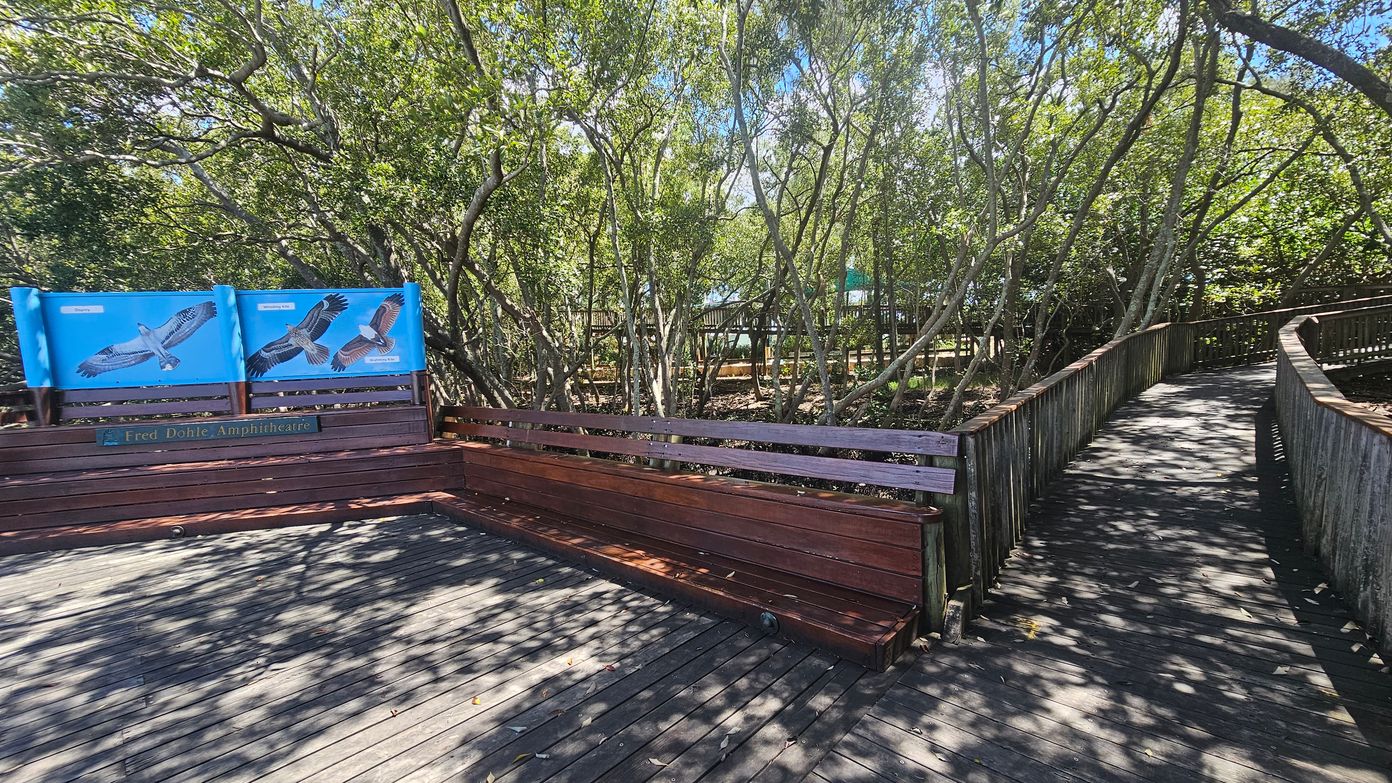
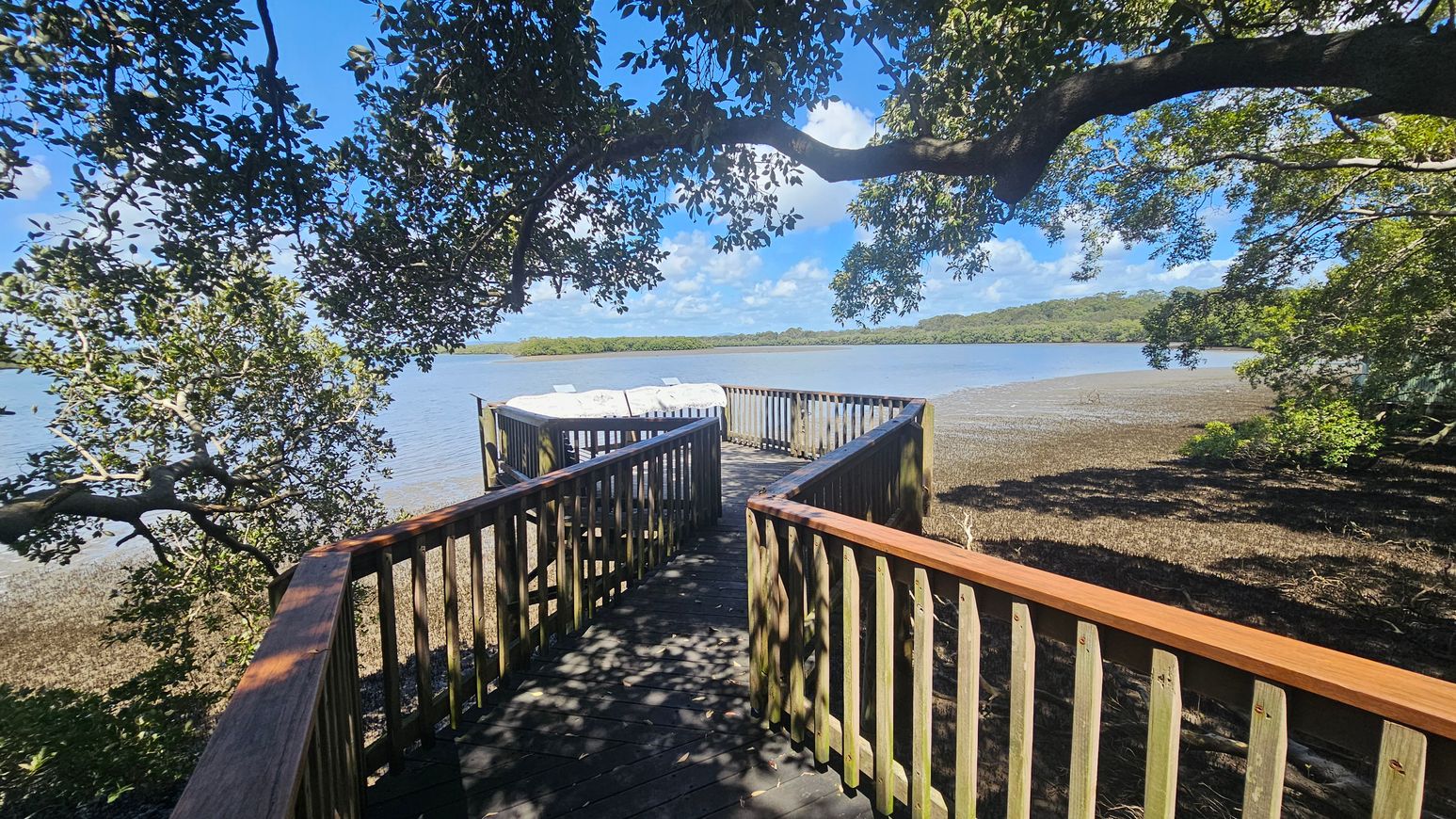
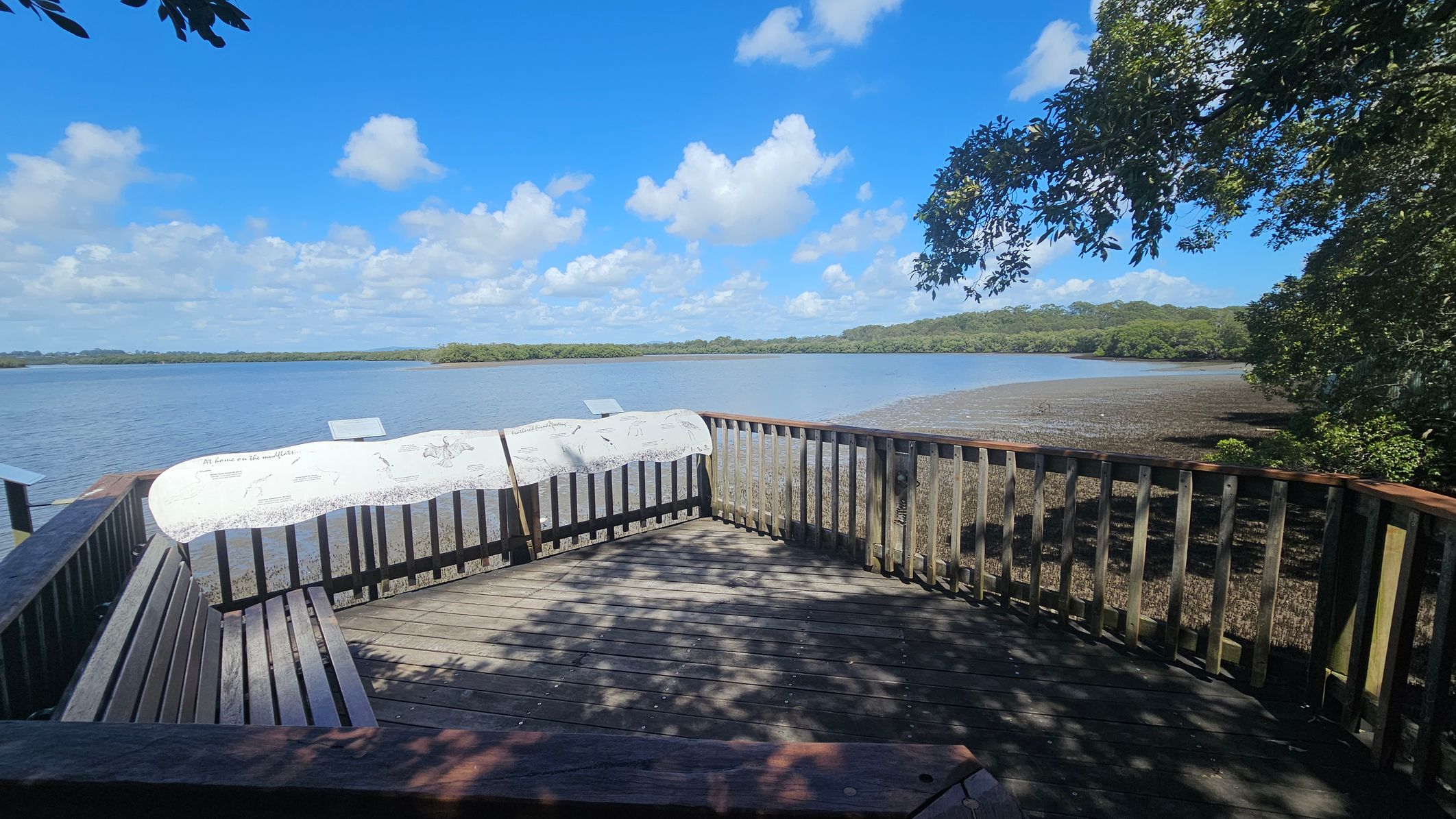
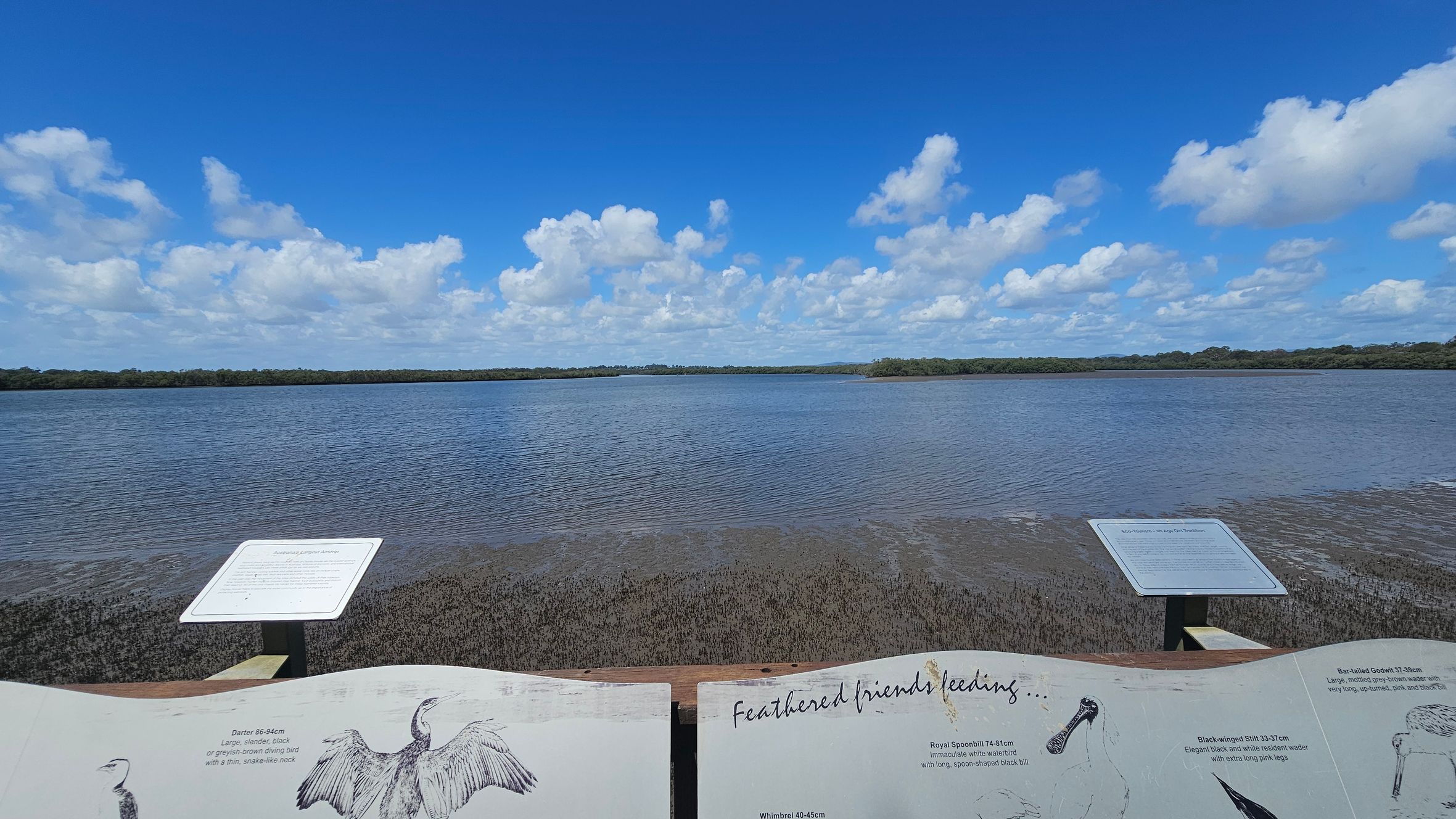
The open-air bird watching lookouts include the Fred Doley Amphitheatre and Kingfisher Lookout. These platforms are constructed with timber and are not enclosed. The ground surface is wooden decking, and there are railings for safety. Pathways leading to the platforms are step-free, allowing easy access. The area is surrounded by mangroves, providing natural shade.
Visitors can connect to surrounding areas via wooden walkways. This space is used for bird watching and observing the estuarine environment. Activity levels may increase during weekends or events. You may hear clicking and popping sounds from crabs as they push the water and air out of their burrows at low tide. Water laps through mangroves at high tide. An estuarine smell is noticeable.
Sounds
- Sounds from the mud as crabs move
- Water lapping
- Bird calls
- Wind in trees
- People talking
Smells
- Estuarine scent
- Mangrove aroma
- Faint fish aroma
- Fresh air
- Barbecue aromas (in distance)
Feel
- Wooden decking
- Natural shade
- Open air
- External weather conditions
- Excitement and anticipation
Sight
- Mangroves
- Water view
- Bird signs
- Wooden railings
- Informative signs
6. Bird Hide
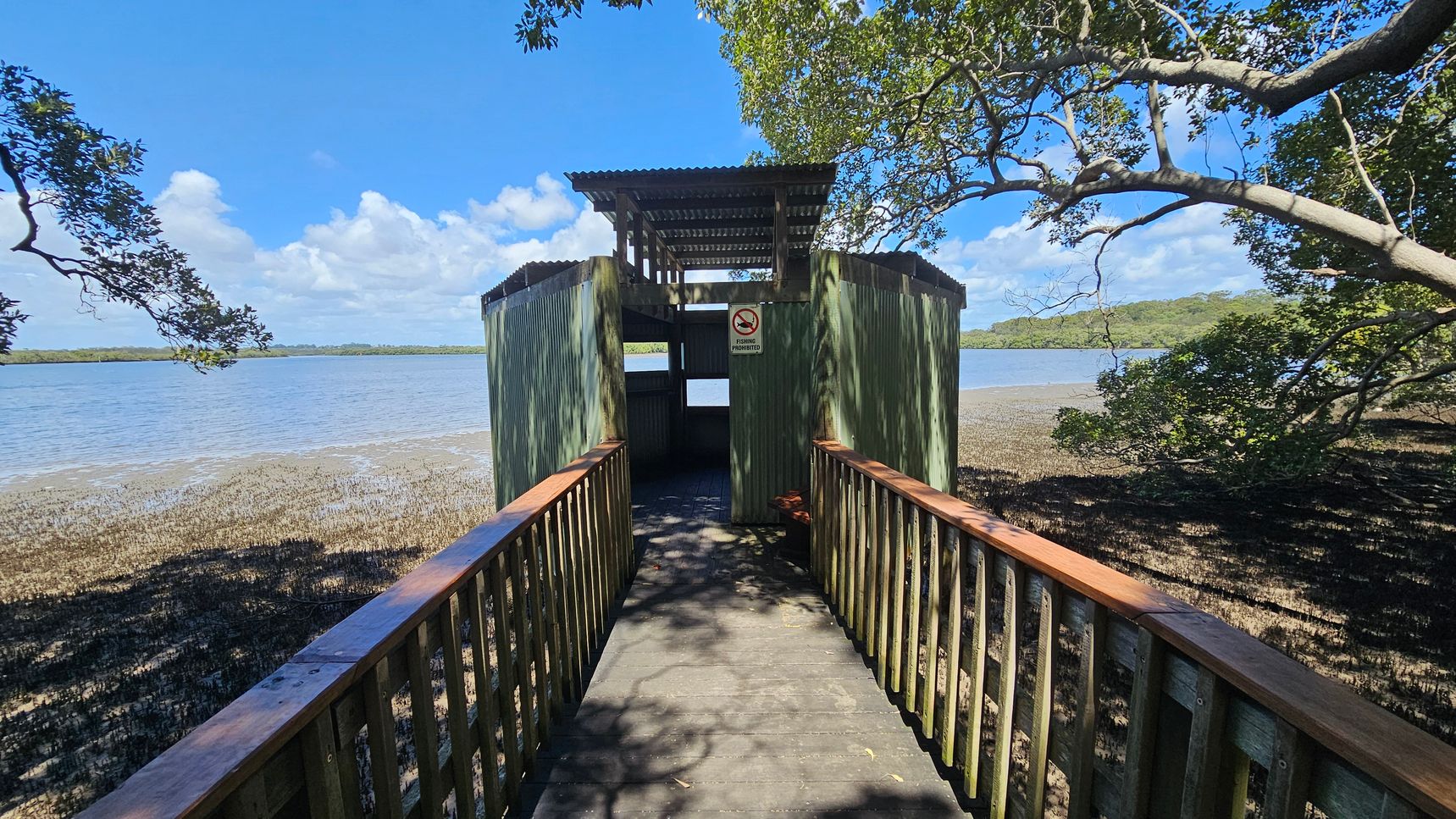
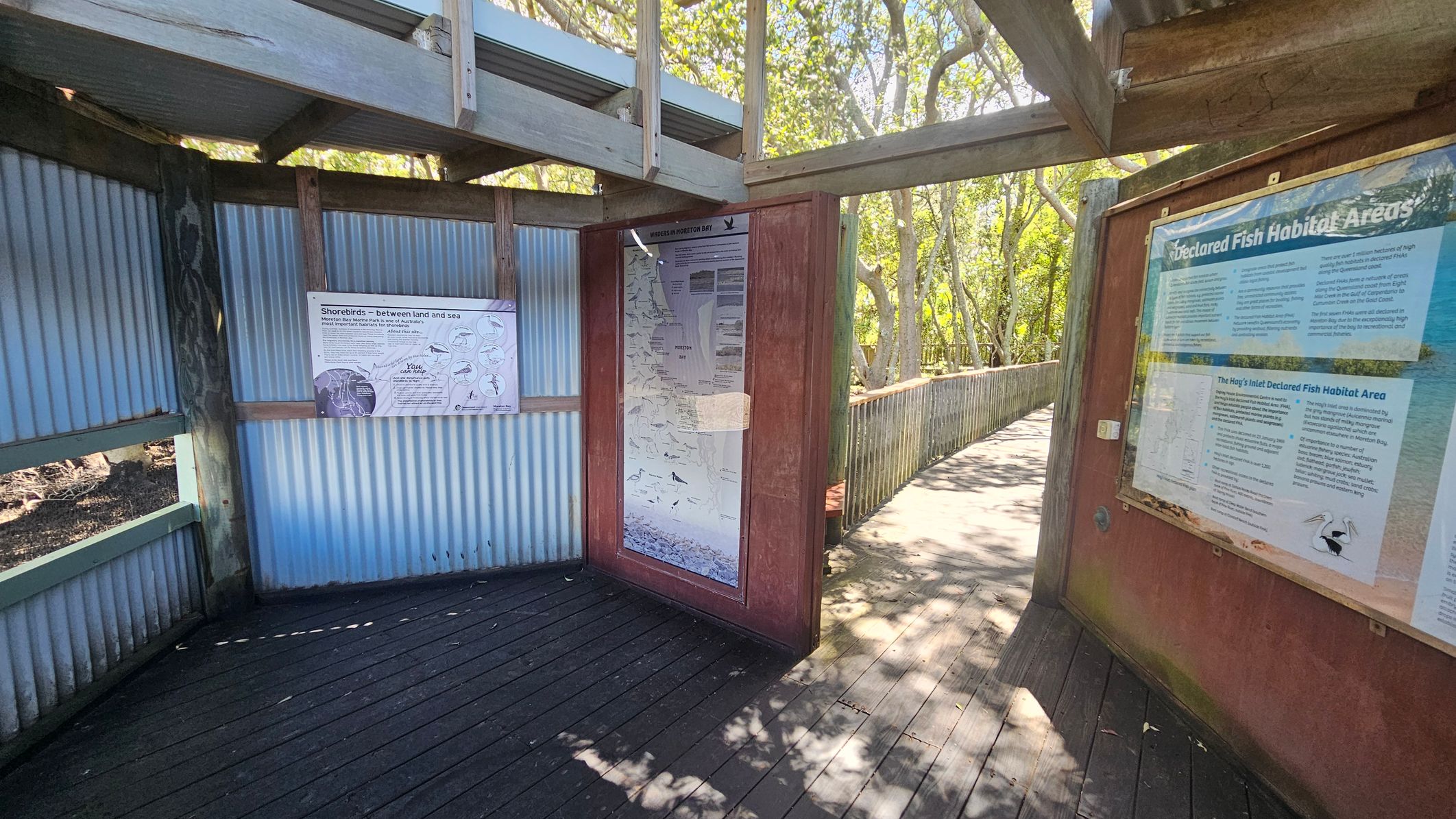
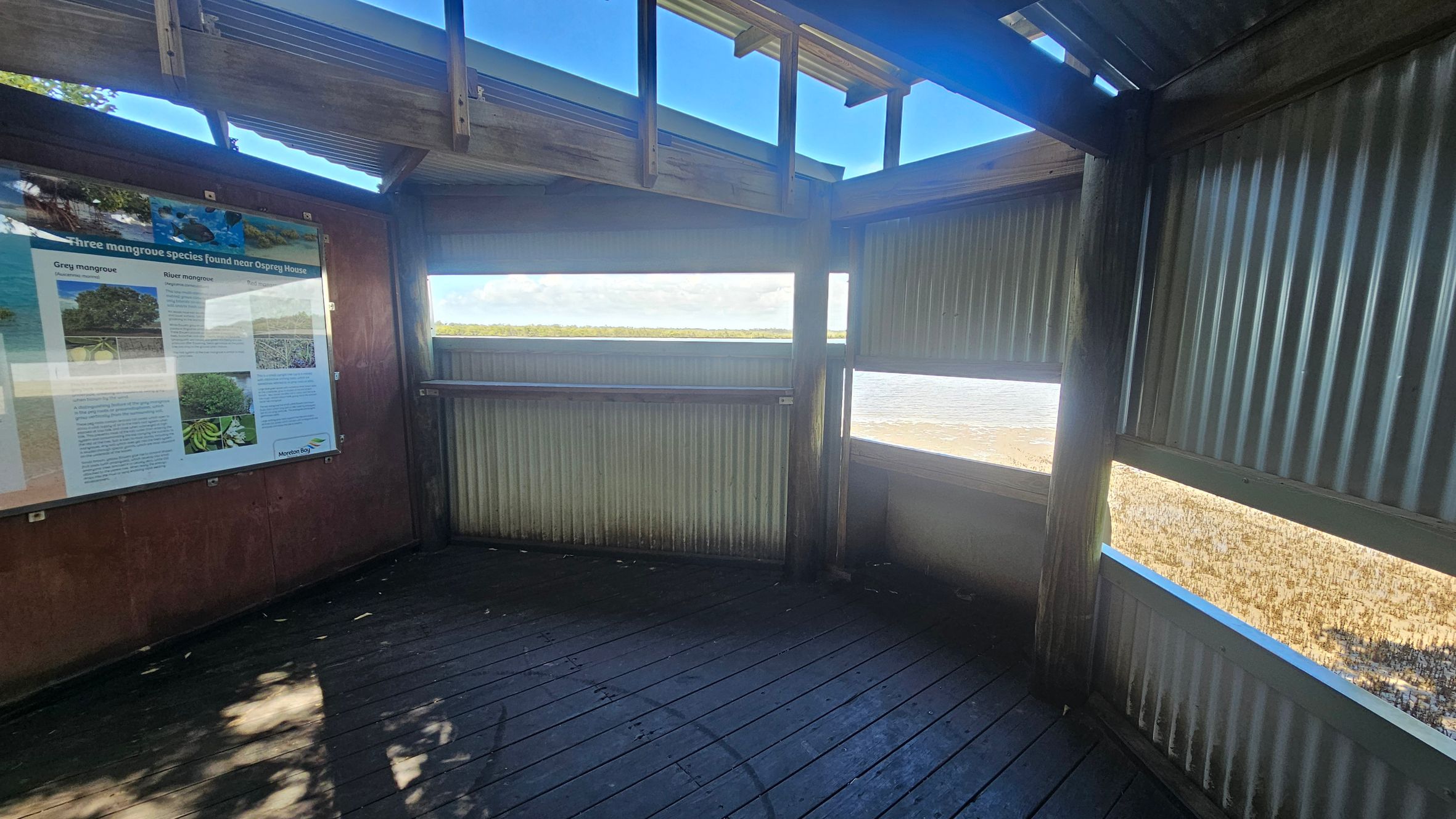
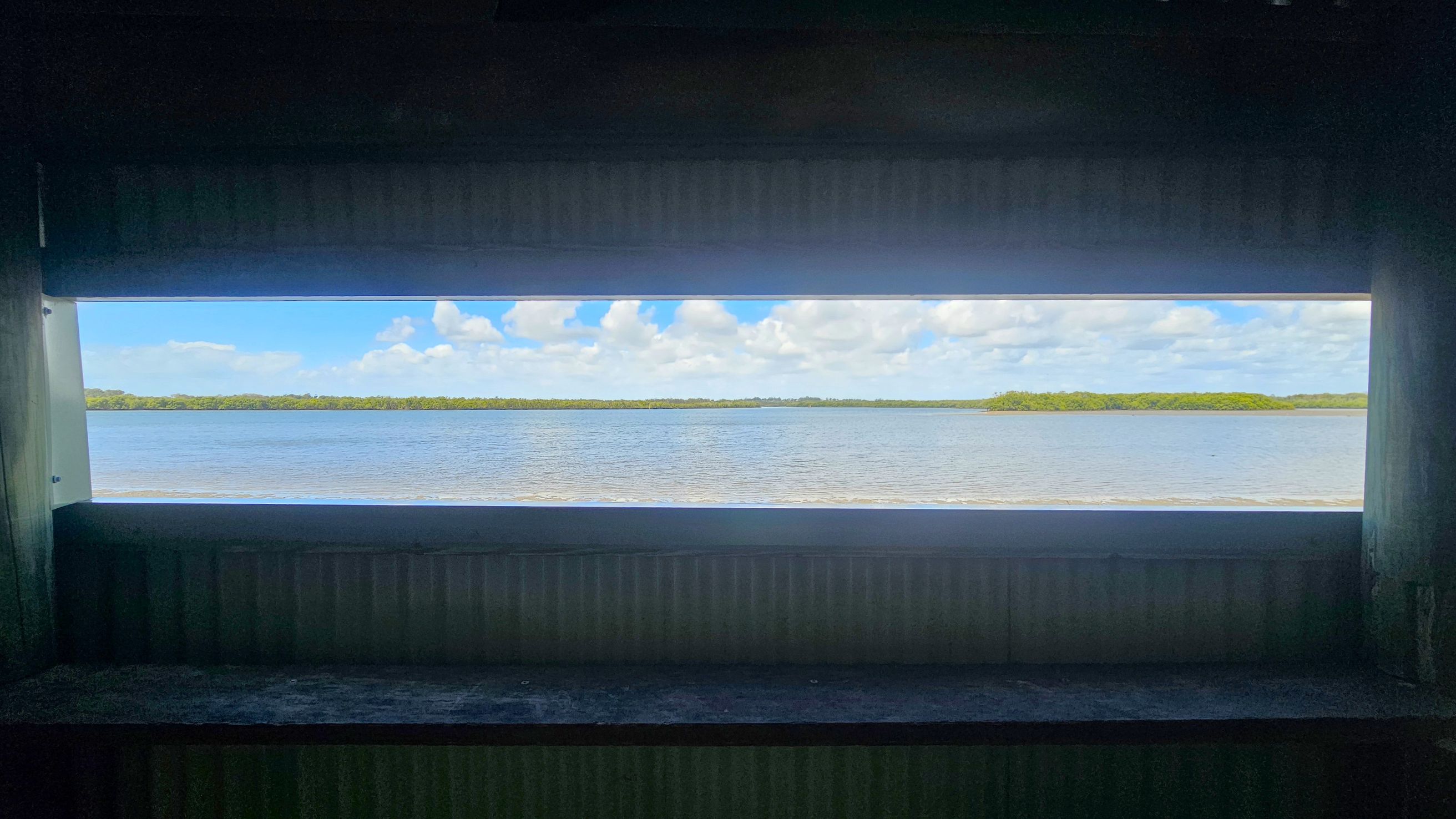
The Bird Hide is an enclosed structure resembling a corrugated tin shack. It features three viewing slits at different heights for adults, wheelchair users, and children. The platform is accessed via a wooden boardwalk with railings, surrounded by mangroves.
The ground surface is wooden, and the area is shaded by trees. Information panels are present inside the hide. This space is used for bird watching and observing the estuarine environment. Activity levels may vary with tides. You may hear clicking and popping sounds from crabs as they push the water and air out of their burrows at low tide. Water laps through mangroves at high tide. An estuarine smell is noticeable.
Sounds
- Sounds from the mud as crabs move
- Water lapping
- Bird calls
- Wind rustling
- Footsteps on wood
Smells
- Estuarine
- Faint fish aroma
- Mud
- Mangroves
- Fresh air
Feel
- Enclosed
- Secluded
- Excitement and anticipation
- Breezy
- Wooden underfoot
Sight
- Viewing slits
- Mangroves
- Water view
- Information panels
- Corrugated walls

Thank You
For all suggestions to improve our Visual Stories contact info@cerge.app and join the Facebook community to get involved /cergecommunity.