Bunbury Wildlife Park Visual Story

1. Bird Aviaries
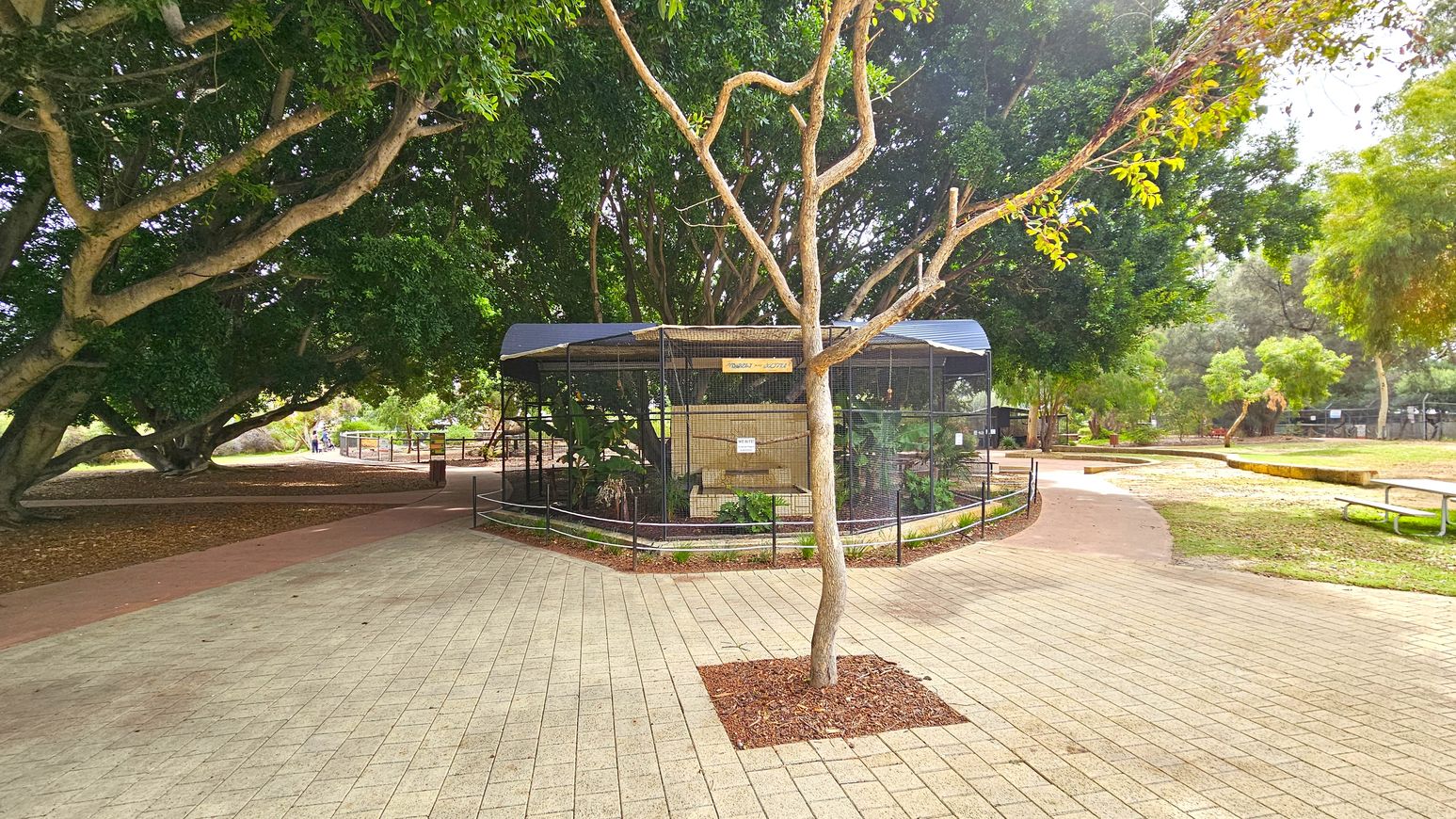
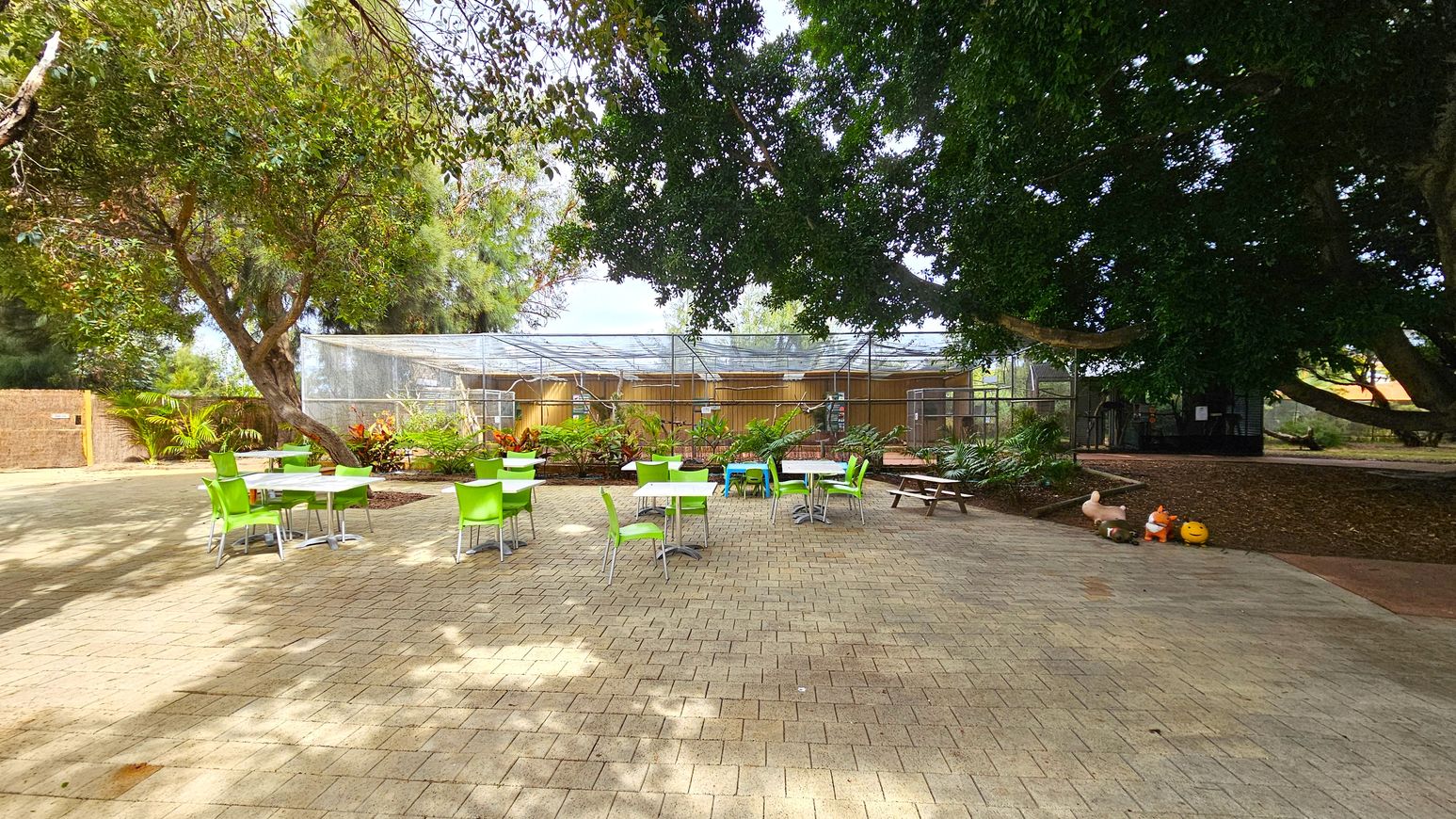
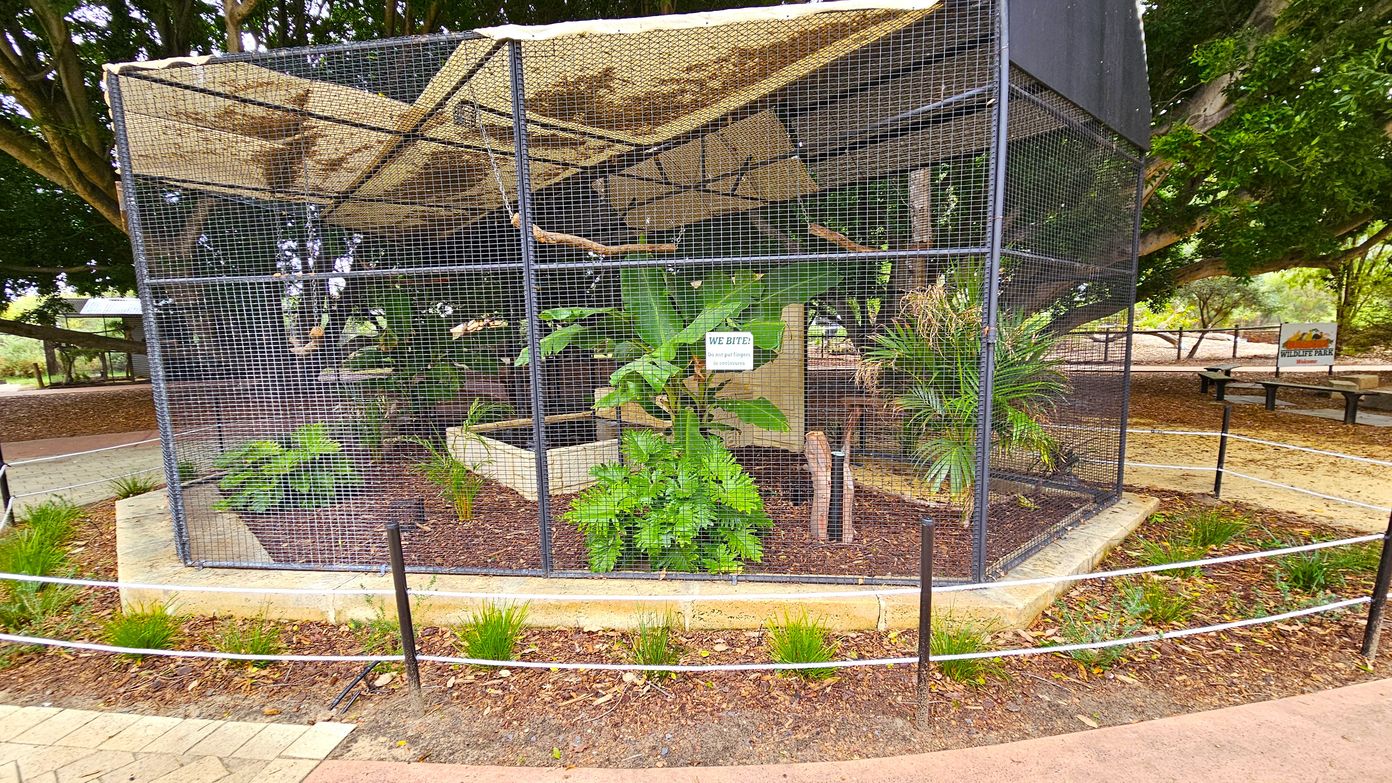
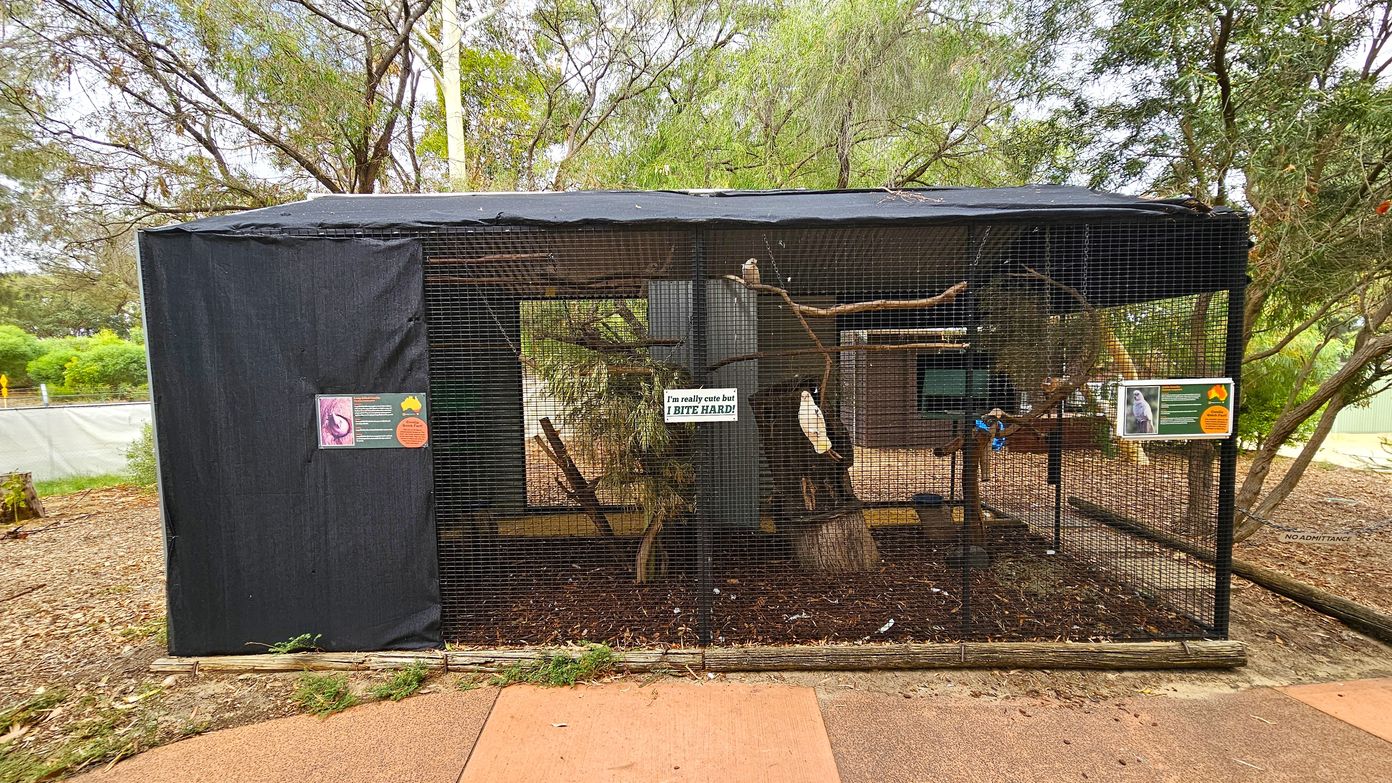
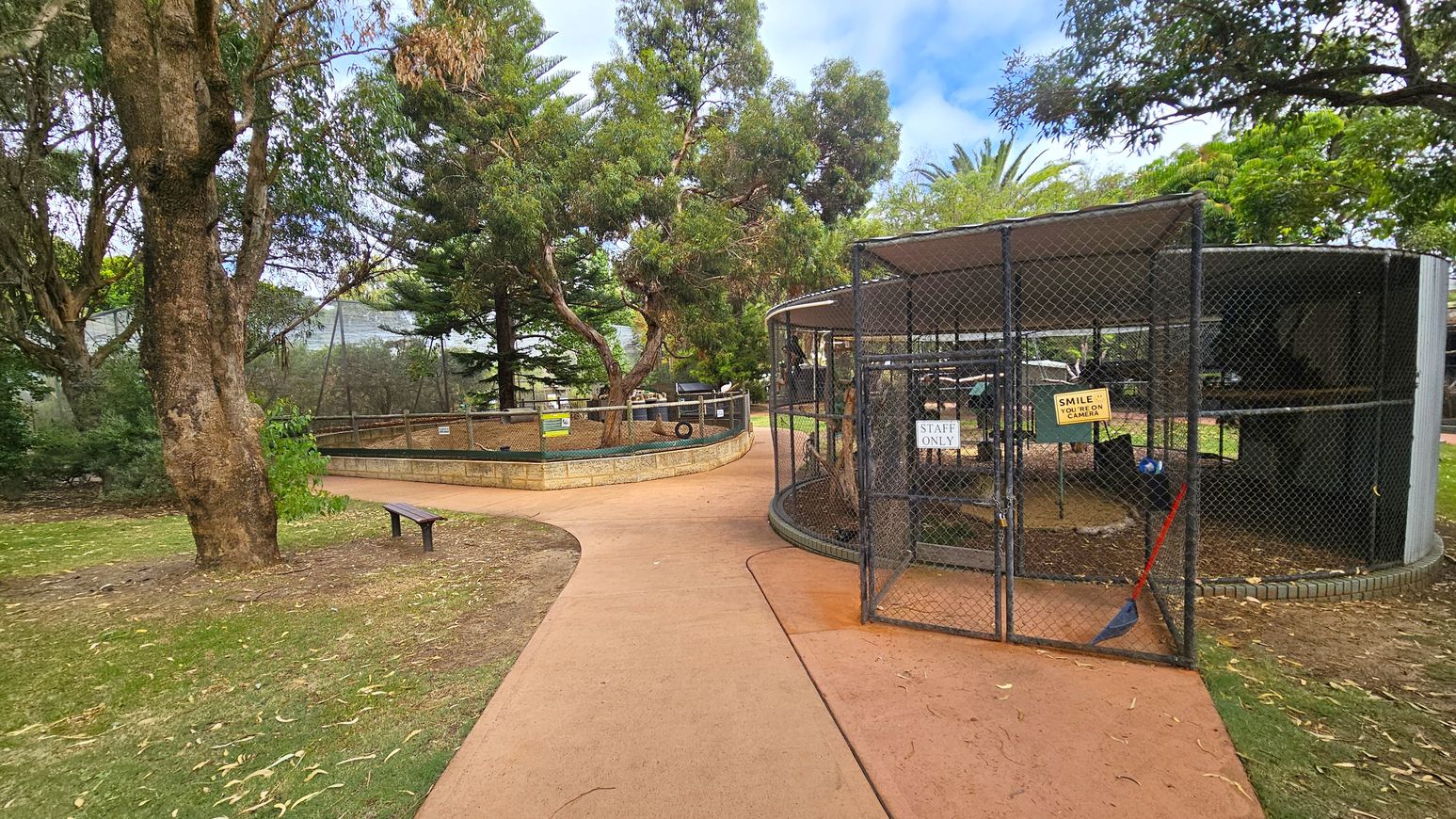
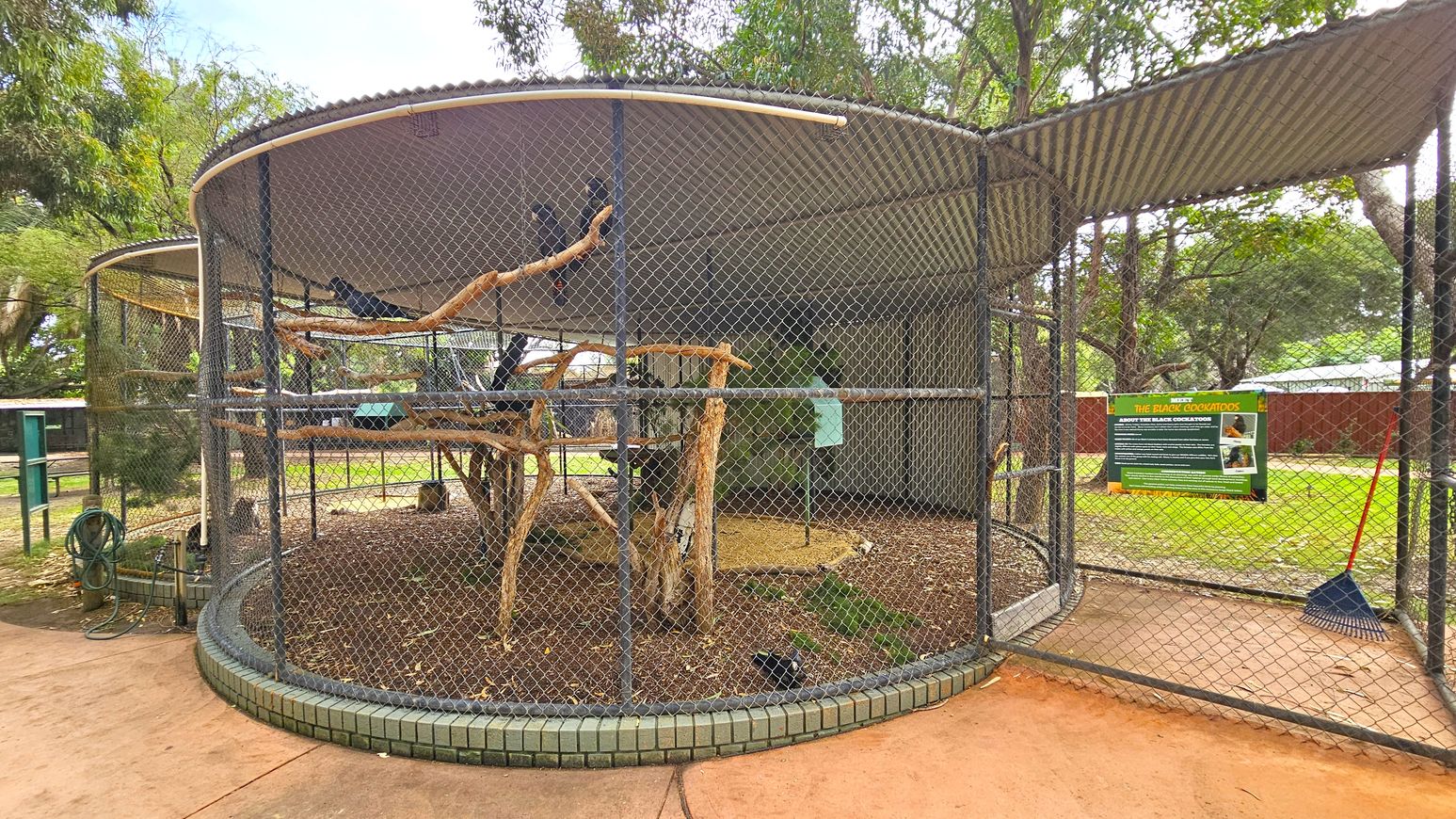
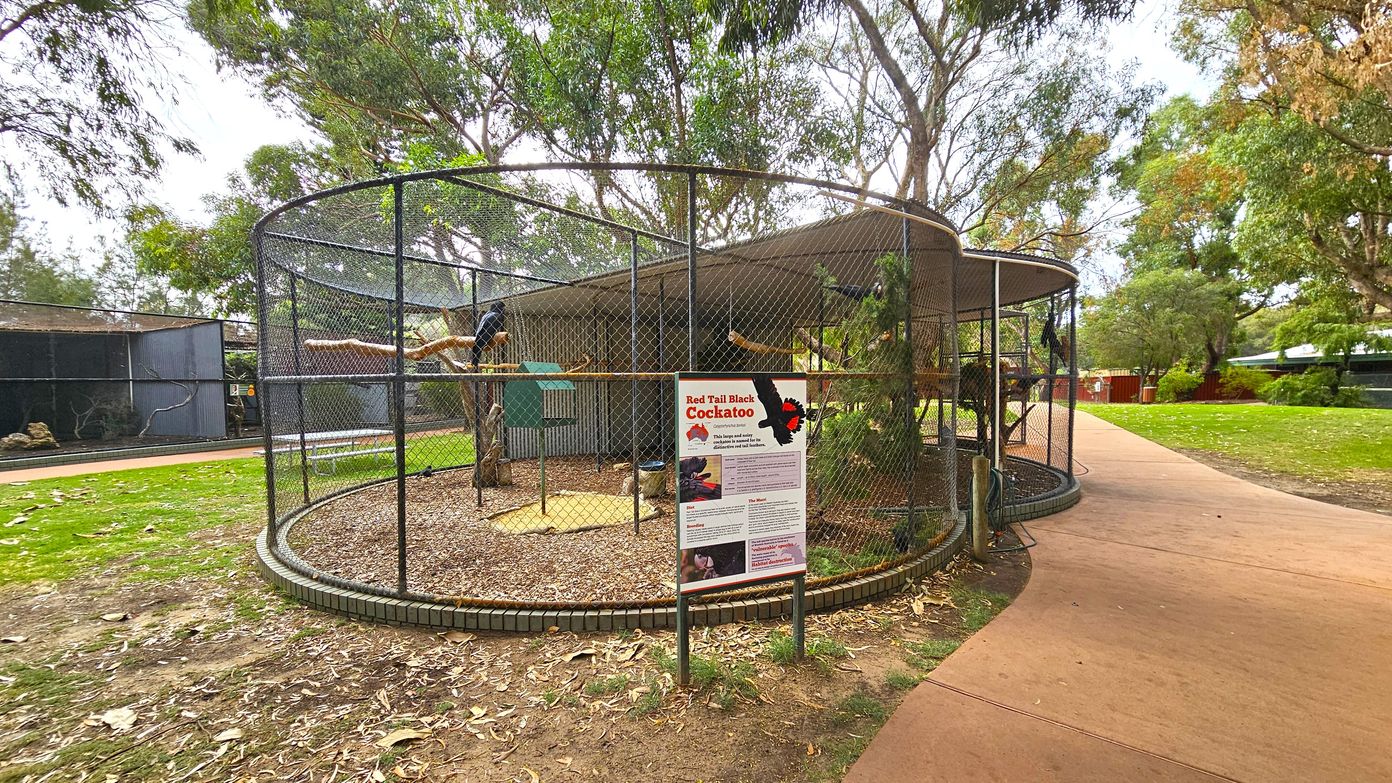
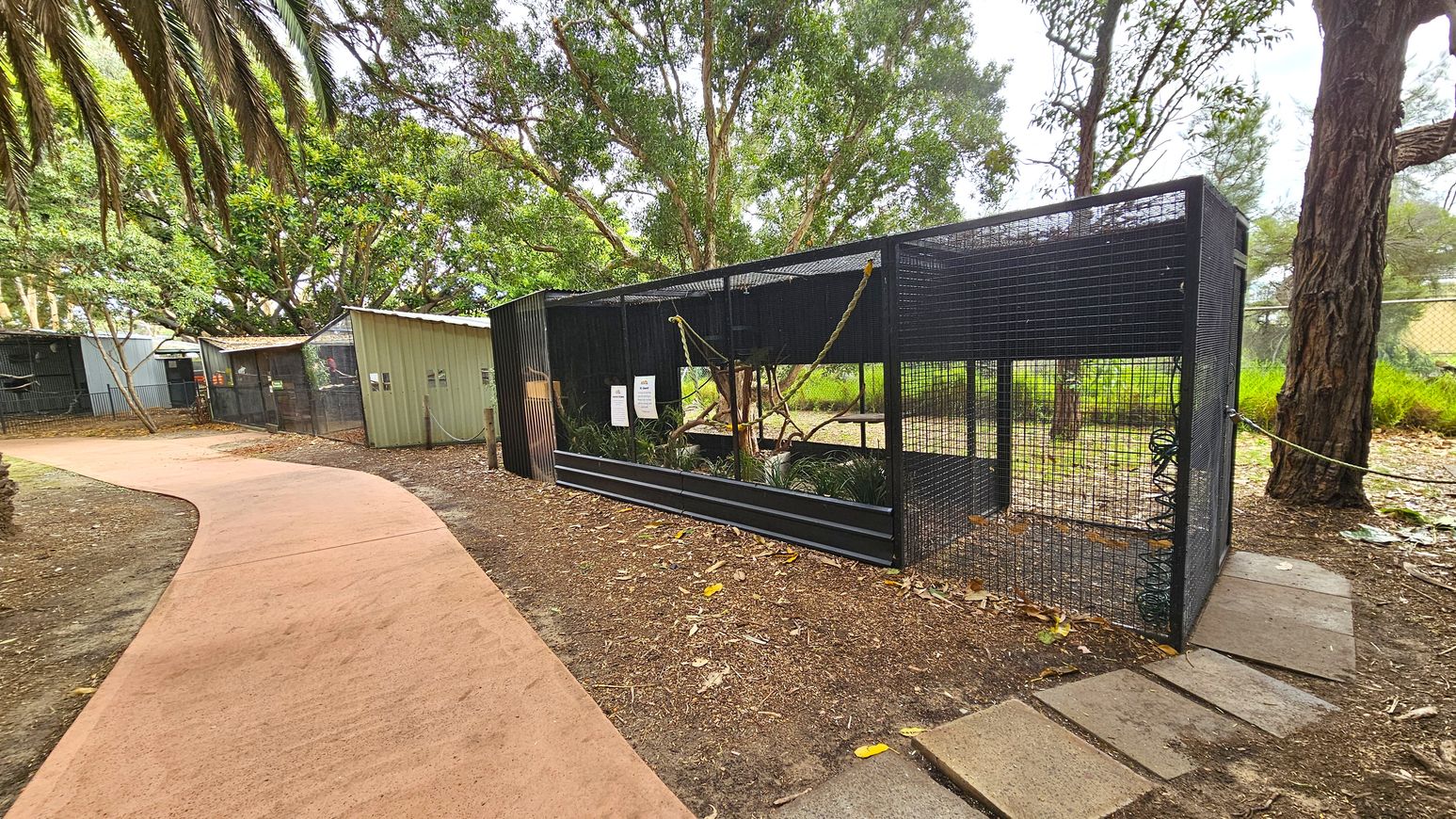
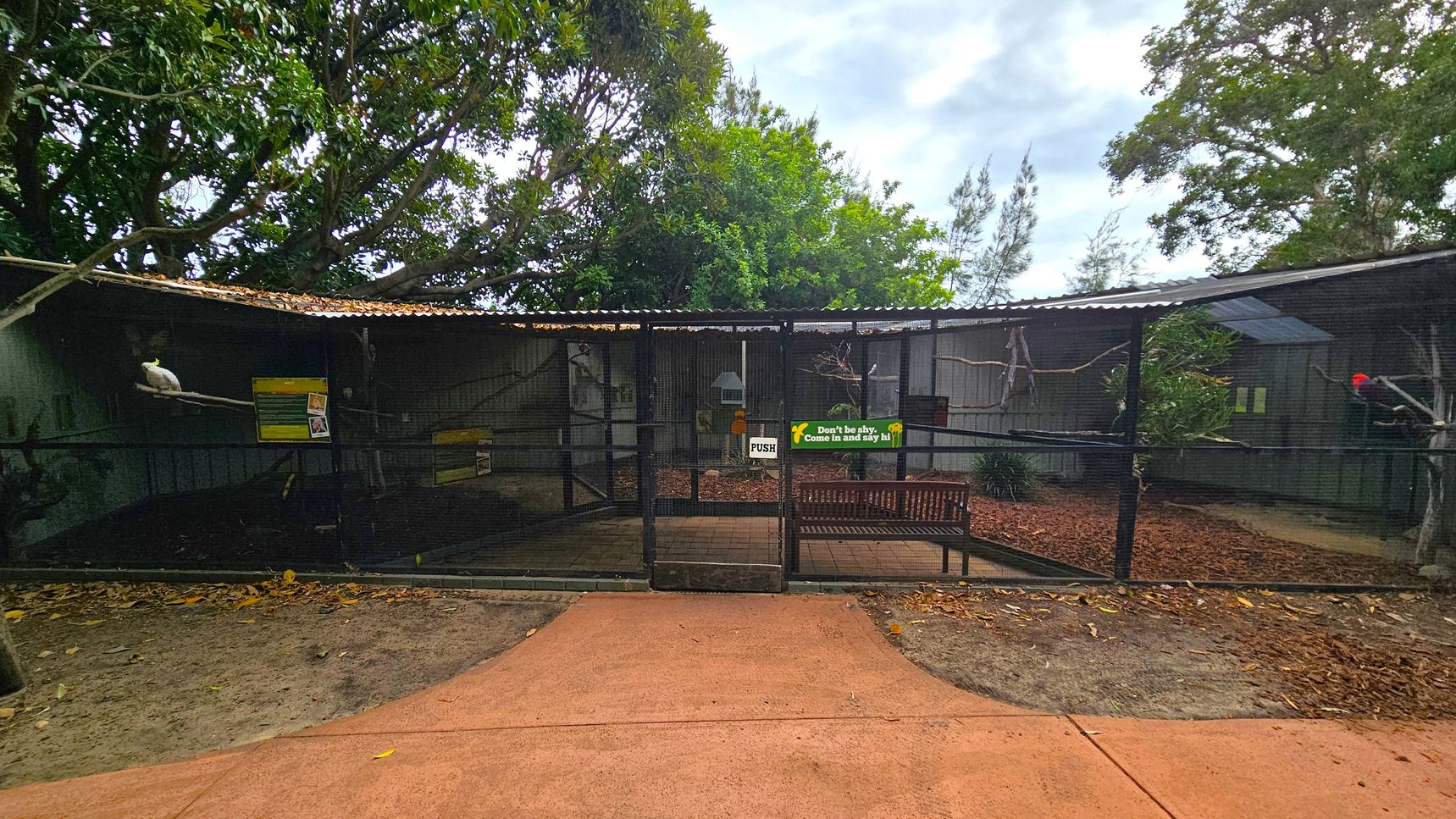
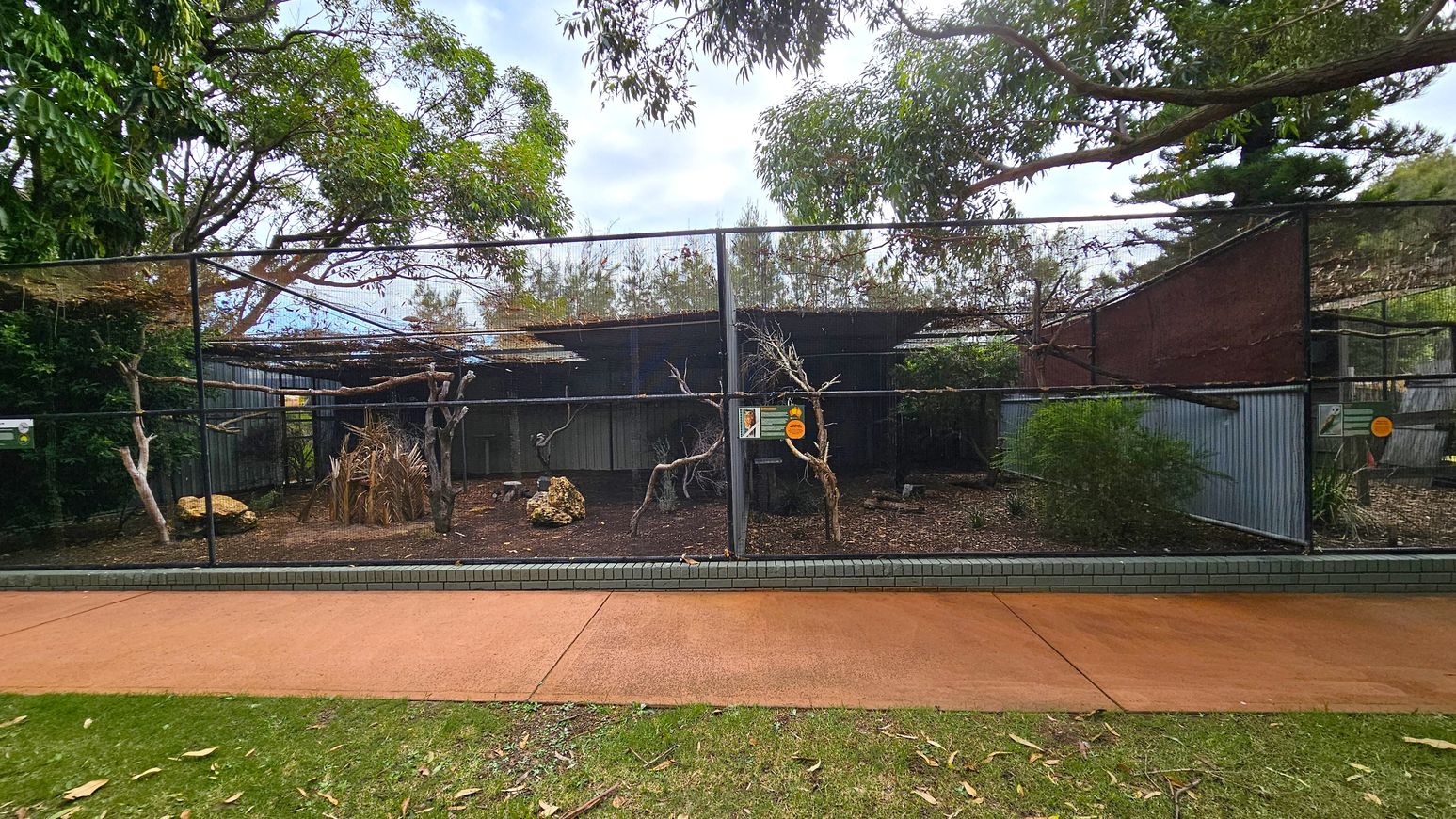
This area features multiple aviaries constructed with metal mesh and steel frames, each covered with a roof to contain birds. The aviaries have concrete or brick bases and are surrounded by step-free pathways made of concrete and brick pavers, supporting easy movement. Shade is provided by large trees overhead, and barriers with metal railings and ropes separate visitors from the enclosures. Seating areas with tables and chairs are located near some aviaries, and signage is in place to advise visitors about bird bites.
The space is used for viewing parrots, cockatoos, and other colourful birds, with some aviaries allowing visitors to walk through where birds may fly freely and occasionally land on hands or shoulders. Birds may climb the mesh using their beaks and claws, and sounds include bird calls, squawks, and occasional mimicry such as “hello,” along with the sound of wings flapping. Activity levels may increase during peak times. The environment includes natural smells of plants and earth, with occasional bird-related odours, and visitors may feel paved surfaces underfoot and a light breeze through the trees.


Sounds
- Birds squawking loudly
- Cockatoos saying hello
- Wings flapping quickly
- Leaves rustling in wind
- People laughing and talking


Smells
- Earthy soil scent
- Fresh air
- Mild bird-related odours
- Bird feed
- Wood mulch


Feel
- Birds landing on hand or body
- Close proximity to birds and others
- Enclosed feeling - in aviaries
- Smooth paved surfaces
- Fun and excitement


Sight
- Metal mesh aviaries
- Colourful parrots and cockatoos
- Warning and informational signs
- Large trees providing shade
- People looking at and holding birds
2. Animal Enclosures
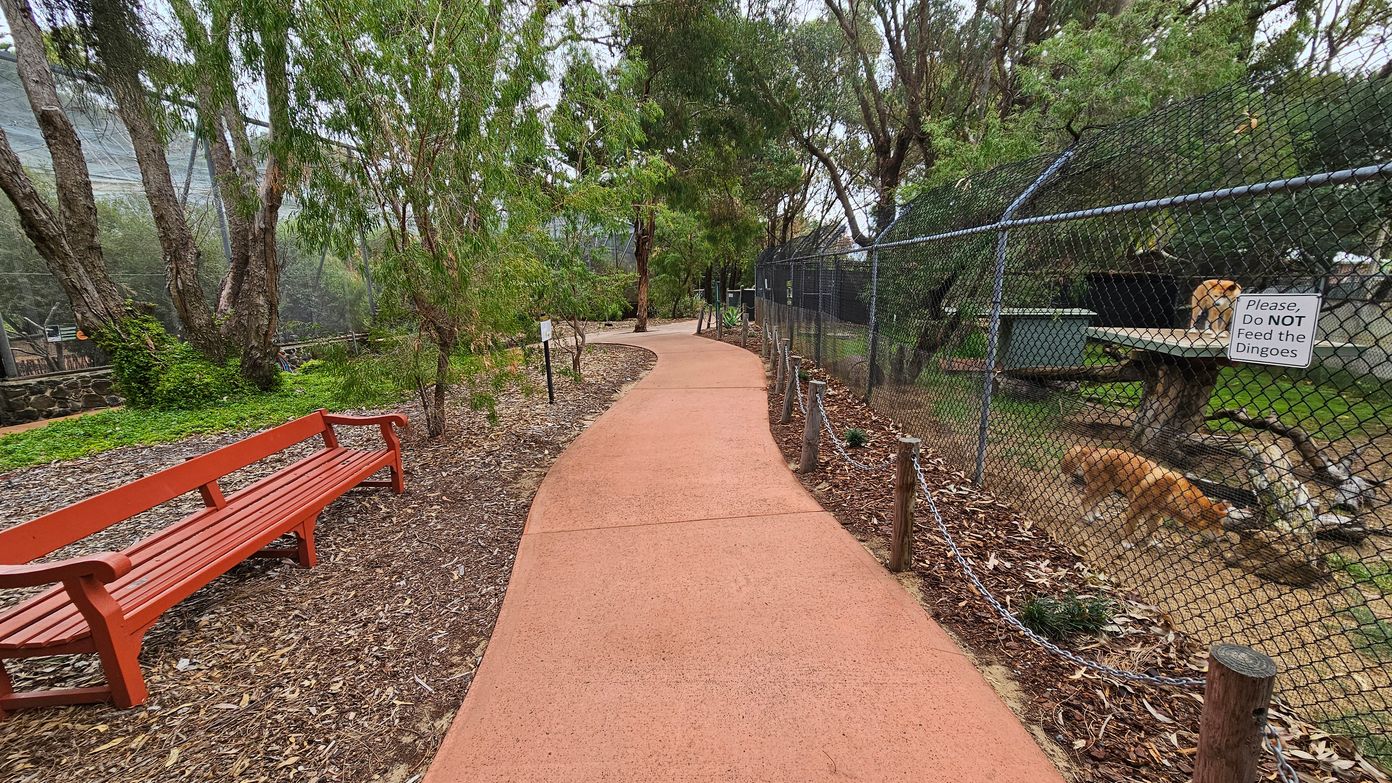
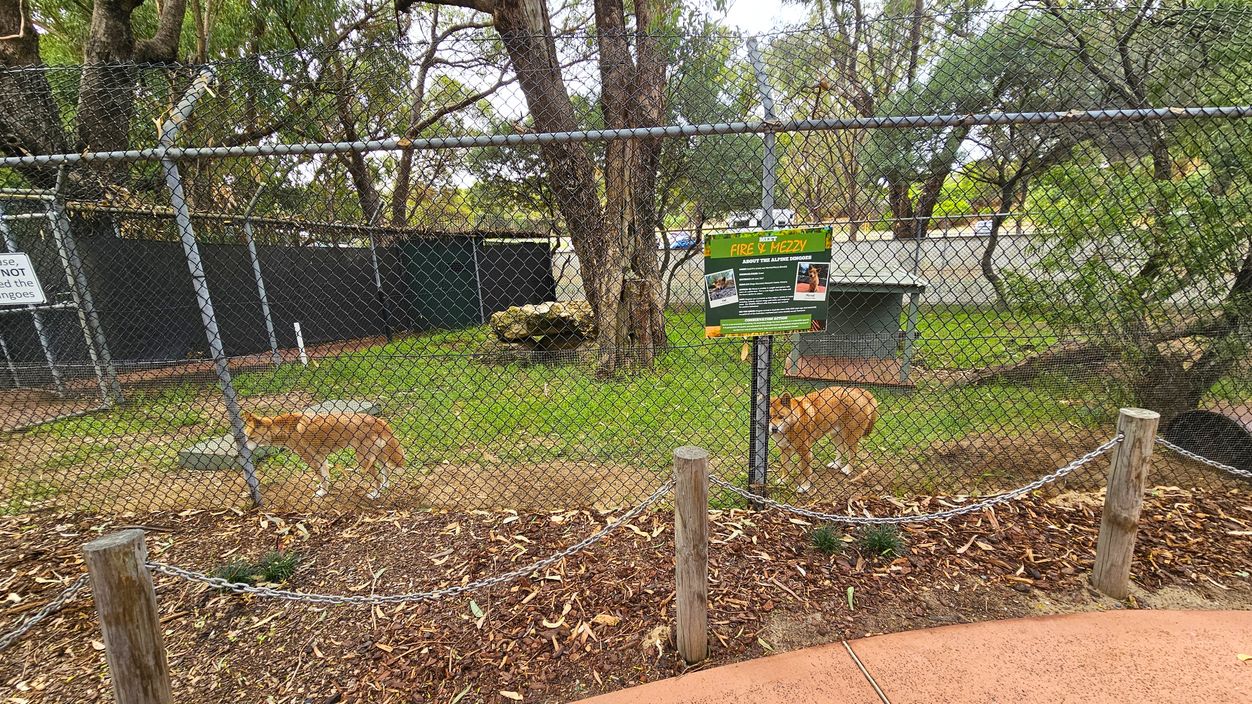
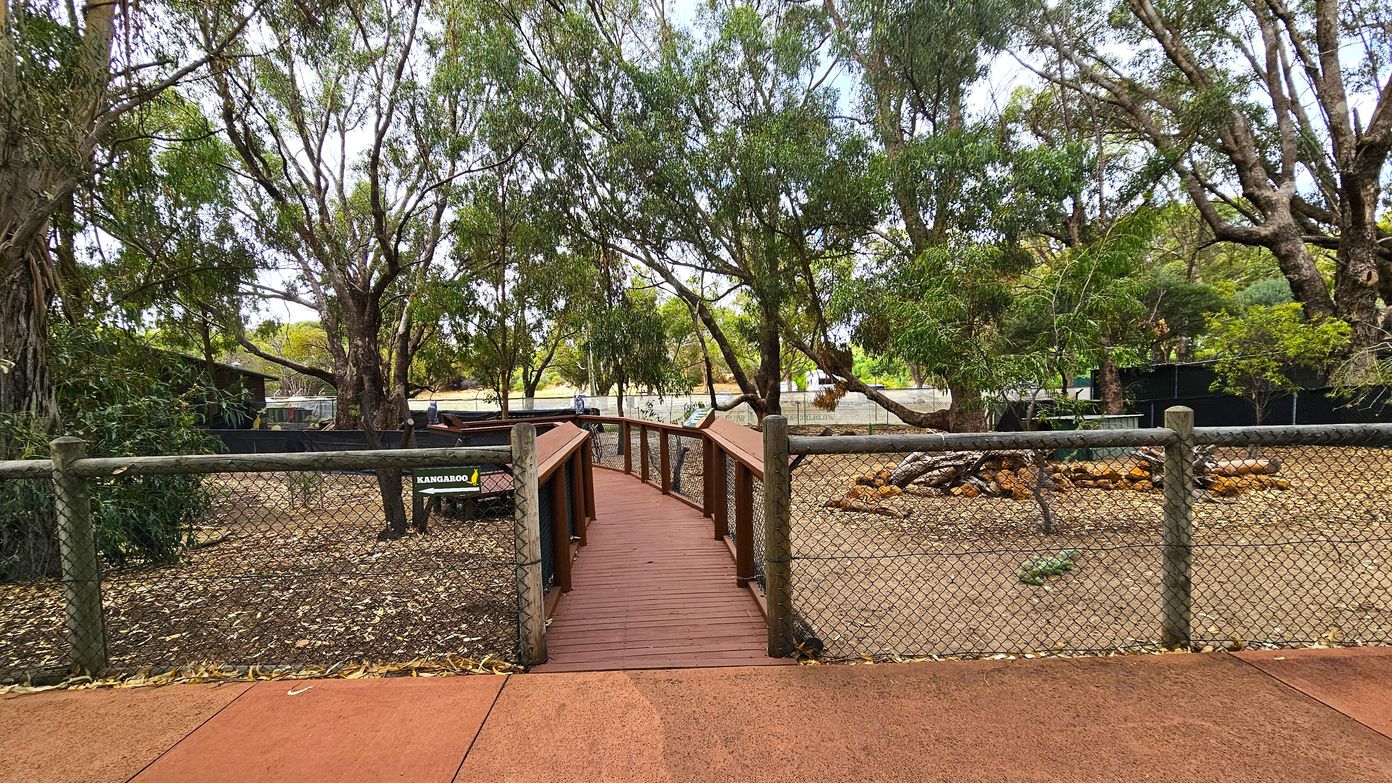
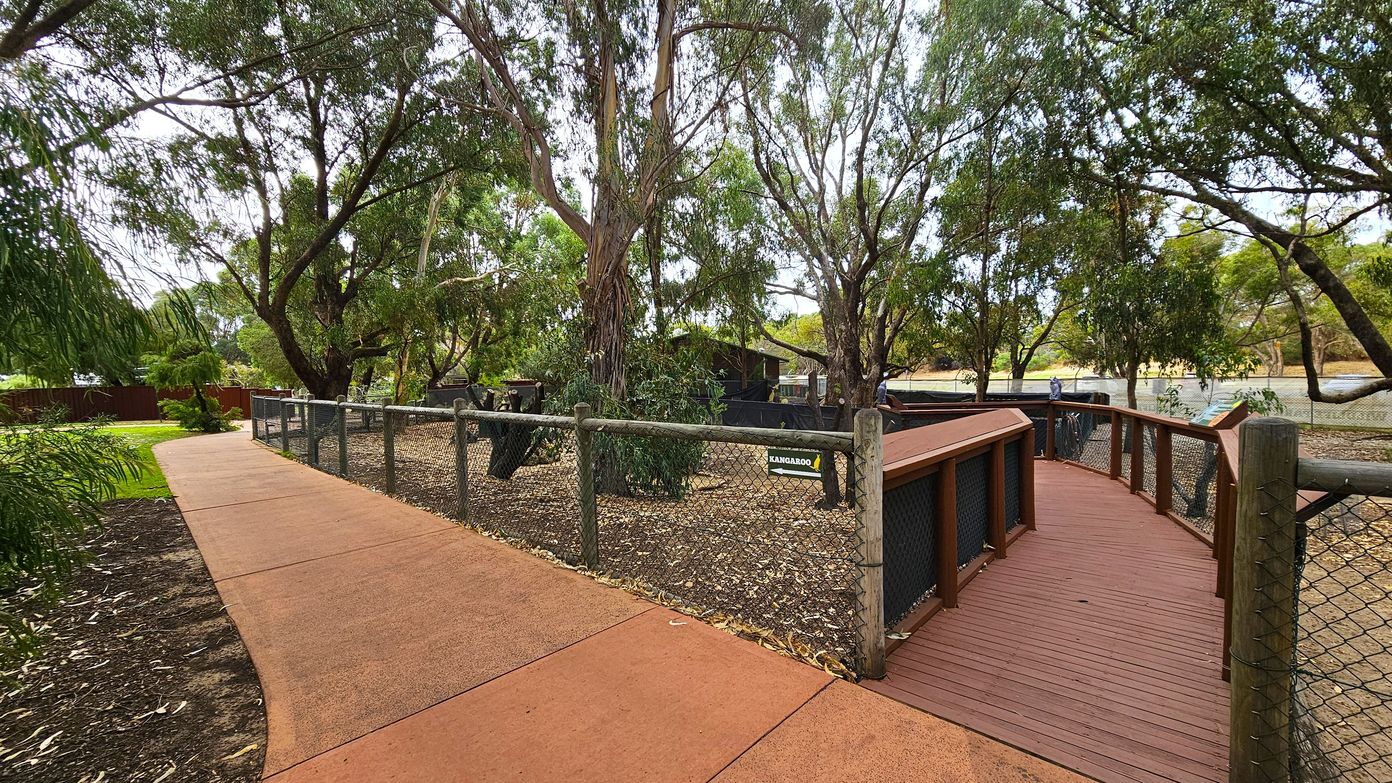
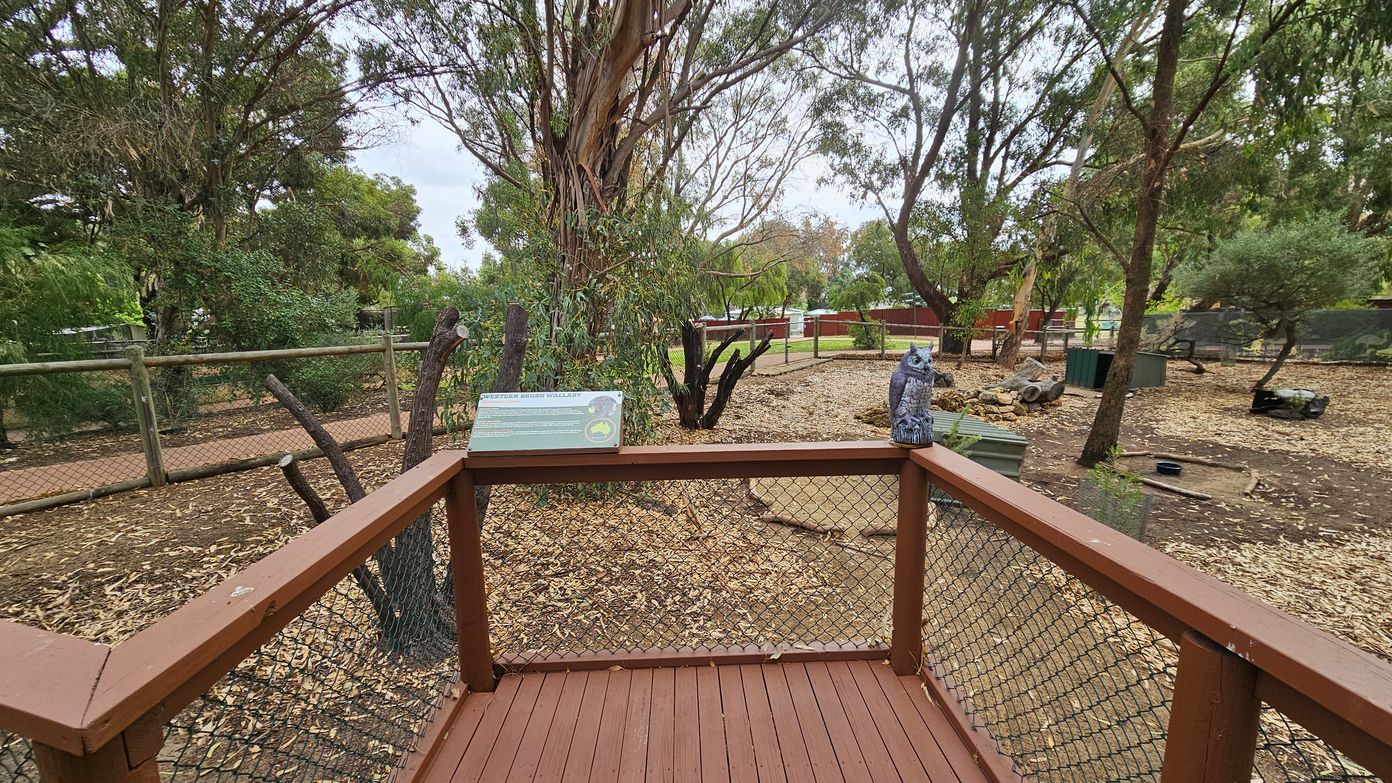
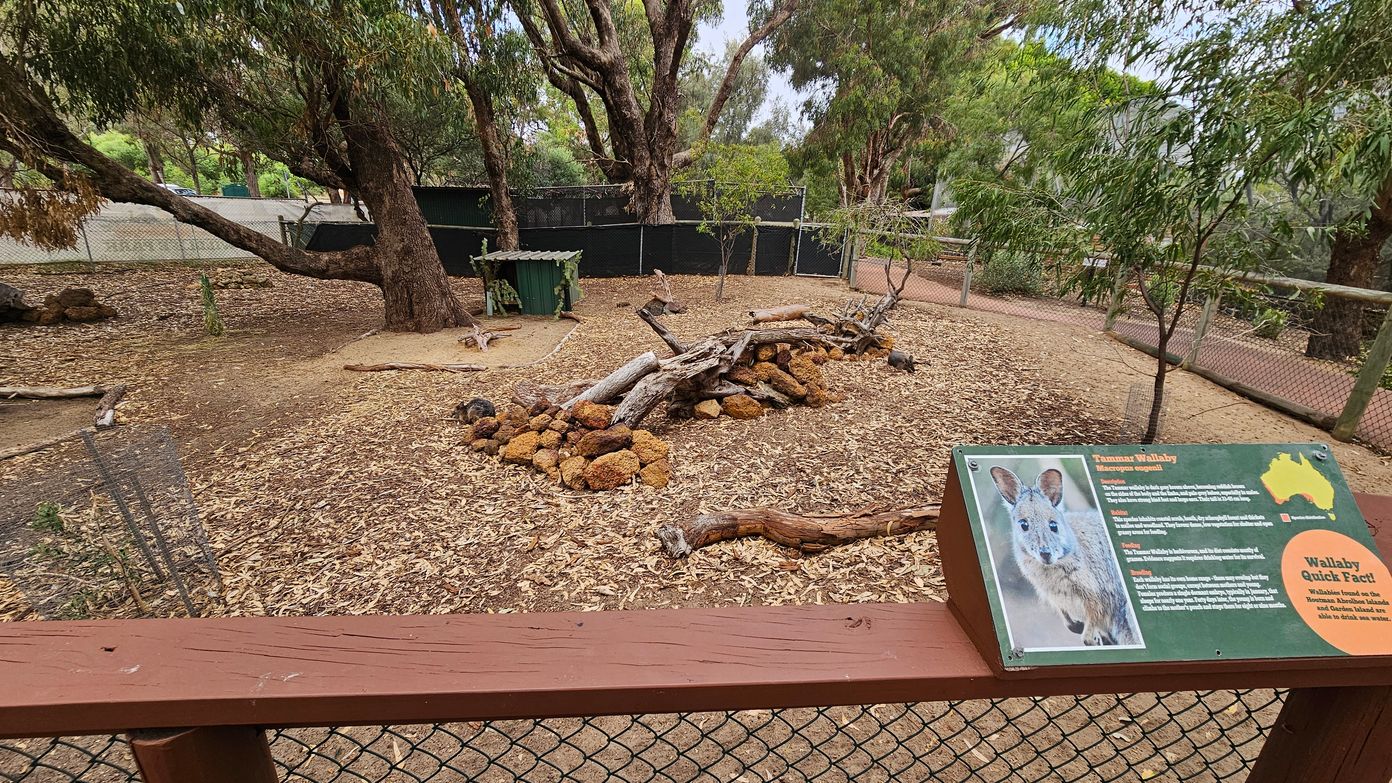
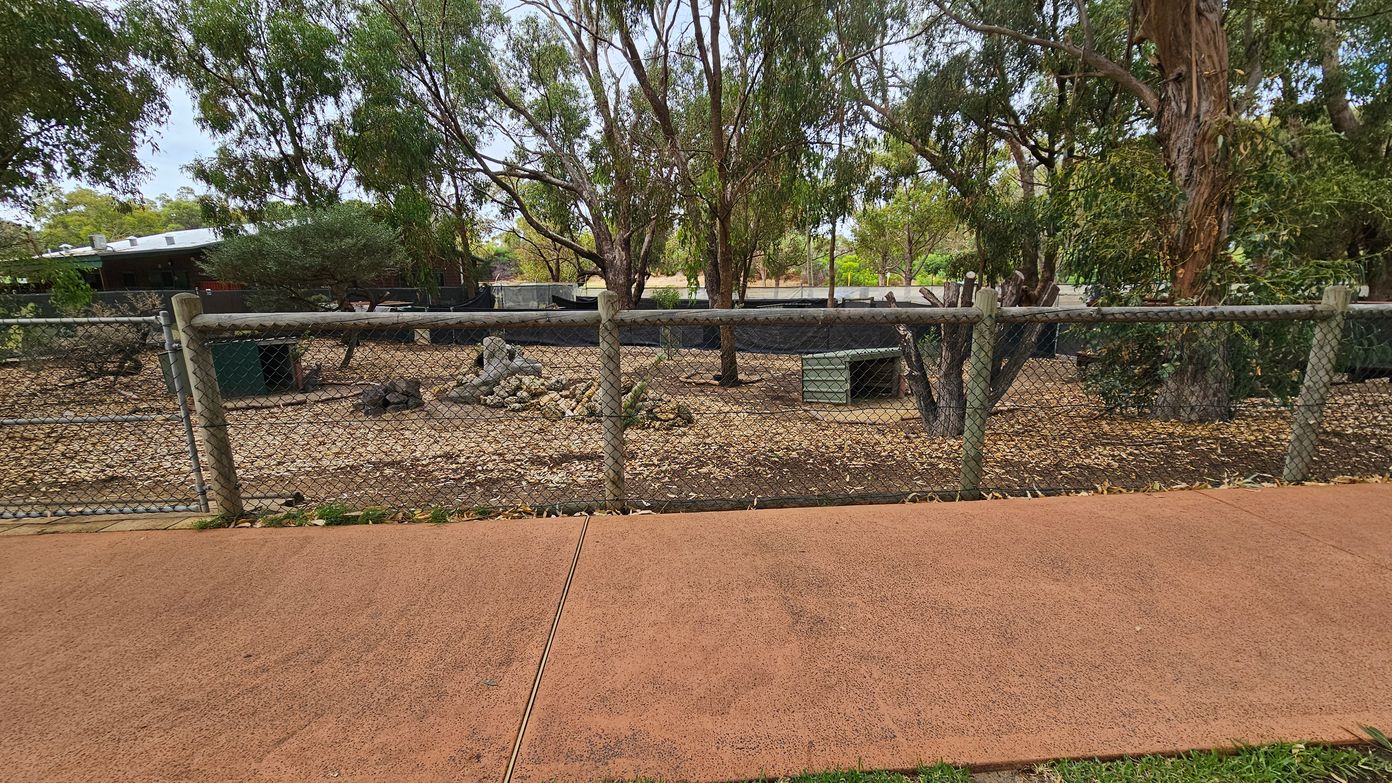
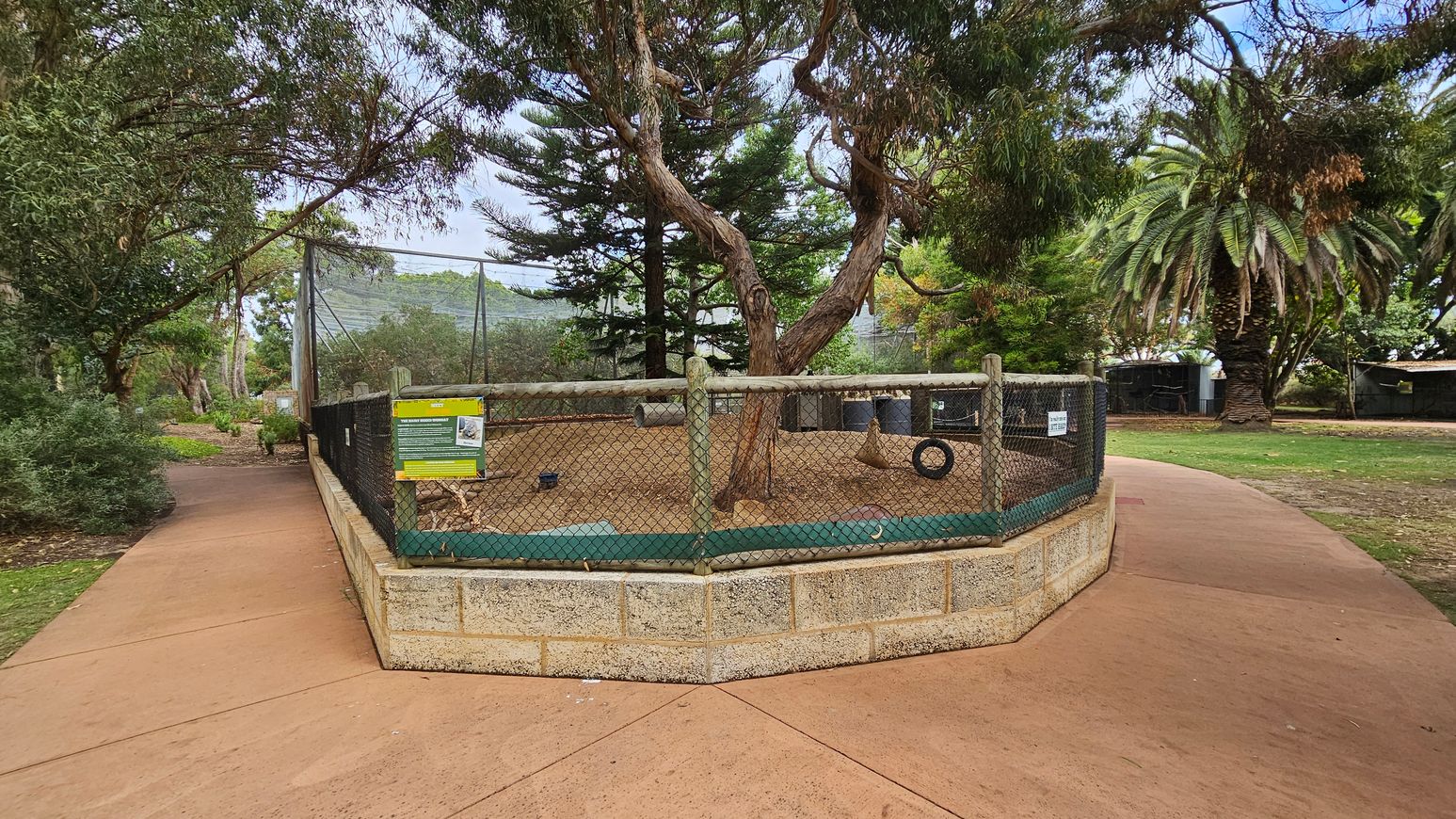
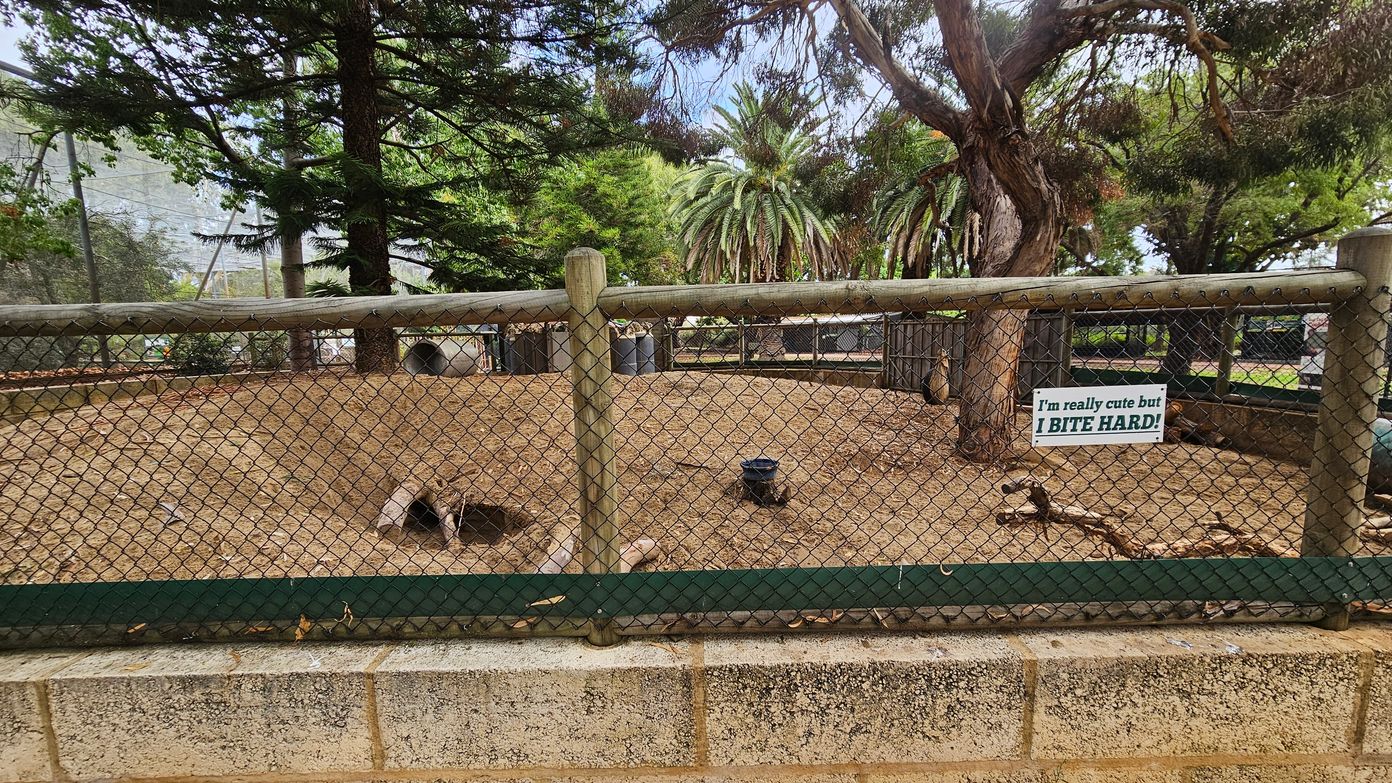
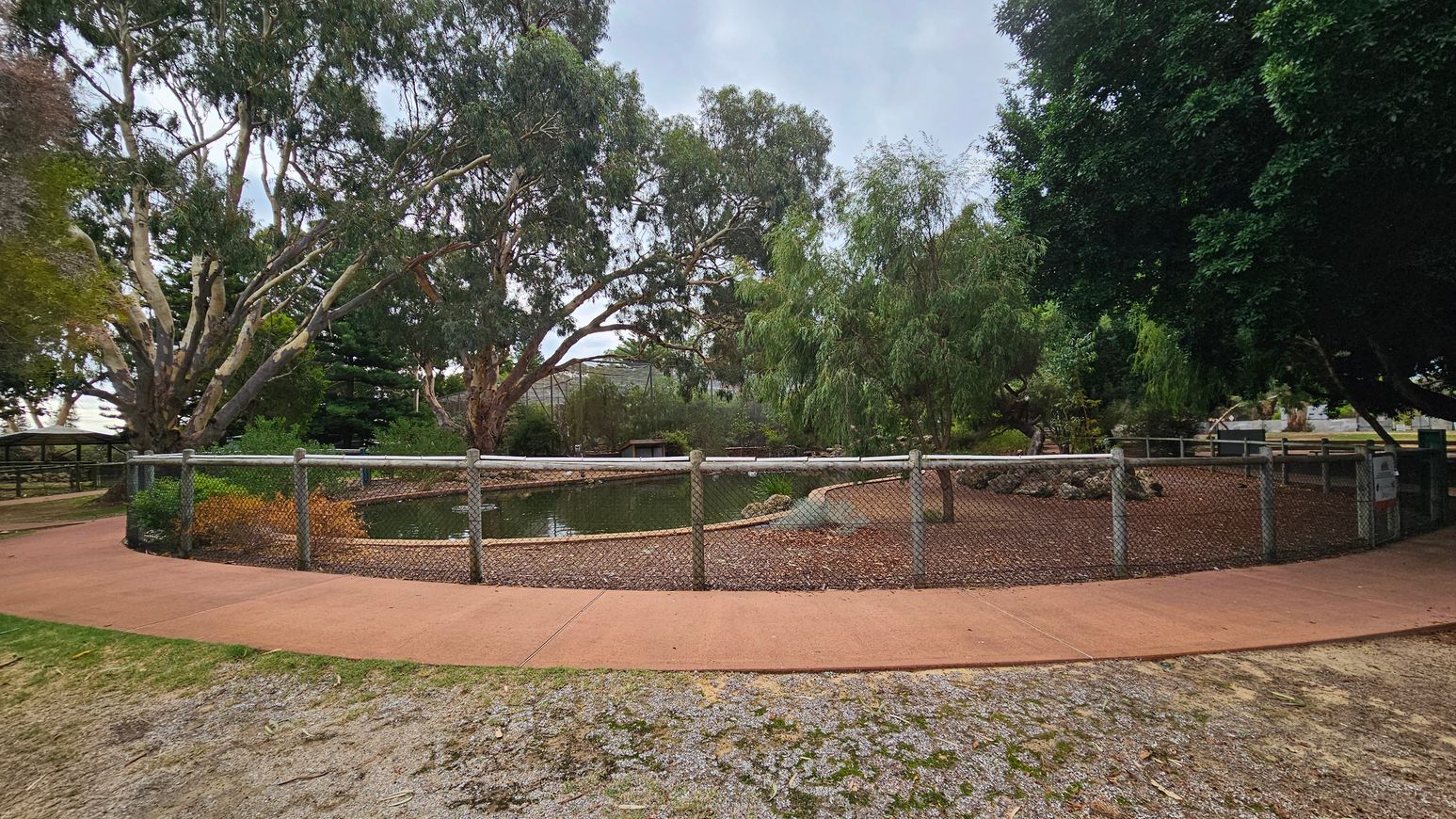
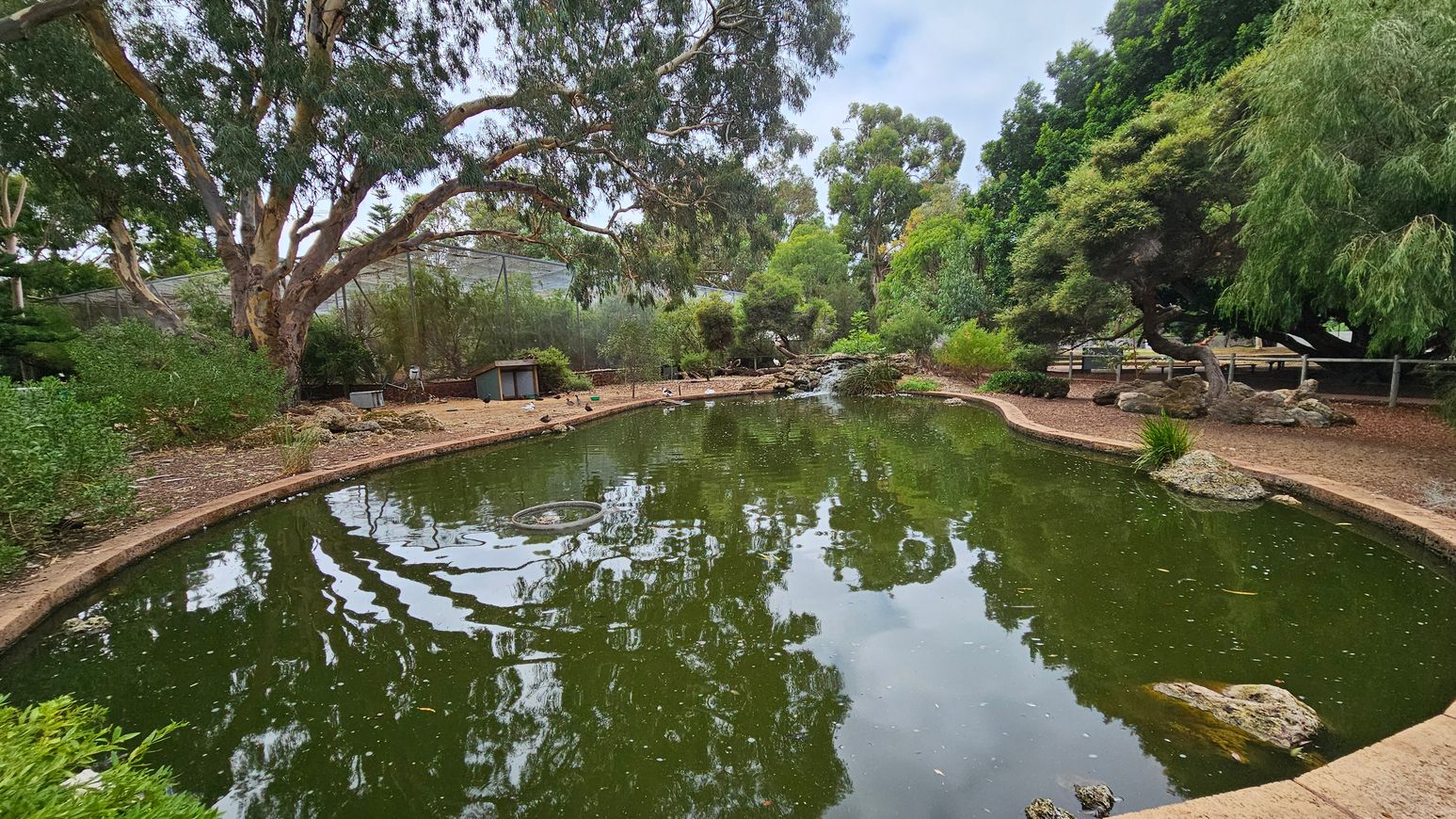
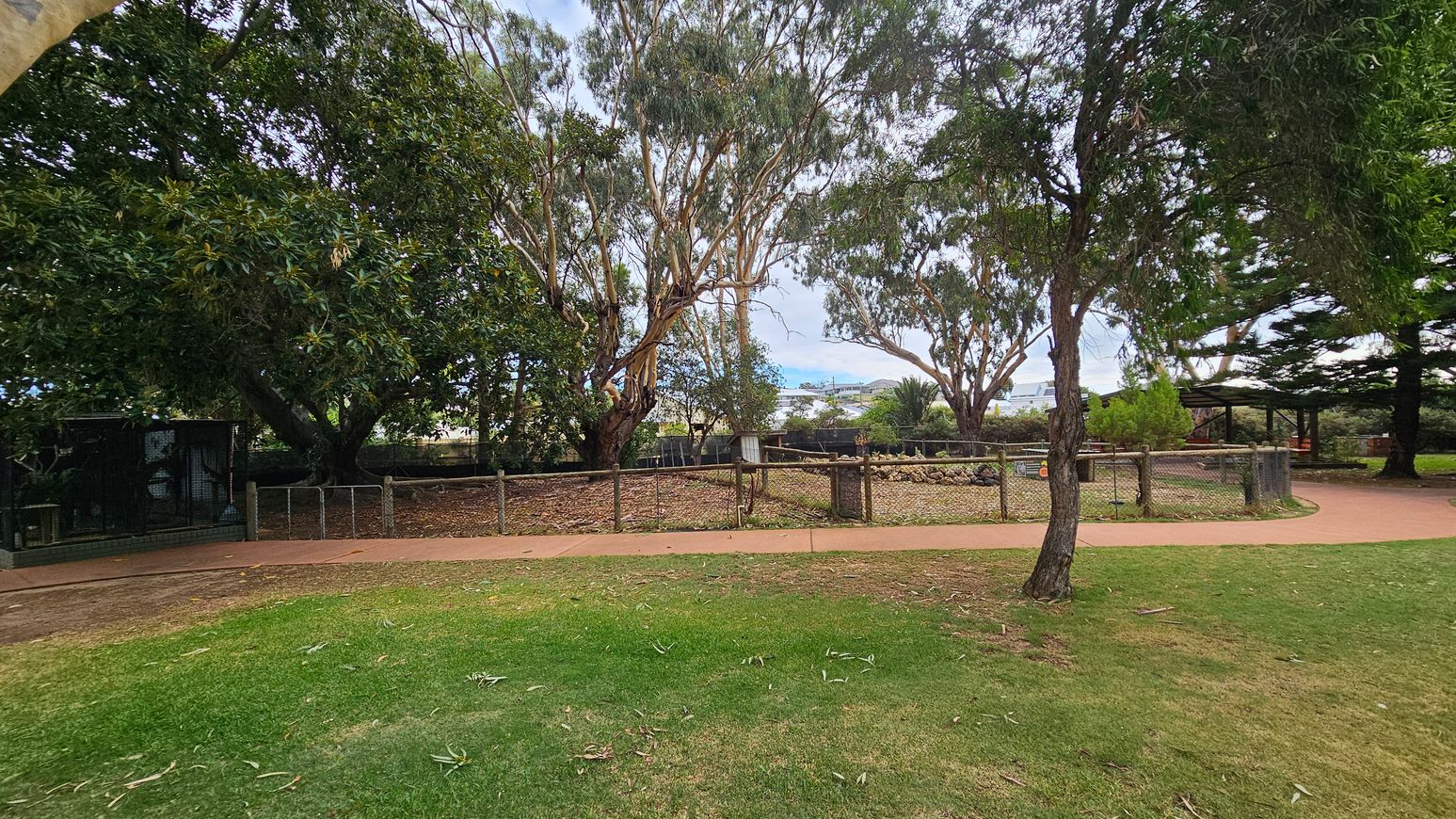
This area features dedicated animal enclosures surrounded by chain-link fencing with wooden posts. Ground surfaces within the enclosures include bark and dirt, while visitor pathways are smooth, step-free concrete, supporting easy movement. Wooden ramps and raised viewing platforms are positioned throughout for closer observation. Shade is provided by tall eucalyptus and other native trees, and benches are placed along the paths for resting. The enclosures include natural elements such as logs and rocks, allowing animals to rest and move within their environment. Wide, gently curving pathways connect this area to other parts of the venue.
The space is used for viewing native animals including dingoes, kangaroos, wallabies, wombats, and bilbies. Activity levels may increase during feeding times or weekends. Sounds may include dingoes howling or barking, wombats moving through leaves, and general visitor movement along the paths. The environment includes natural smells of bark and earth, with occasional humidity and soft water sounds from a nearby fenced pond. The area is generally quiet aside from animal noises and footsteps.
Sounds
- Dingoes howling or barking
- Wombats rustling leaves
- Footsteps on concrete path
- Water sounds from pond
- Bird calls from trees
Smells
- Earthy bark and soil
- Fresh eucalyptus leaves
- Moisture near pond
- Dry leaves on ground
- Animal odours
Feel
- Smooth concrete path
- Close proximity to birds
- Cool shade under trees
- Enclosed feeling
- Fun and excitement
Sight
- Chain-link fenced enclosures
- Native trees providing shade
- Wooden benches and ramps
- Animals inside enclosures
- People viewing animals
3. Walk Through Enclosures
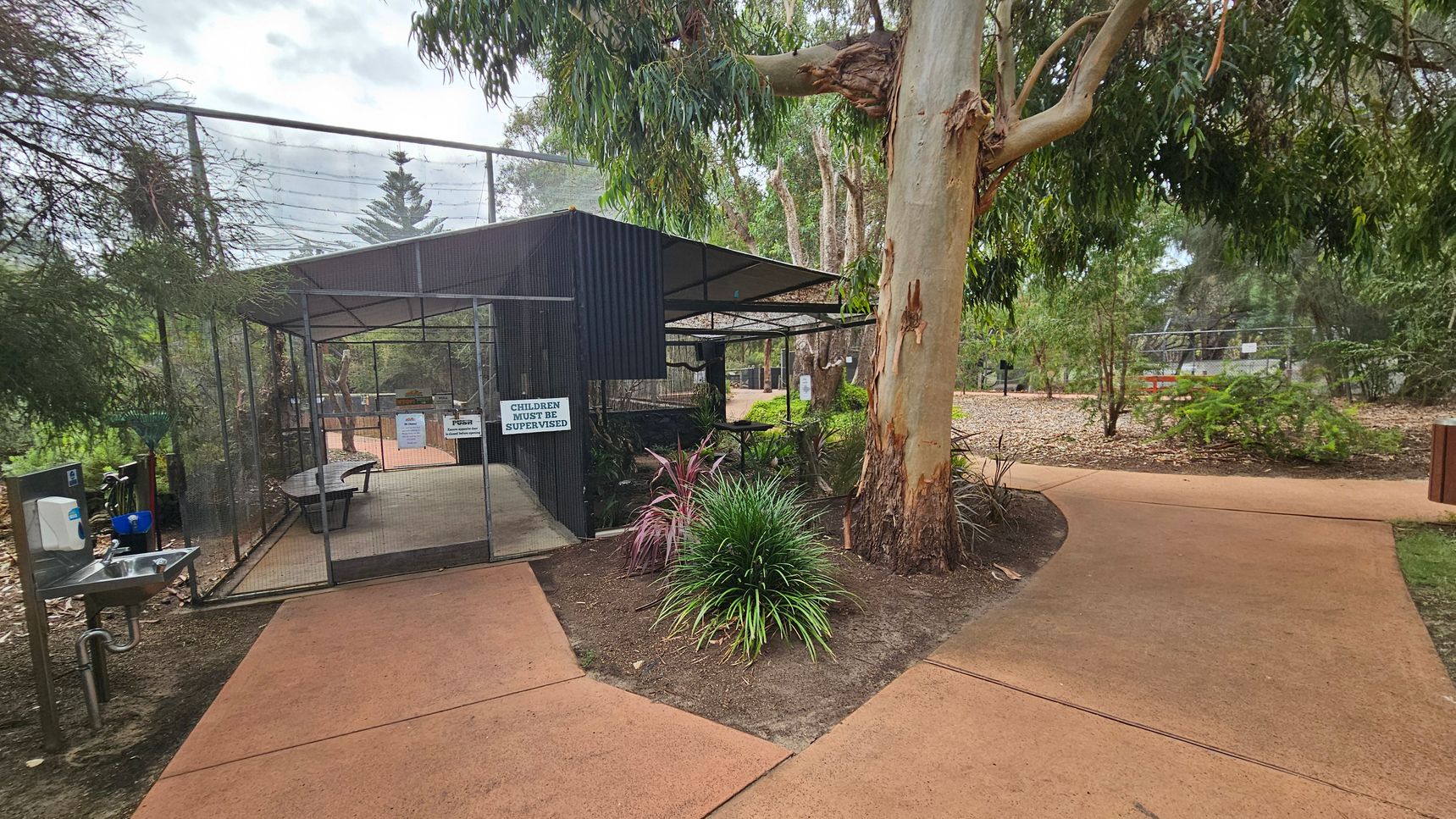
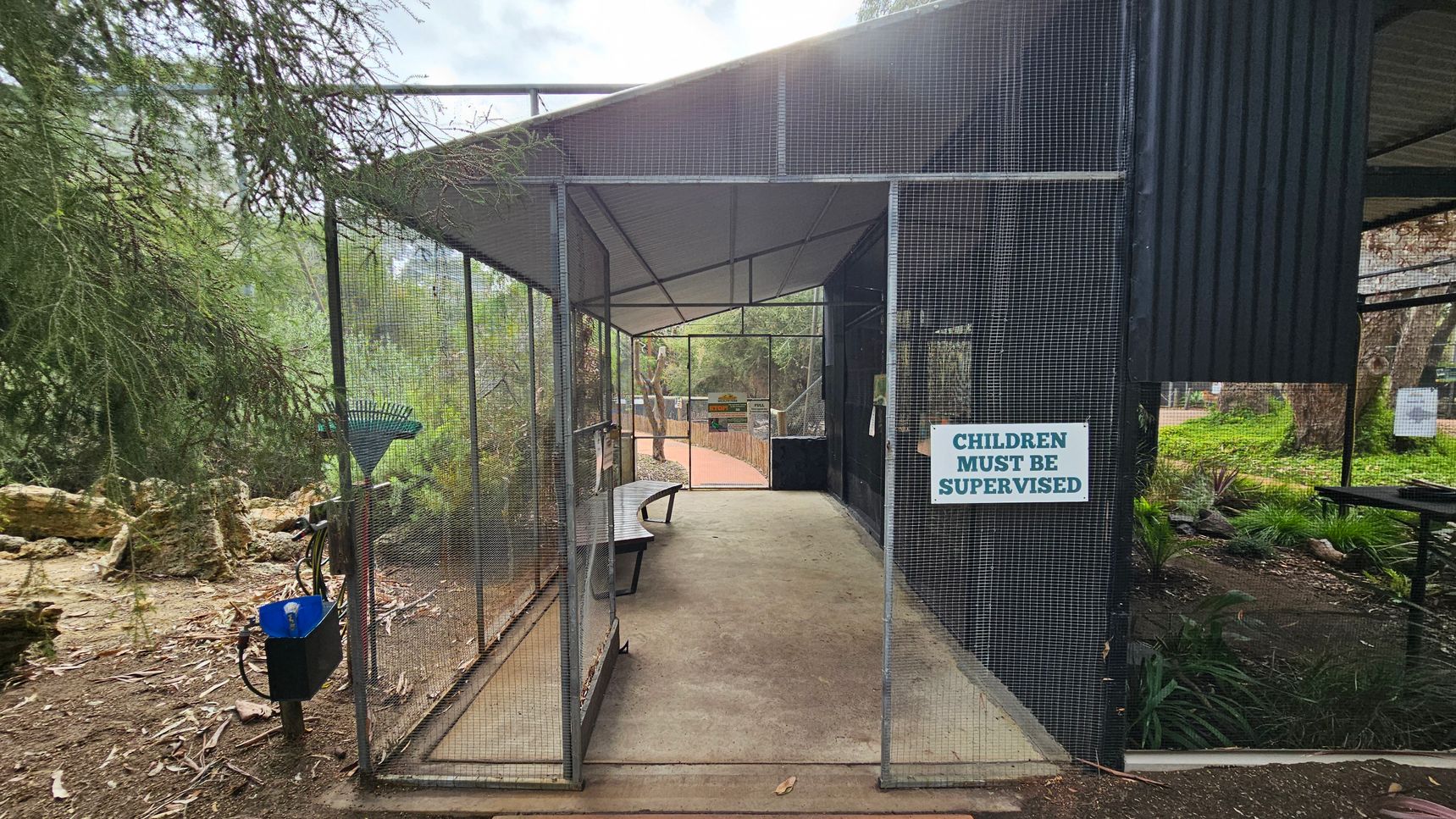
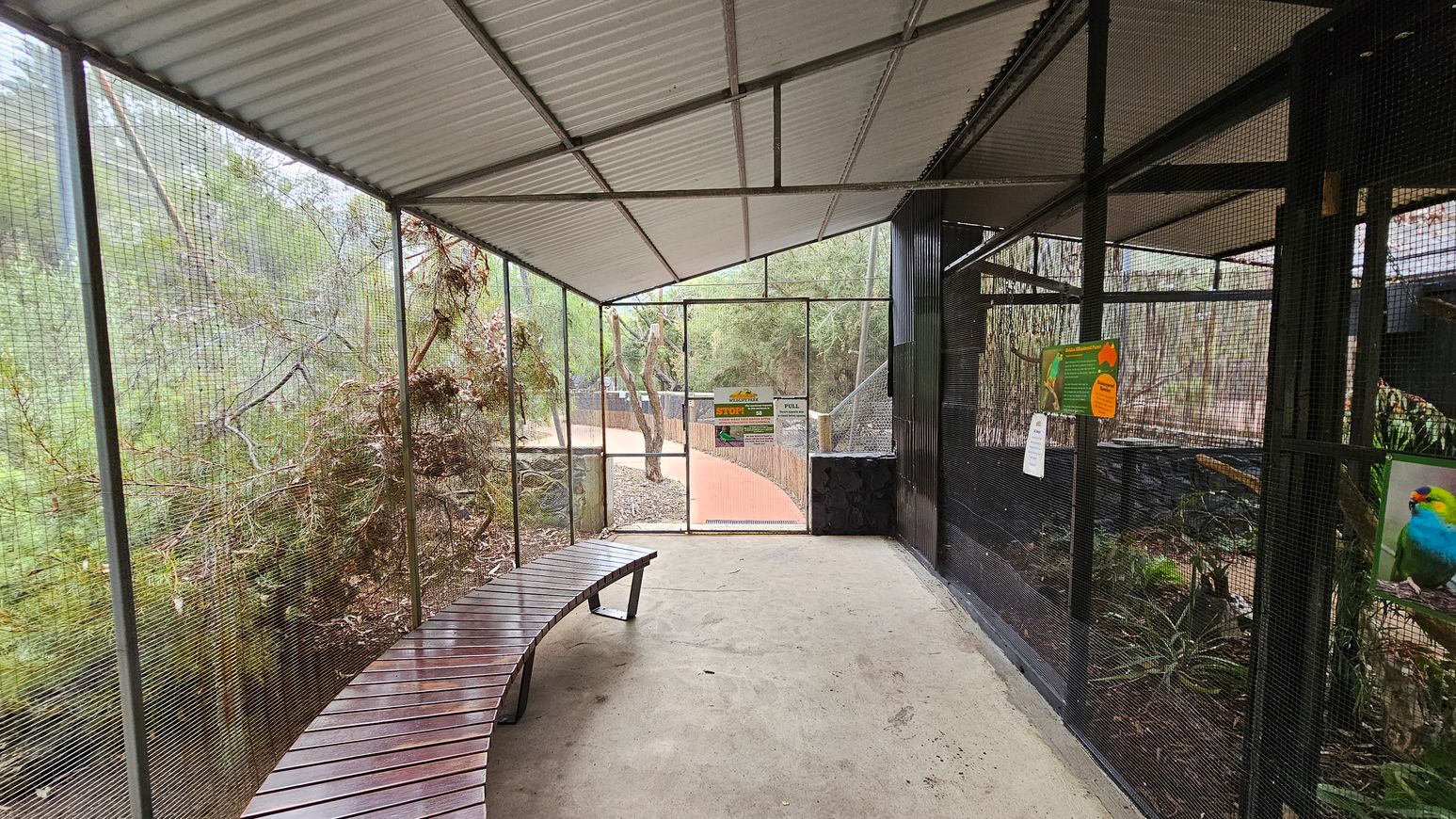
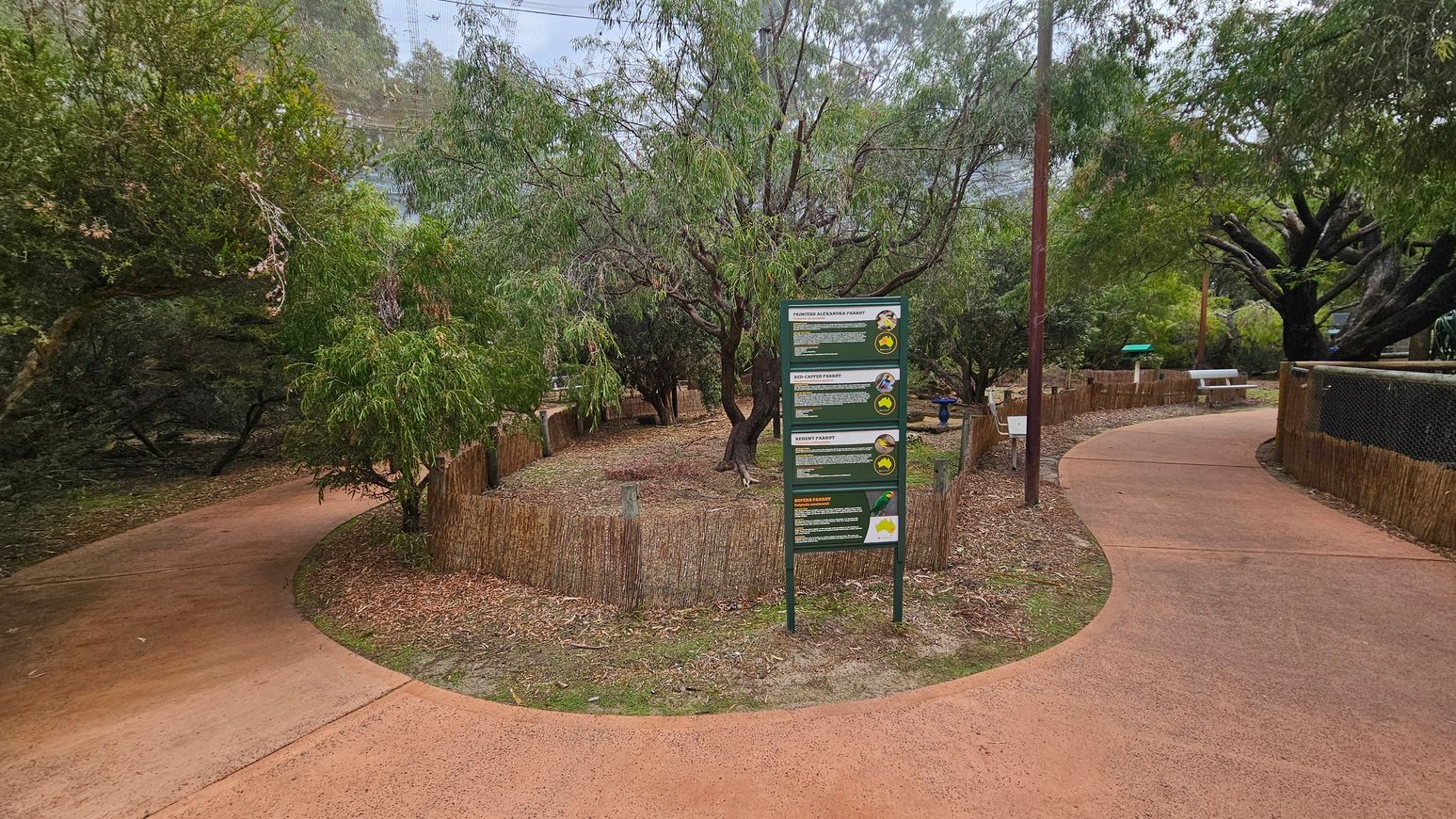
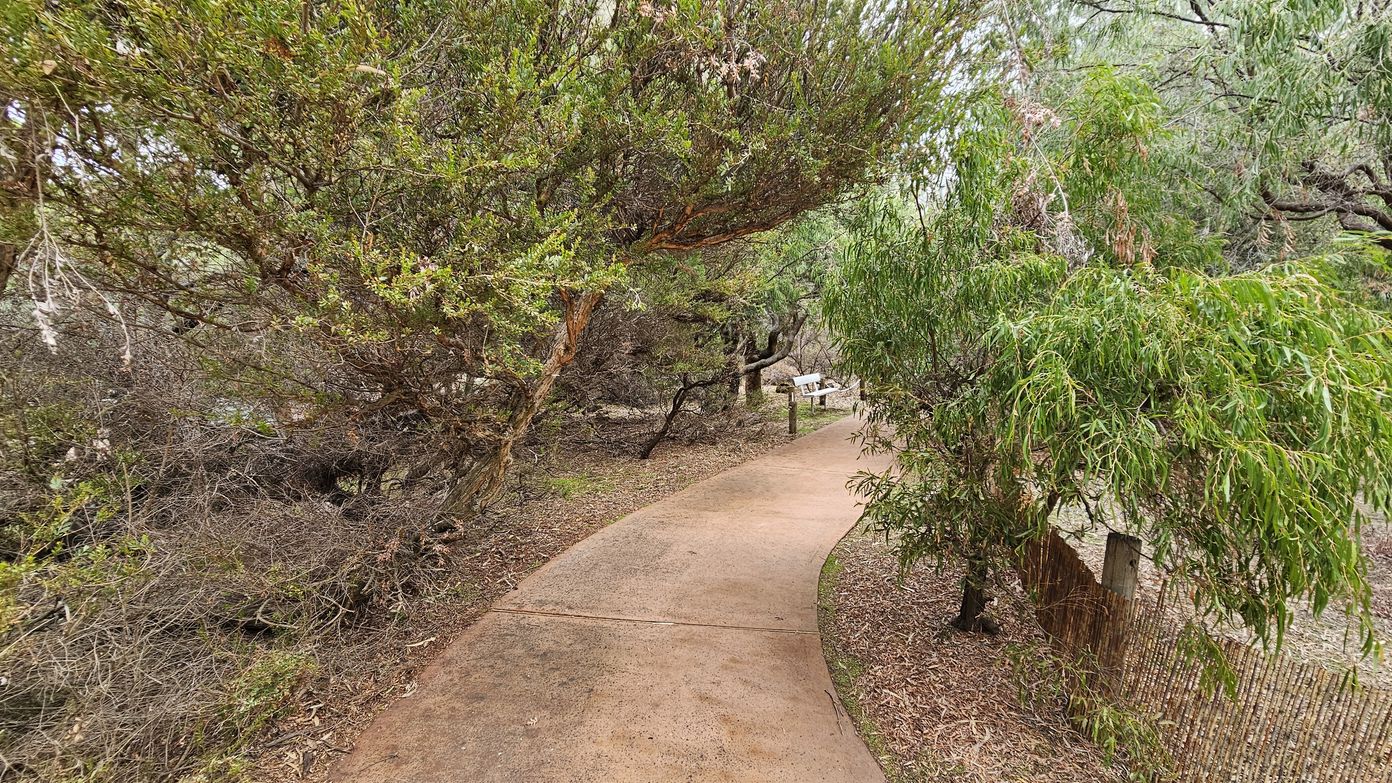
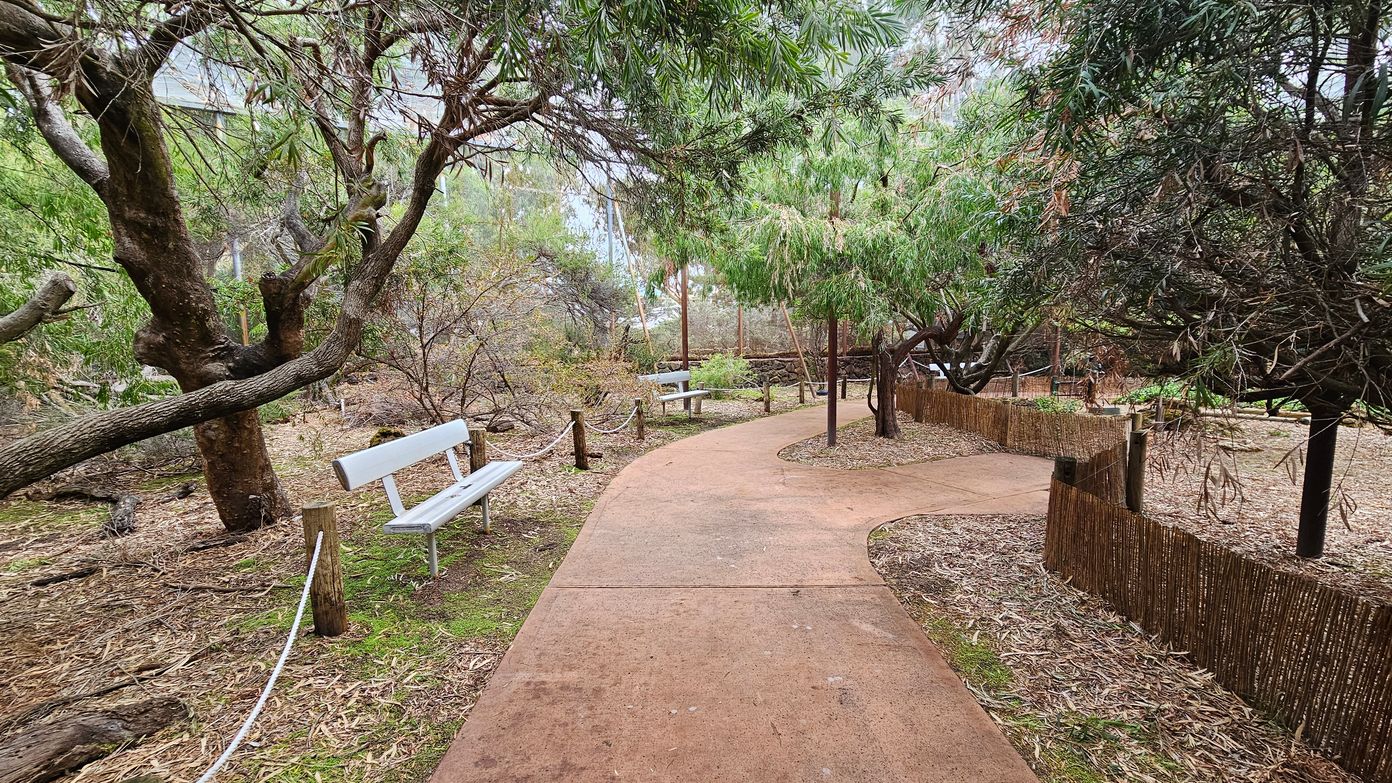
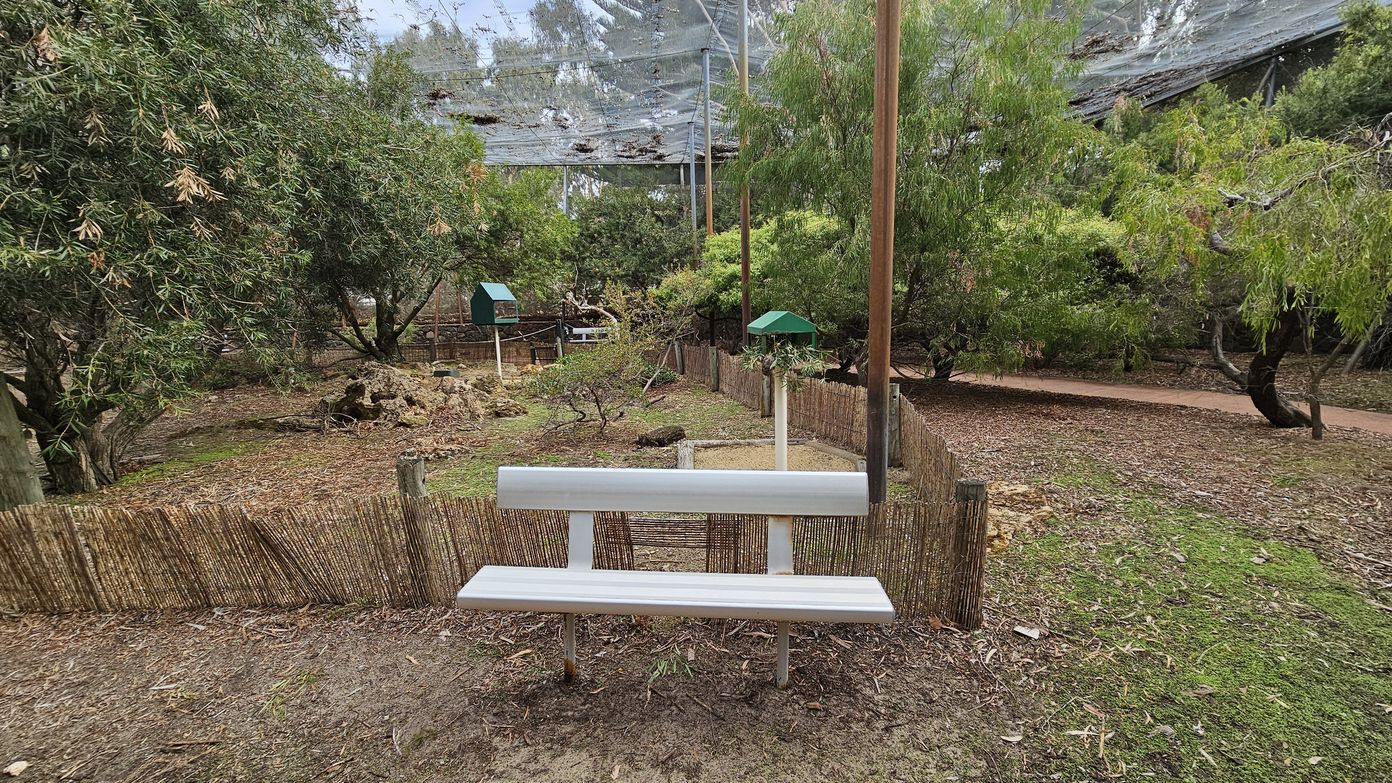
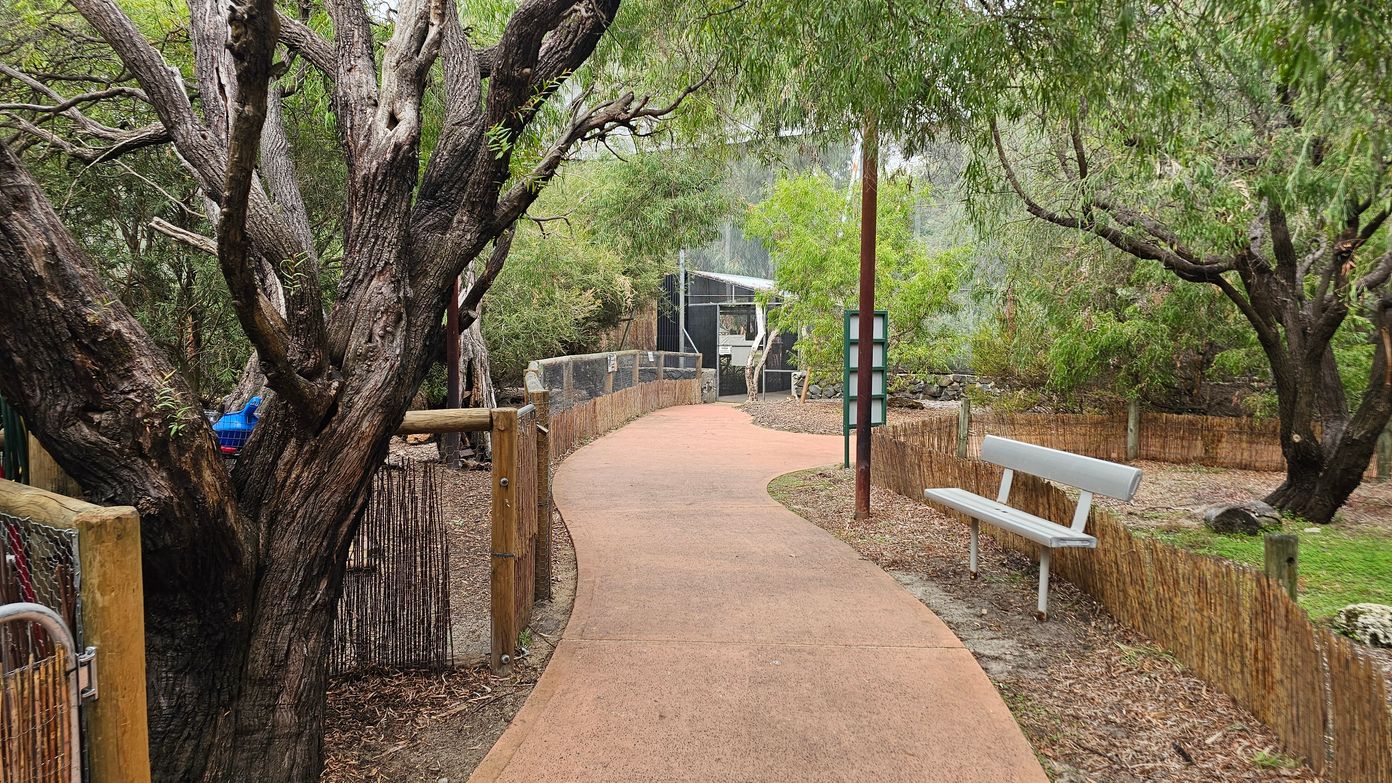
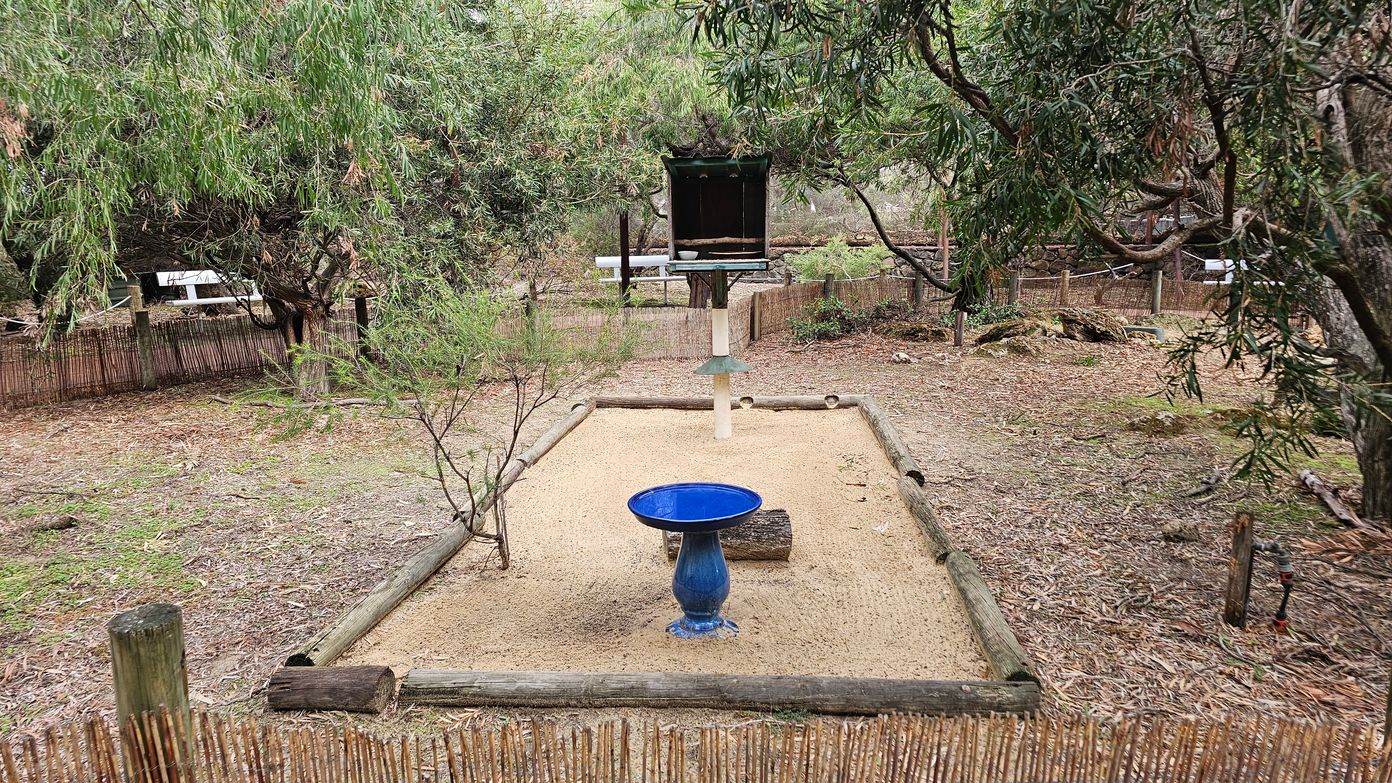
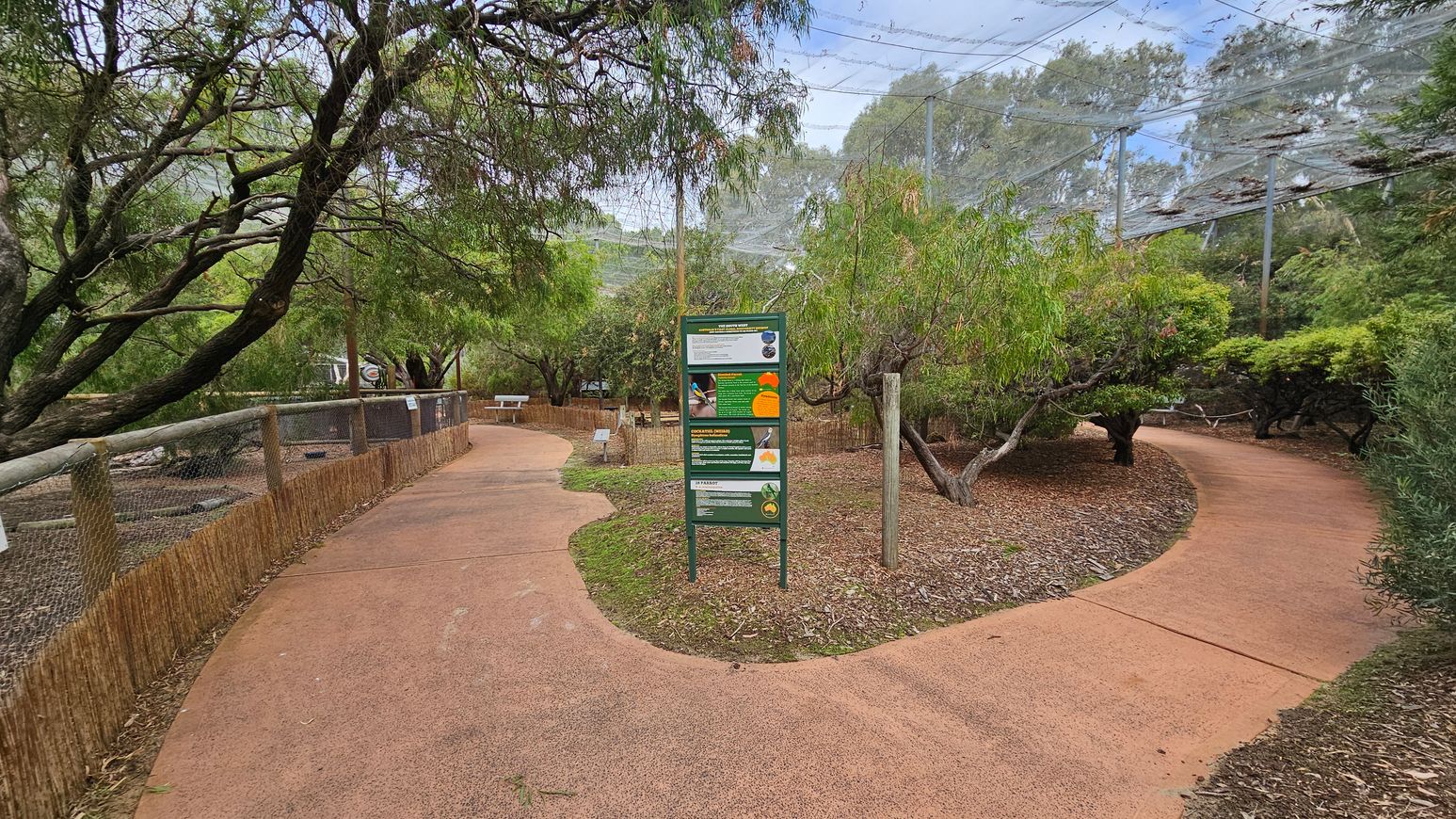
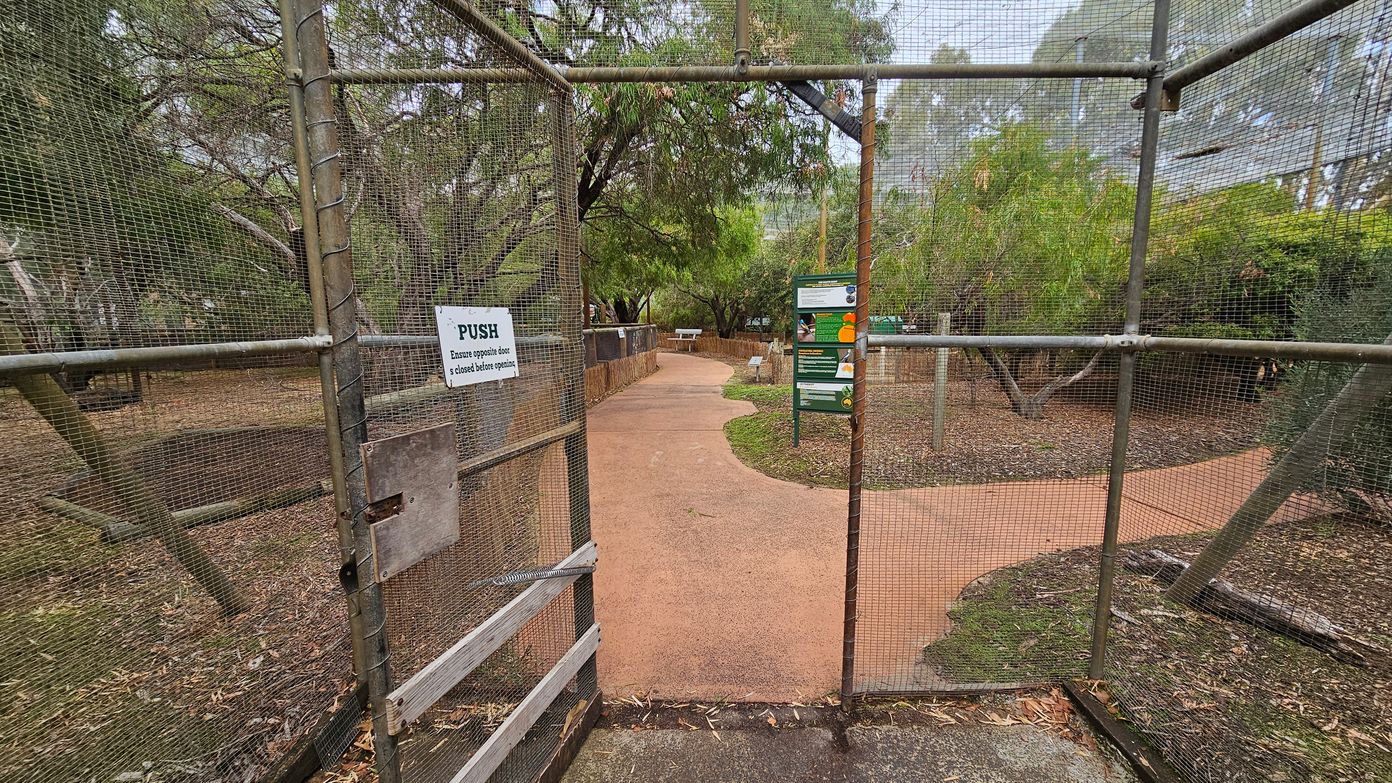
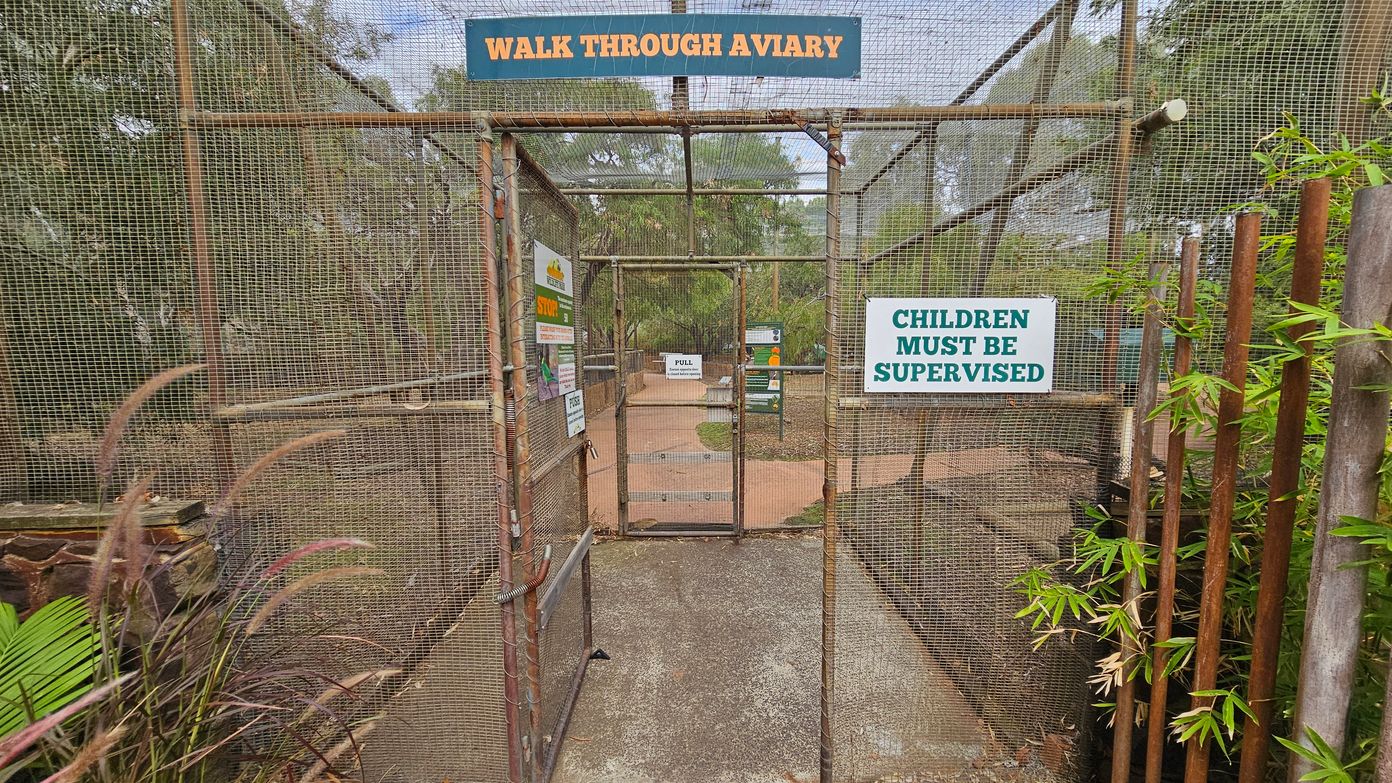
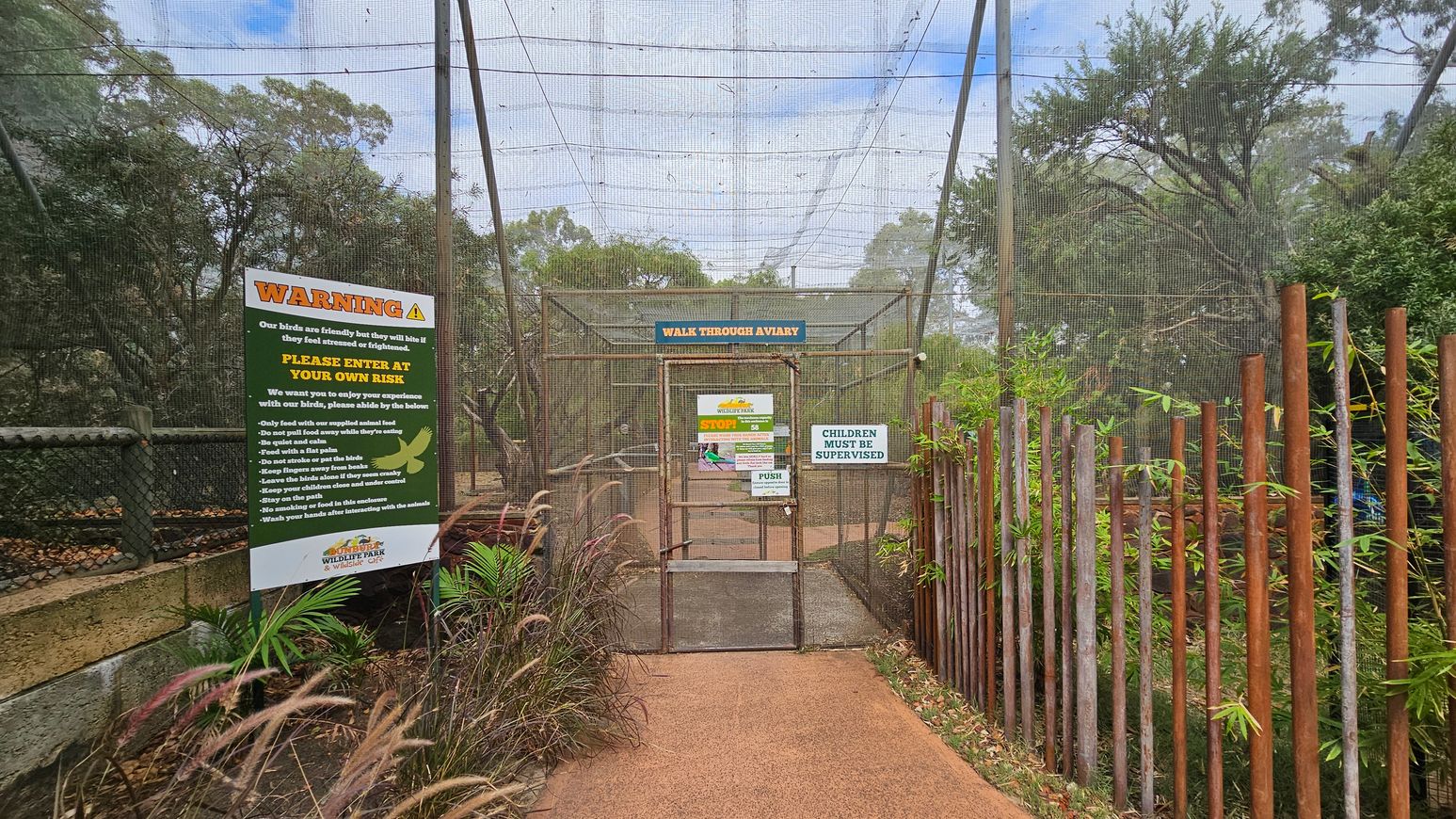
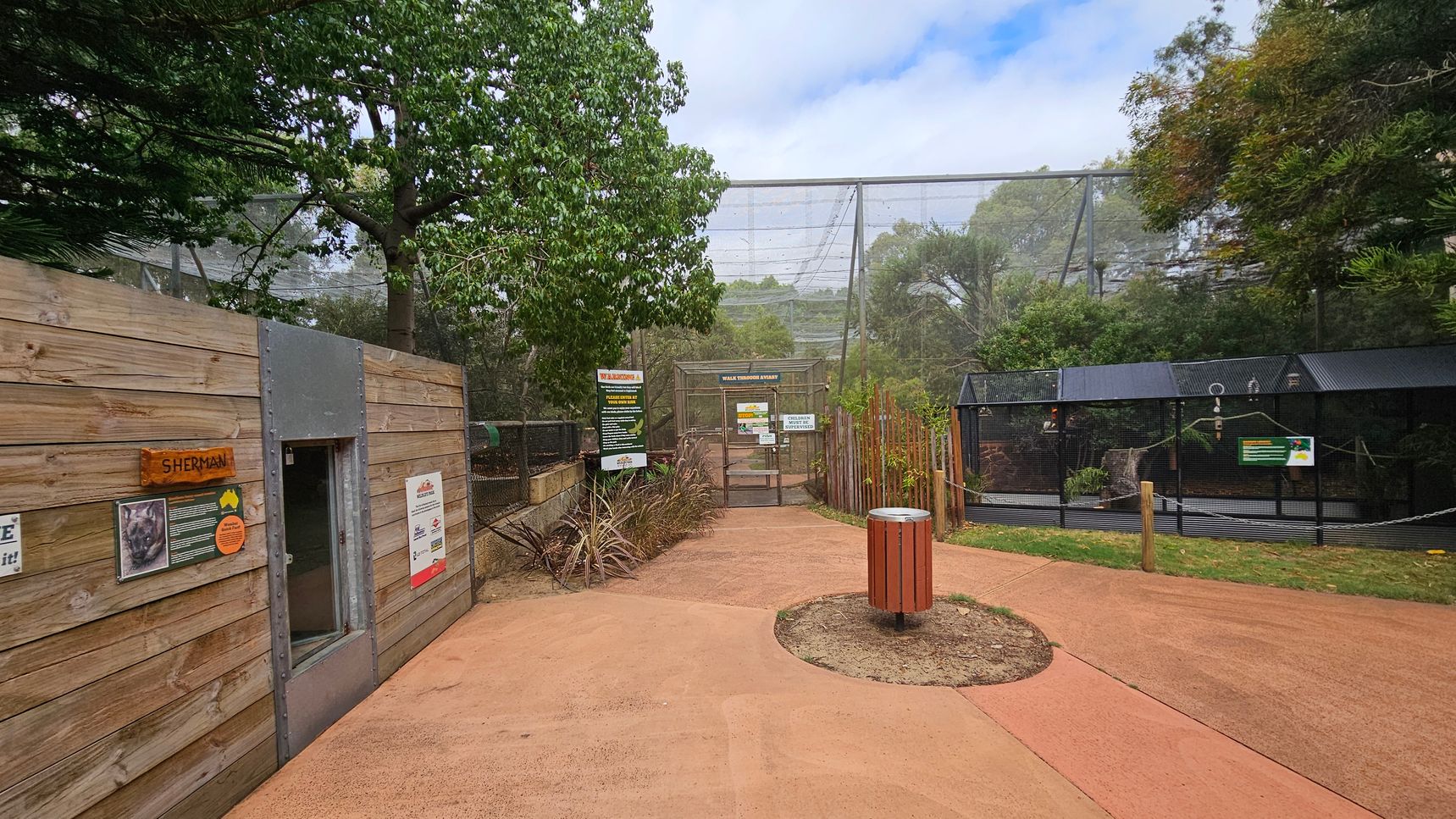
This walk-through aviary features a double gate entry system made of fine metal mesh to prevent birds or animals from escaping. The structure includes a meshed roof supported by metal frames, with trimmed trees inside forming an umbrella-shaped canopy. The ground surface is smooth concrete, and wide, step-free pathways curve through the space, supporting easy movement. Wooden benches are positioned along the paths for resting, while low wooden fencing and ropes define planted areas. Informational signage is located at key points, and a handwashing sink is available outside the enclosure.
This space is used for close observation of birds, with no barriers between visitors and animals. Birds may fly near visitors, sometimes creating light gusts of wind. Activity levels may increase during busy periods. Sensory elements include bird calls and movement, along with natural smells from bird life, wattles, mulch, and cut grass. The environment is shaded and protected from direct sunlight by the mesh roof and tree canopy.
Sounds
- Bird calls and wing flaps
- Rustling leaves in breeze
- Footsteps on concrete path
- Occasional gate opening
- Quiet visitor voices
Smells
- Bird life scent
- Wattle flowers aroma
- Mulch and soil smell
- Cut grass freshness
- Earthy plant odours
Feel
- Smooth concrete underfoot
- Close proximity to animals
- Gentle breeze from bird flight
- Wooden bench seating
- Enclosed feeling
Sight
- Metal mesh enclosure
- Curved concrete pathways
- Trimmed umbrella-shaped trees
- Wooden benches along paths
- Informational signage
4. Farmyard
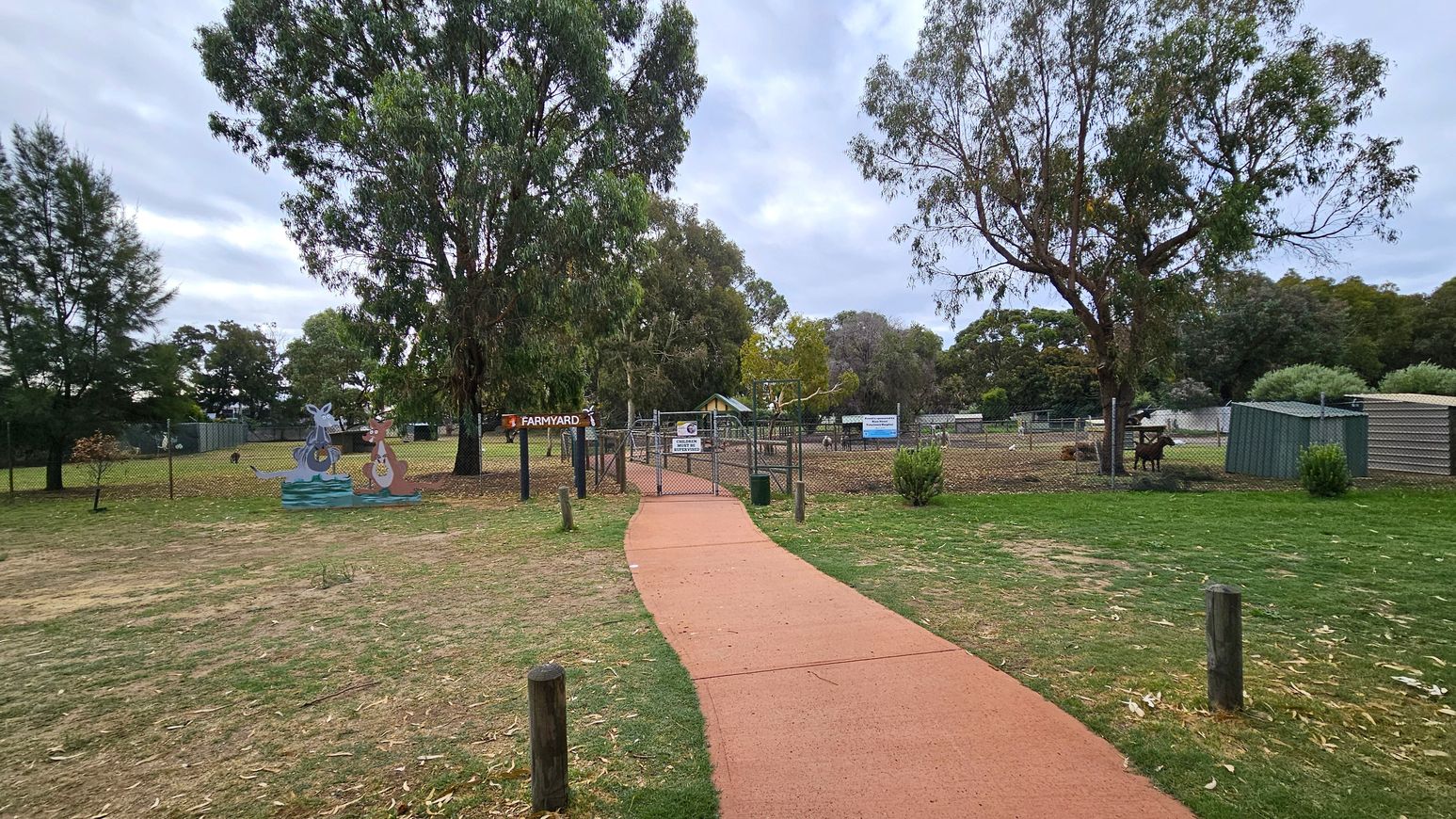
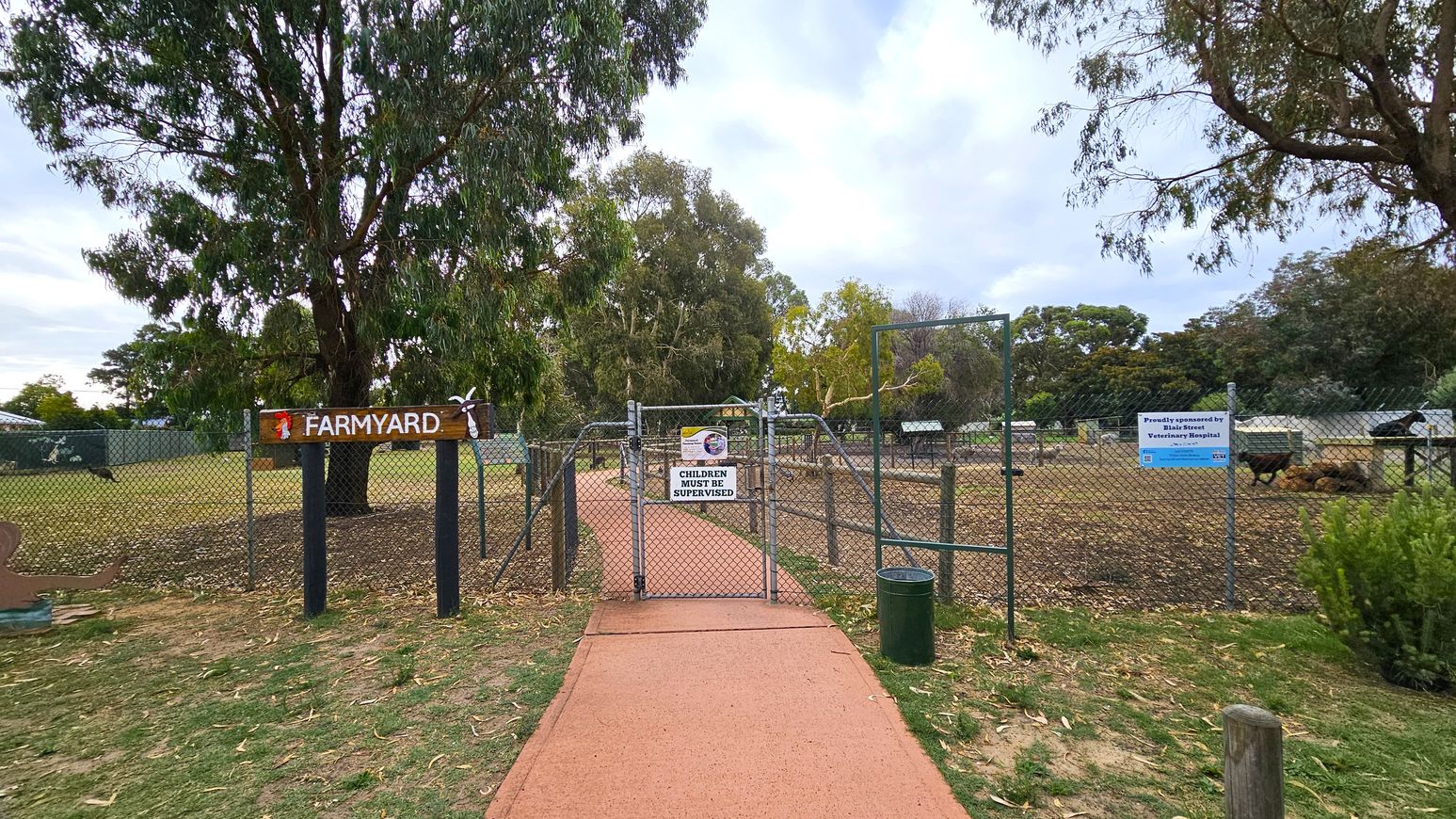
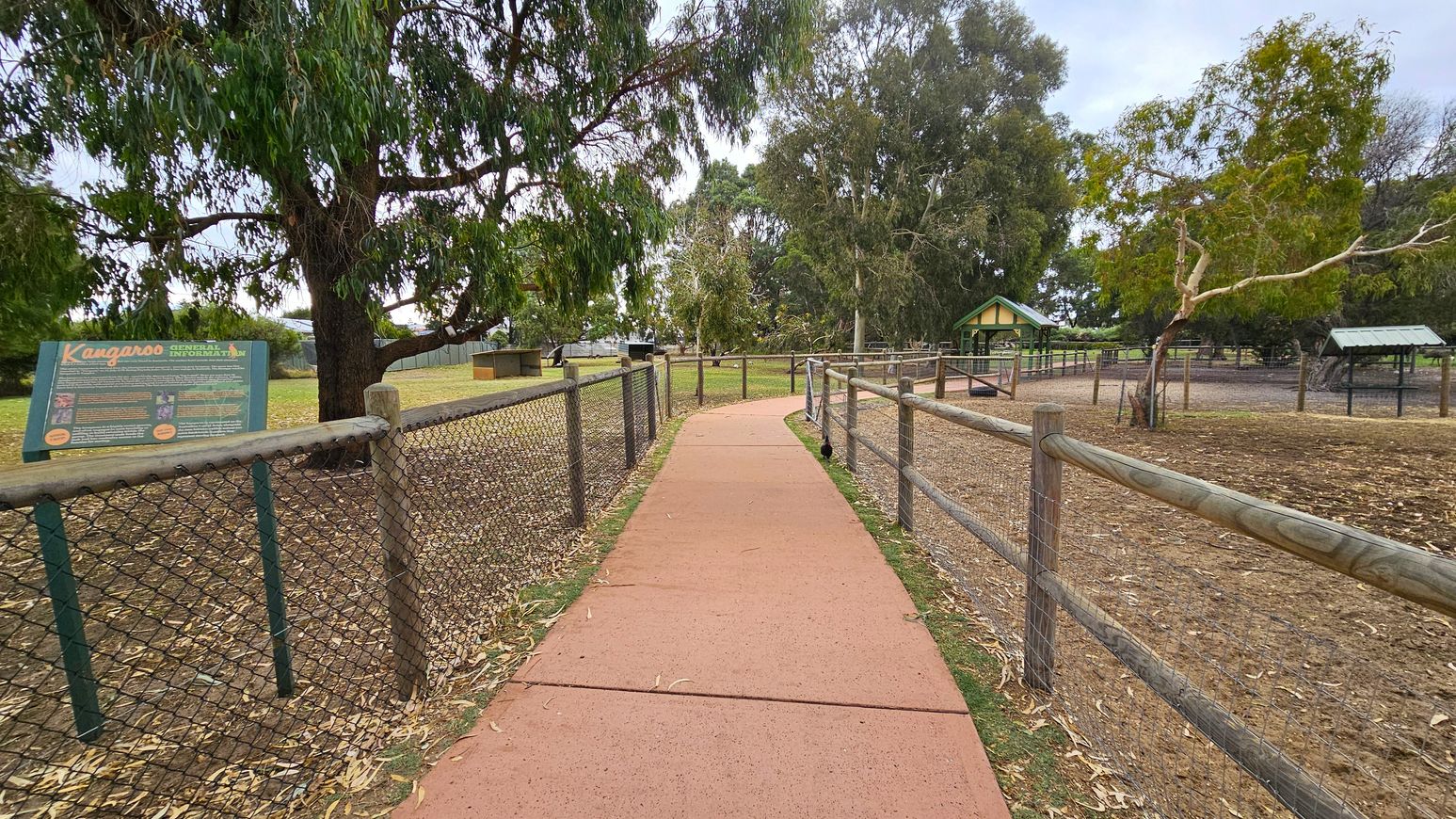
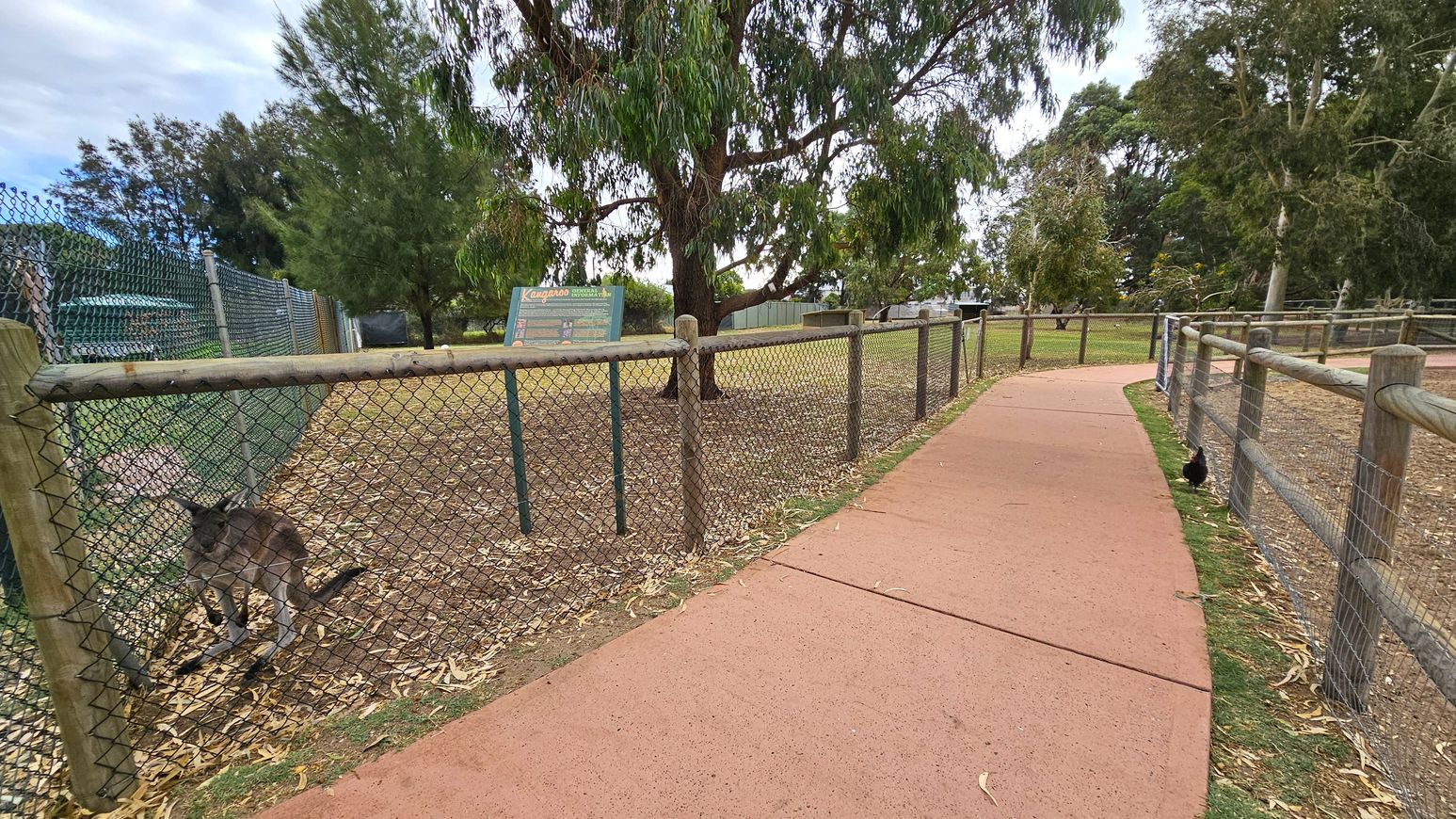
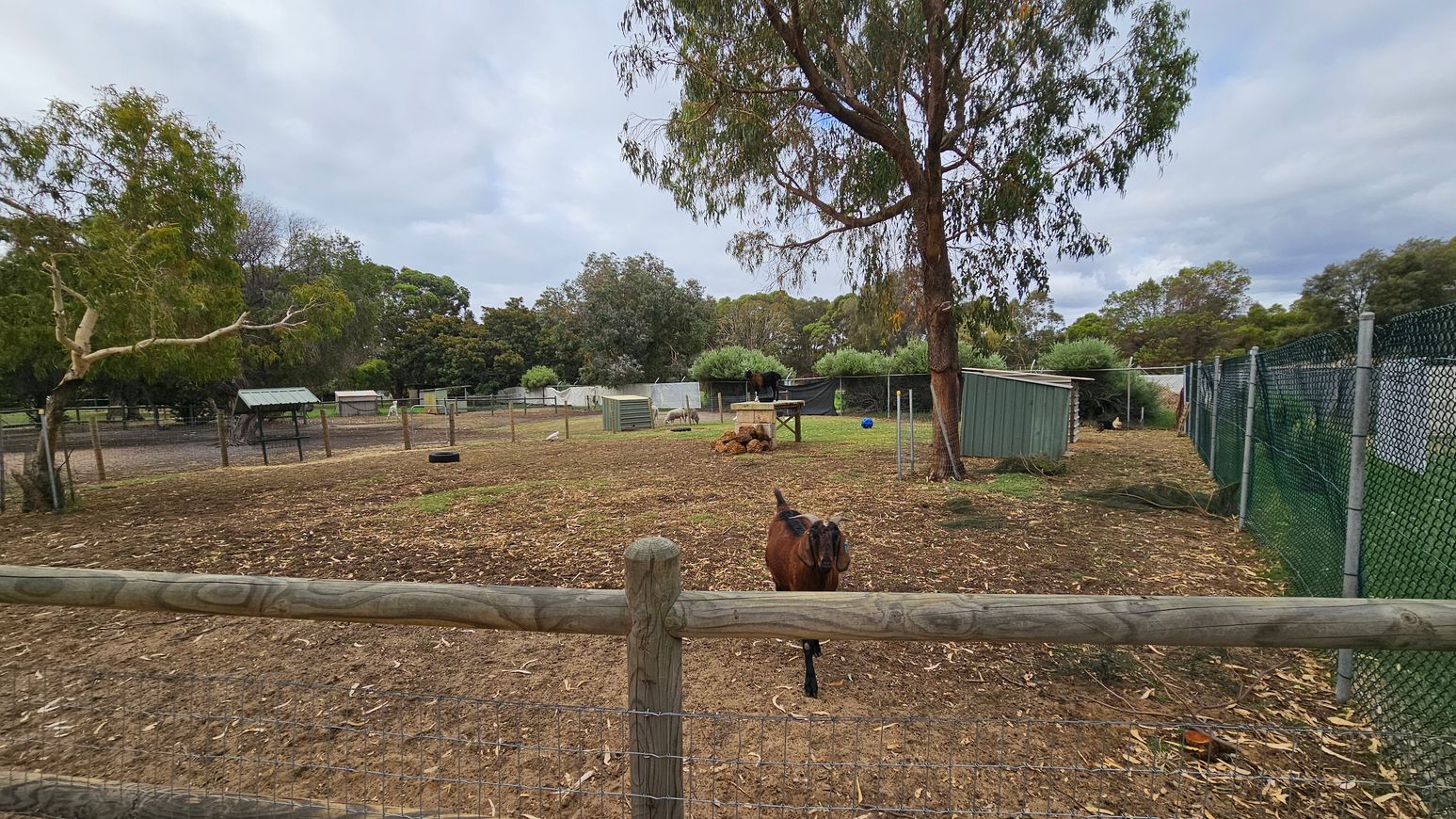
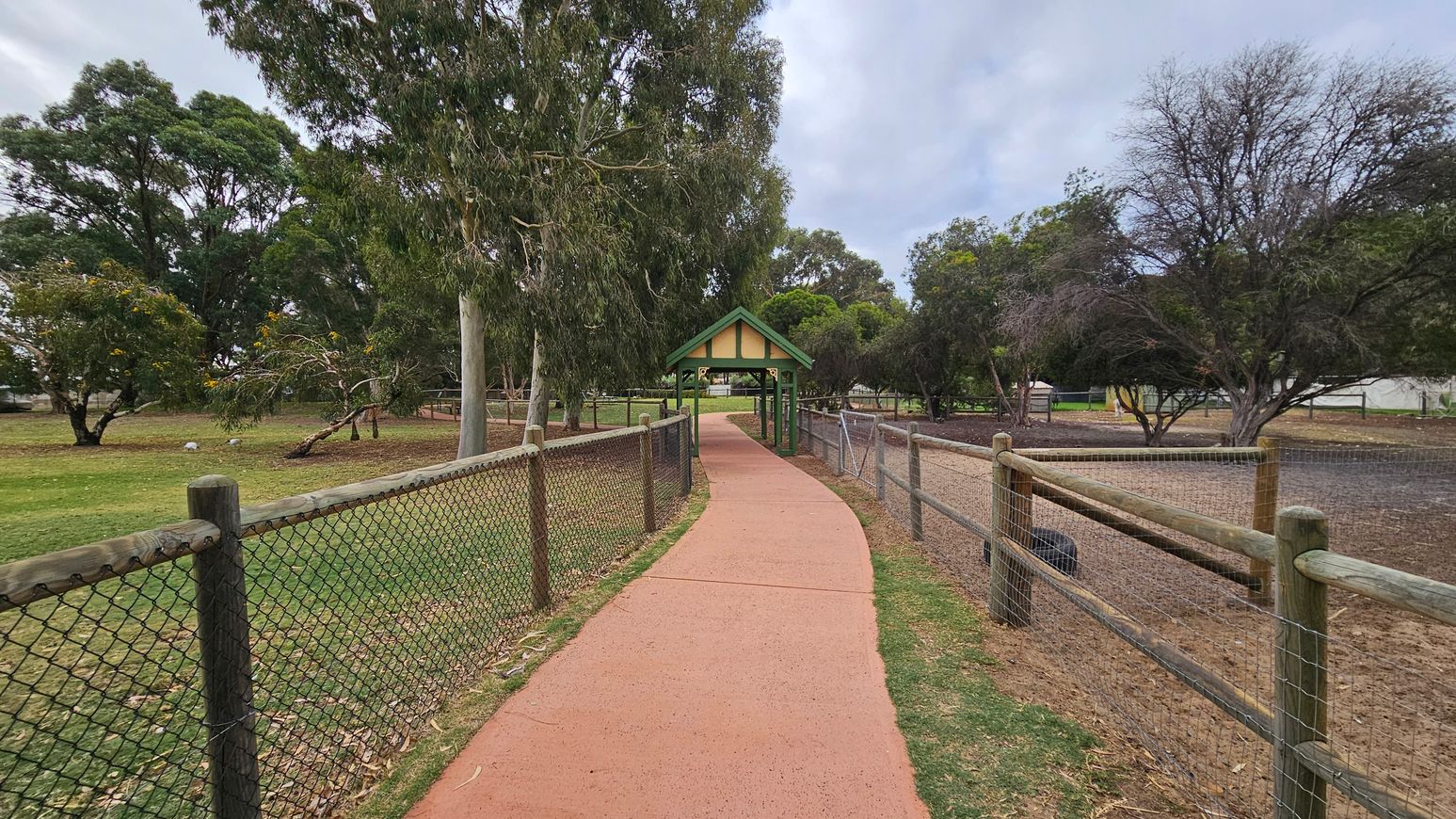
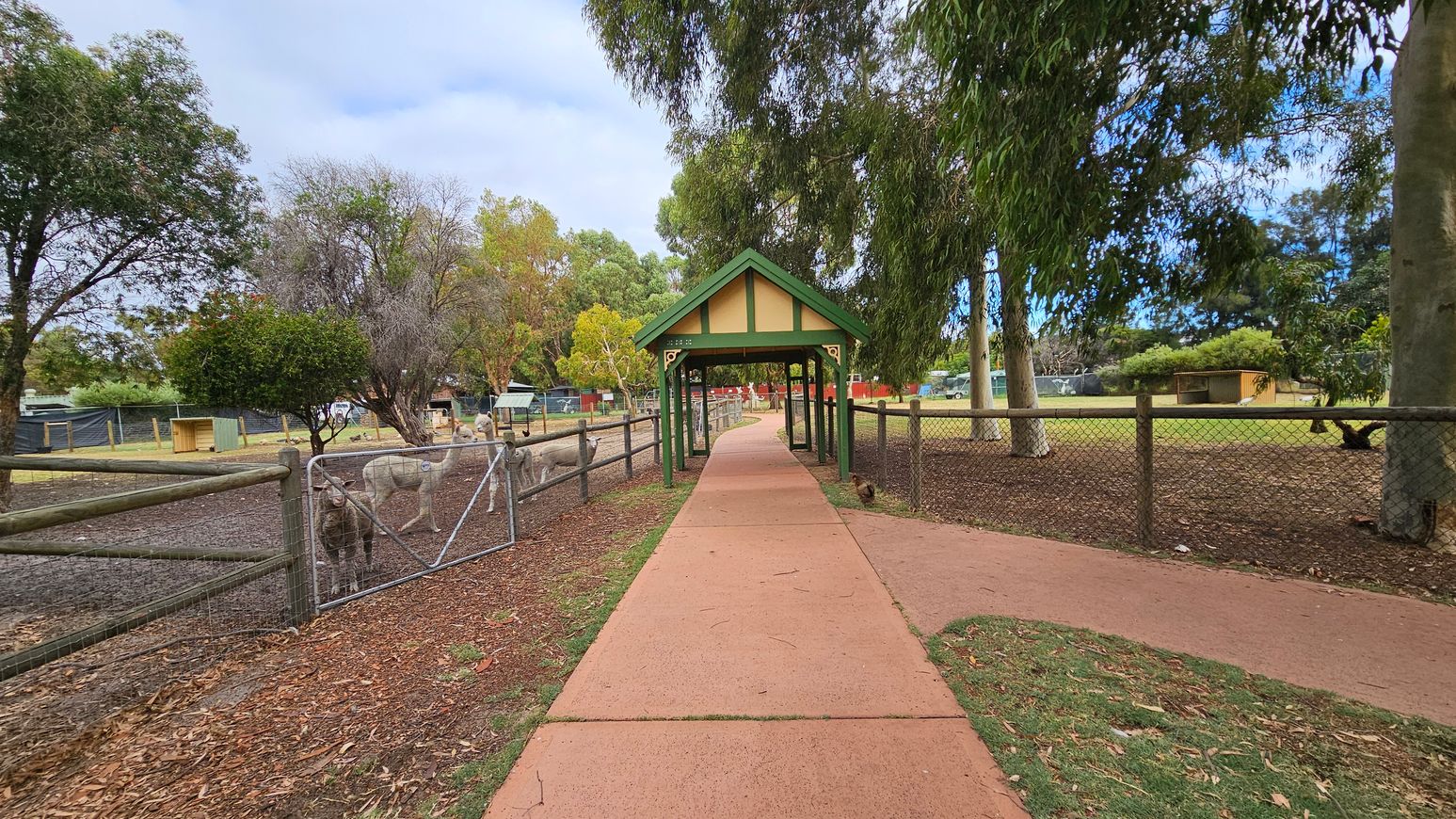
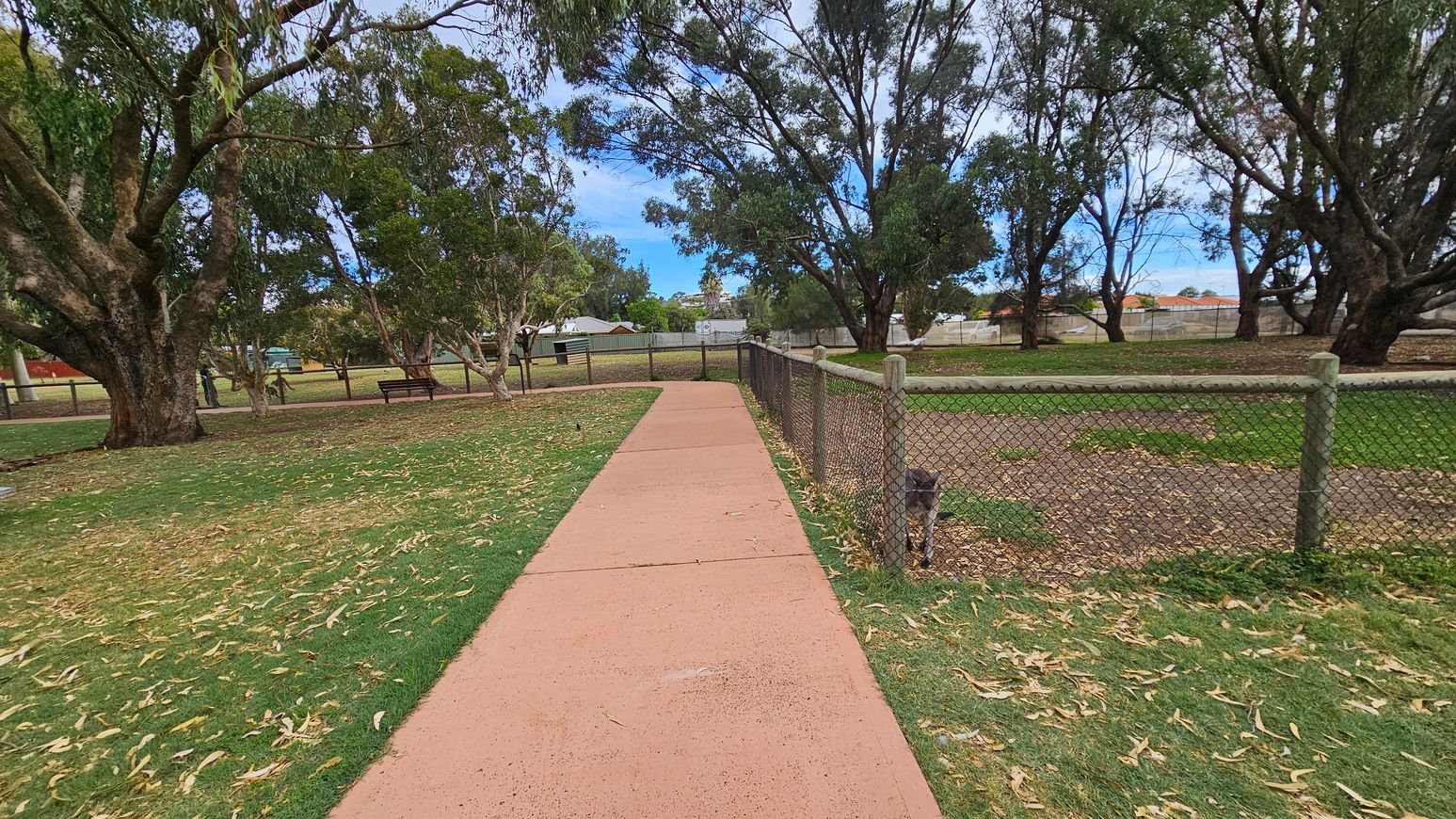
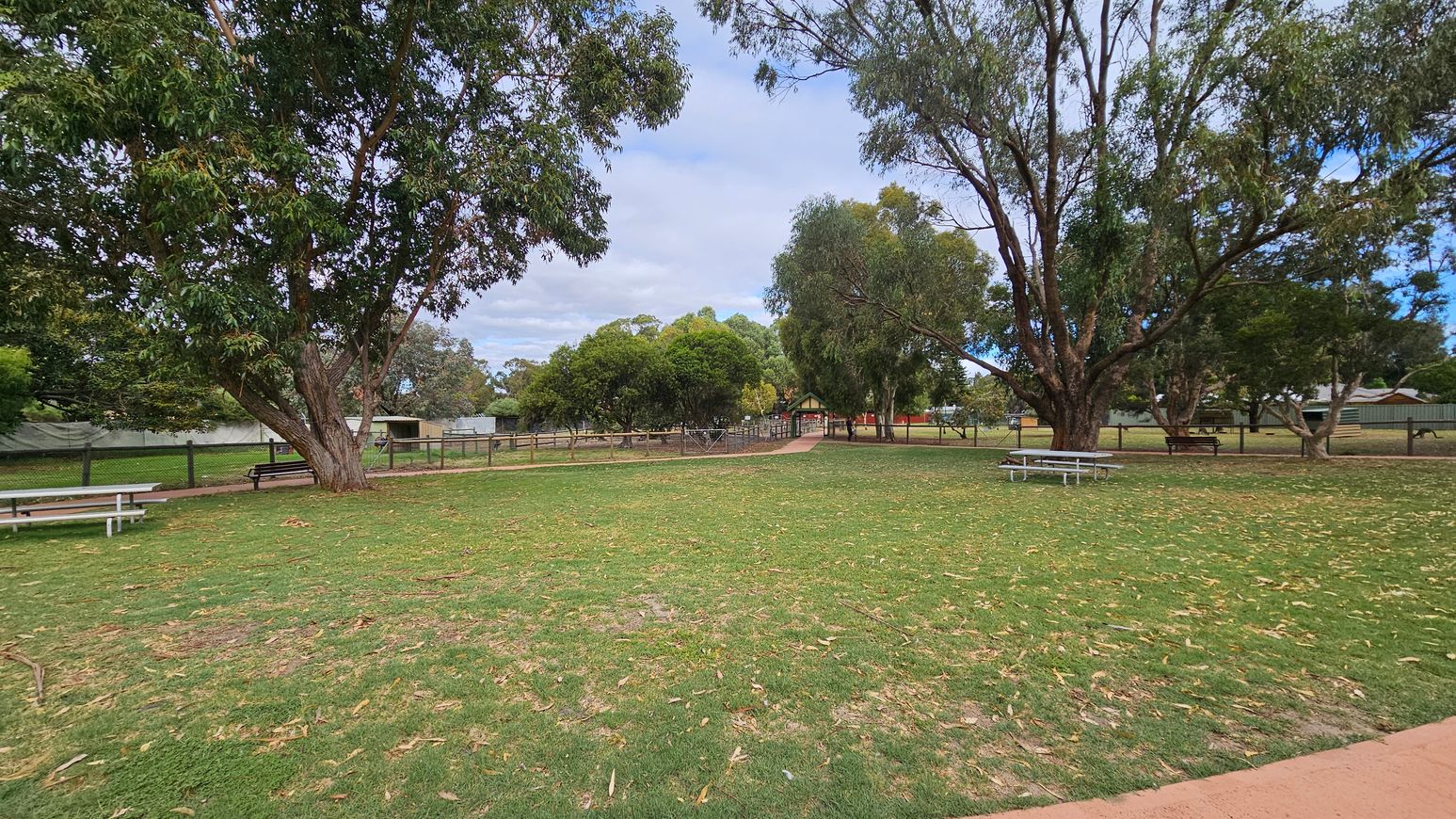
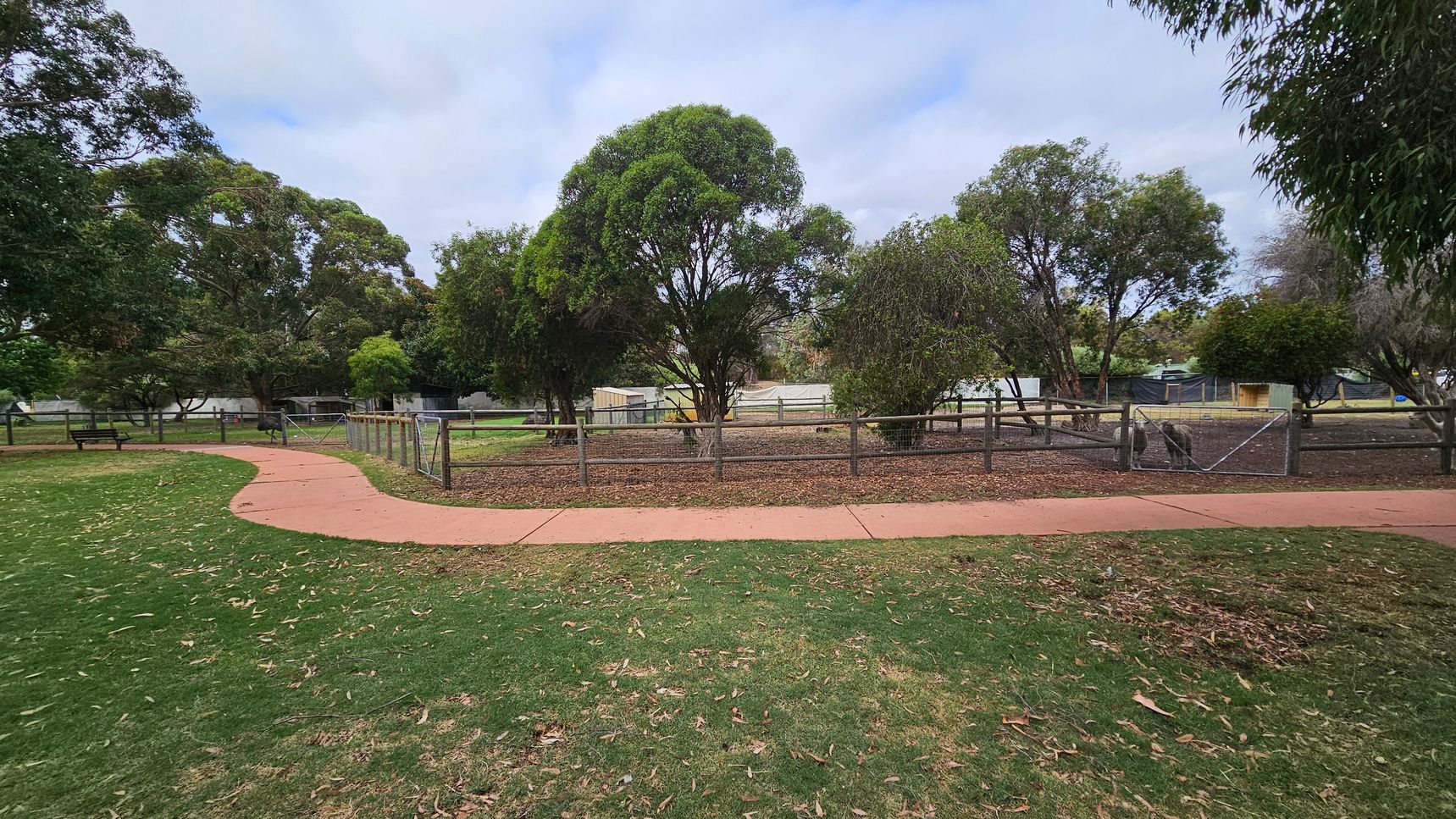
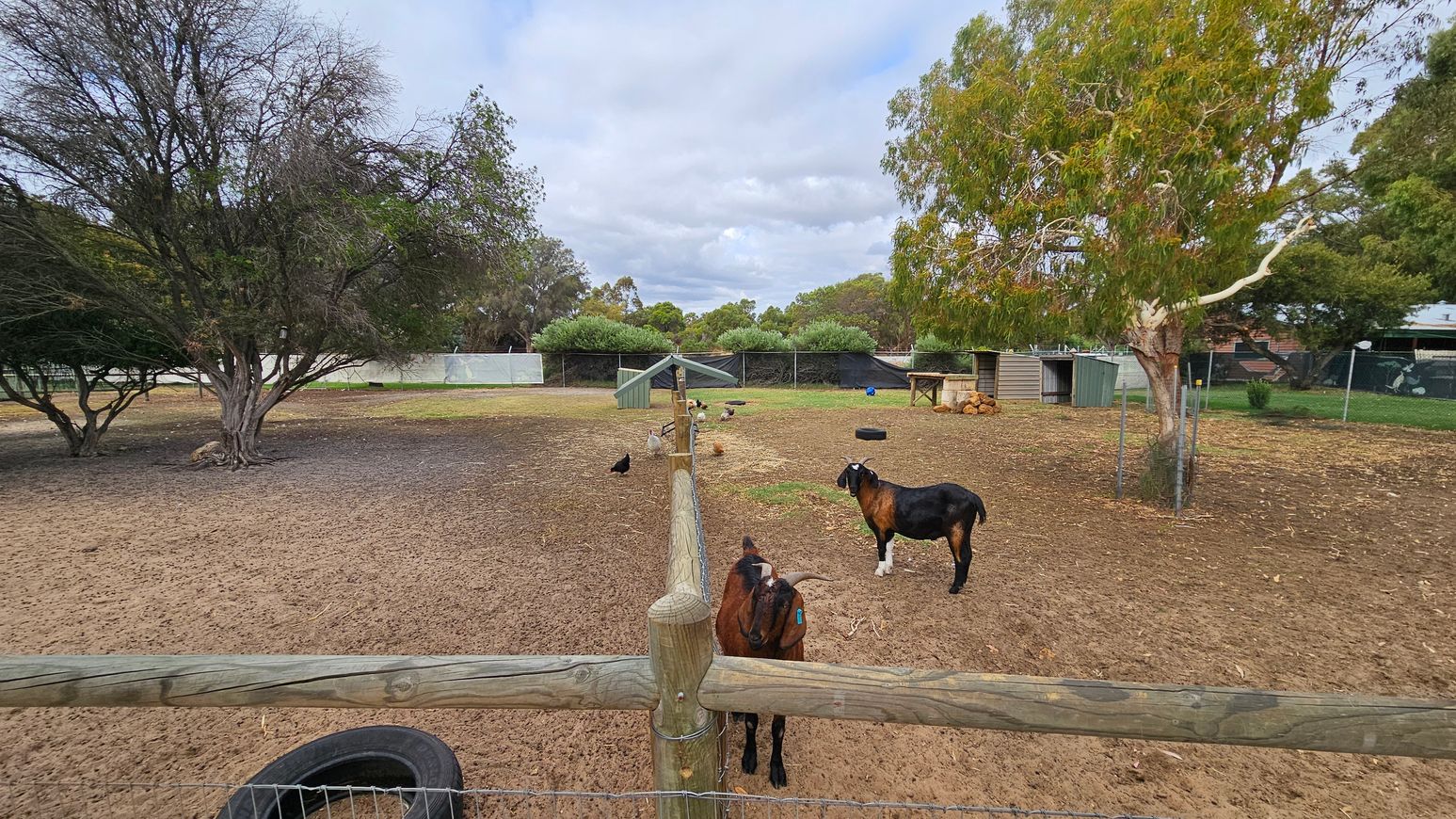
Located adjacent to the animal care facility, this farmyard area is accessed through an outward opening gate. A smooth, step-free concrete path leads into the space and winds past fenced animal paddocks. As the path continues, kangaroos are positioned on the left, with goats and sheep on the right, before the path loops back to the original entry point. Fencing consists of timber posts with wire mesh, creating clear boundaries for each enclosure. Gates are positioned along the path to manage access to the paddocks. Shade is provided by established tall trees throughout the area.
The space is used for viewing and moving alongside animals within a contained farmyard setting. Picnic benches and tables are located on grassed areas near the path, providing resting points under tree canopies. Ground surfaces within the paddocks include dirt and mulch, while surrounding areas feature grass with some bare patches. The environment is open and natural, with typical farmyard sounds and smells present, and activity levels may vary depending on visitor numbers and animal movement.
Sounds
- Sheep bleating nearby
- Chickens clucking
- Kangaroos stomping
- Birds calling in trees
- Occasional animal movement
Smells
- Animal odours from sheep
- Smell of kangaroos
- Occasional faeces smell
- Earthy soil scent
- Fresh tree foliage
Feel
- Smooth concrete path underfoot
- Cool shade from trees
- Open grassy areas
- Excitement and fun
- Light breeze through trees
Sight
- Fenced paddocks with animals
- Tall eucalyptus trees
- Green picnic tables
- People viewing animals
- Animal shelters and signs
5. Walk-ways and Amenities
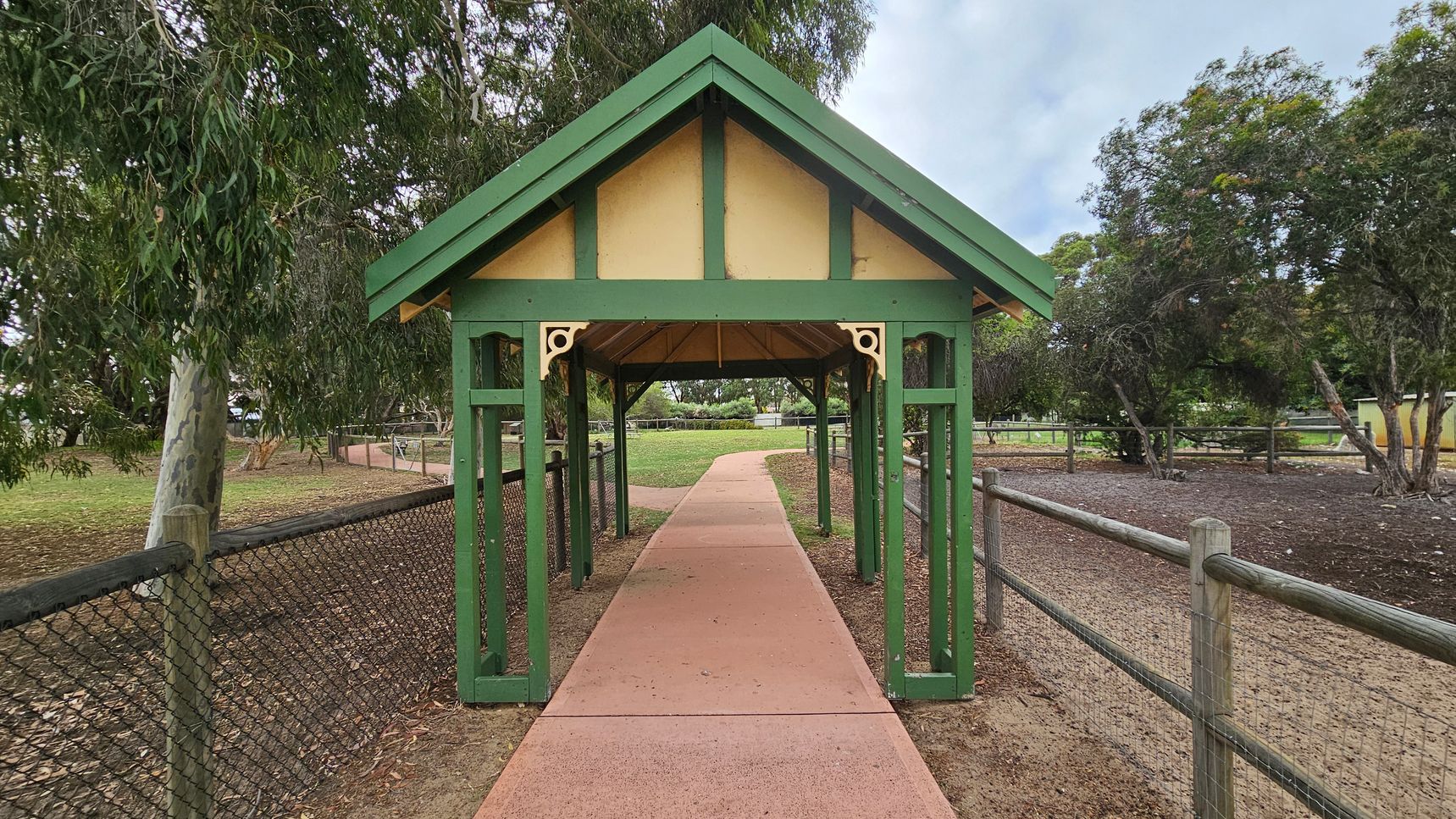
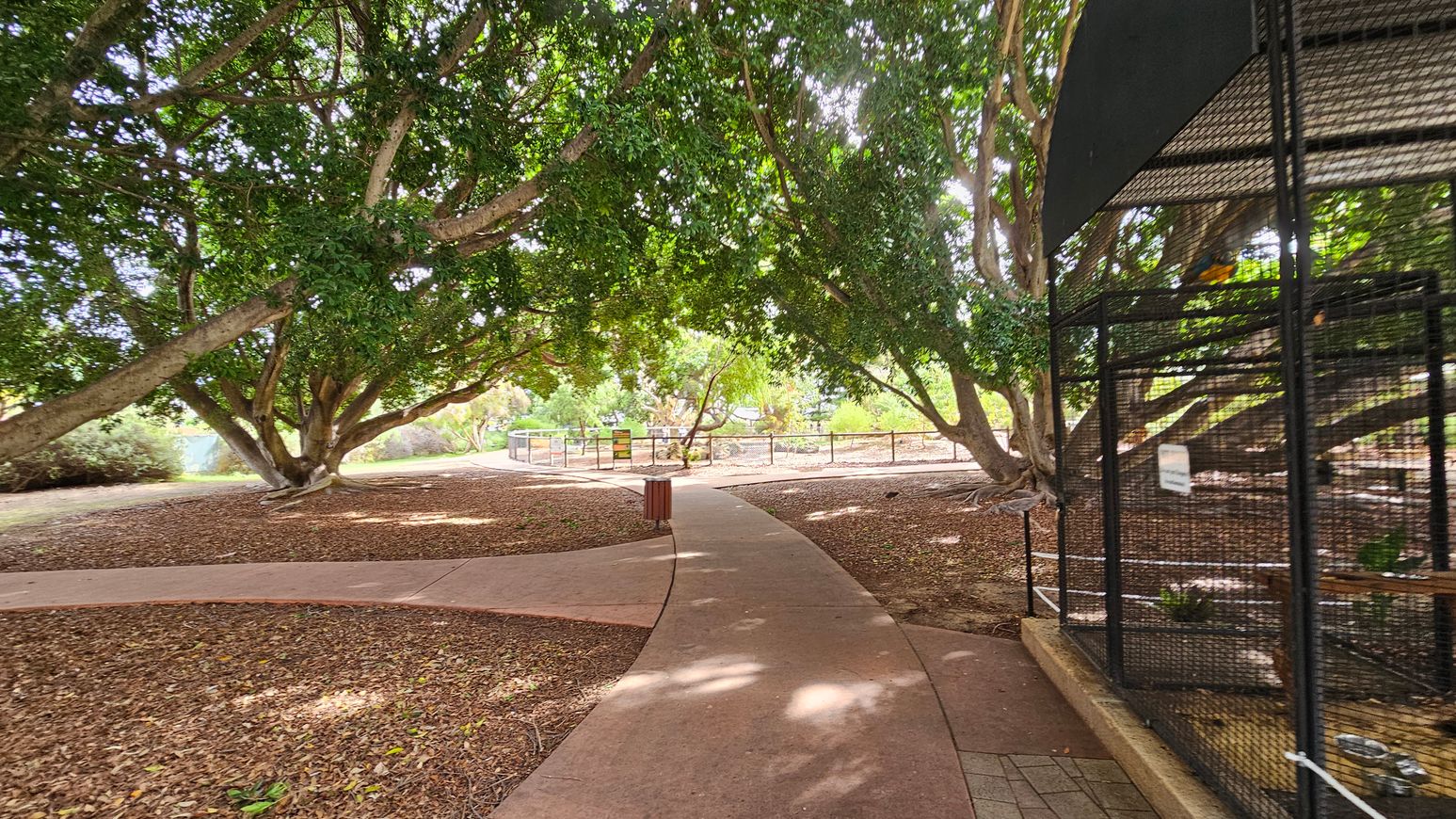
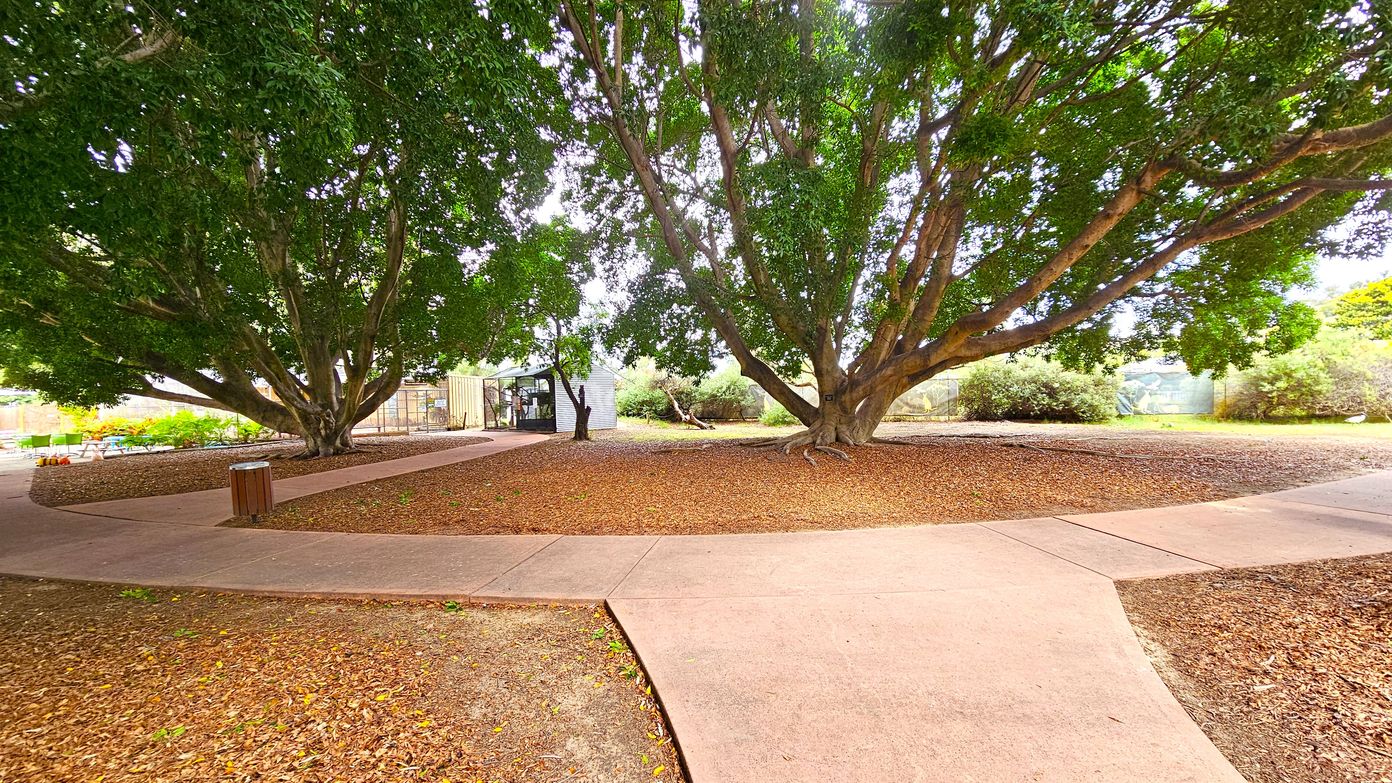
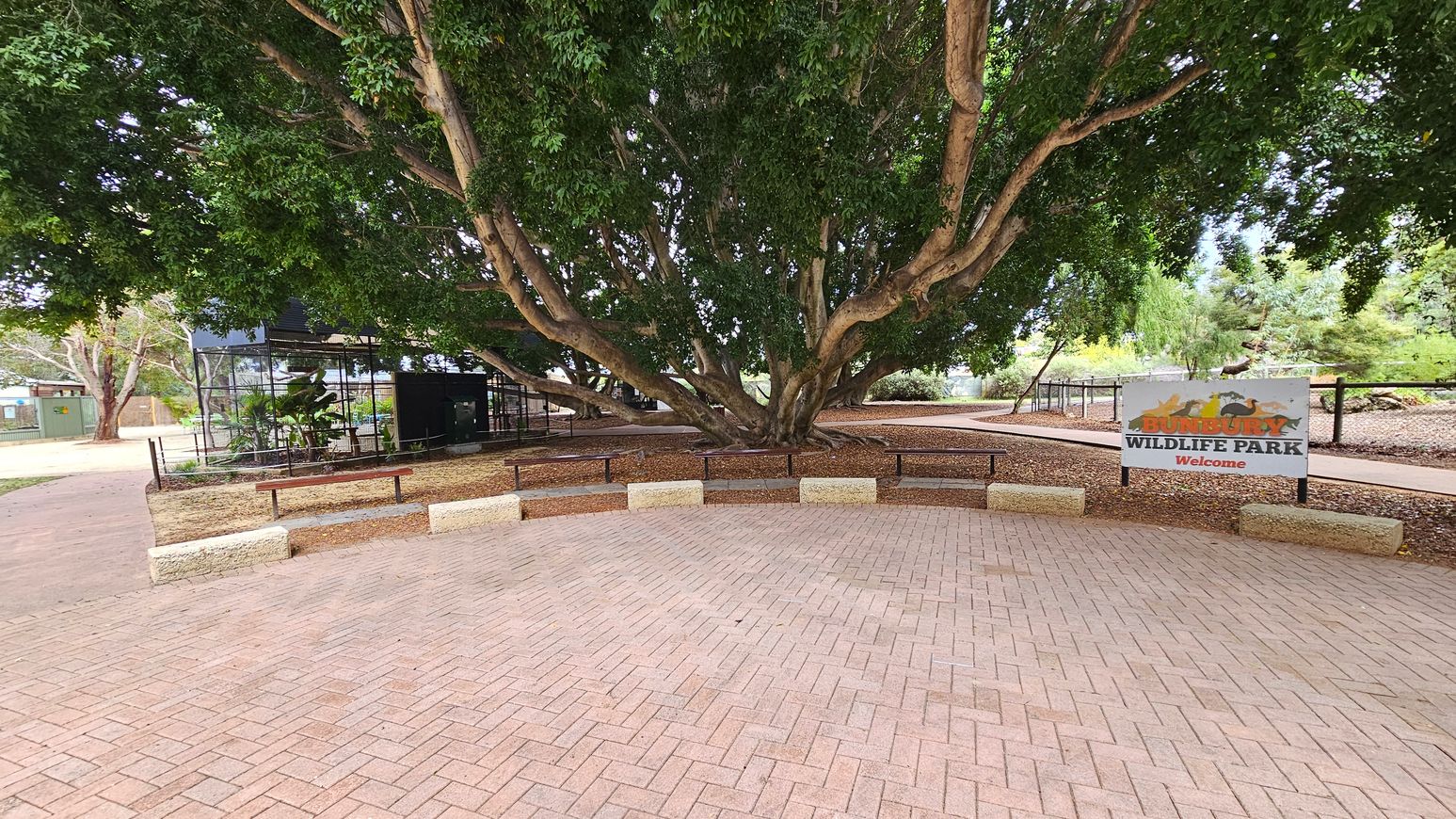
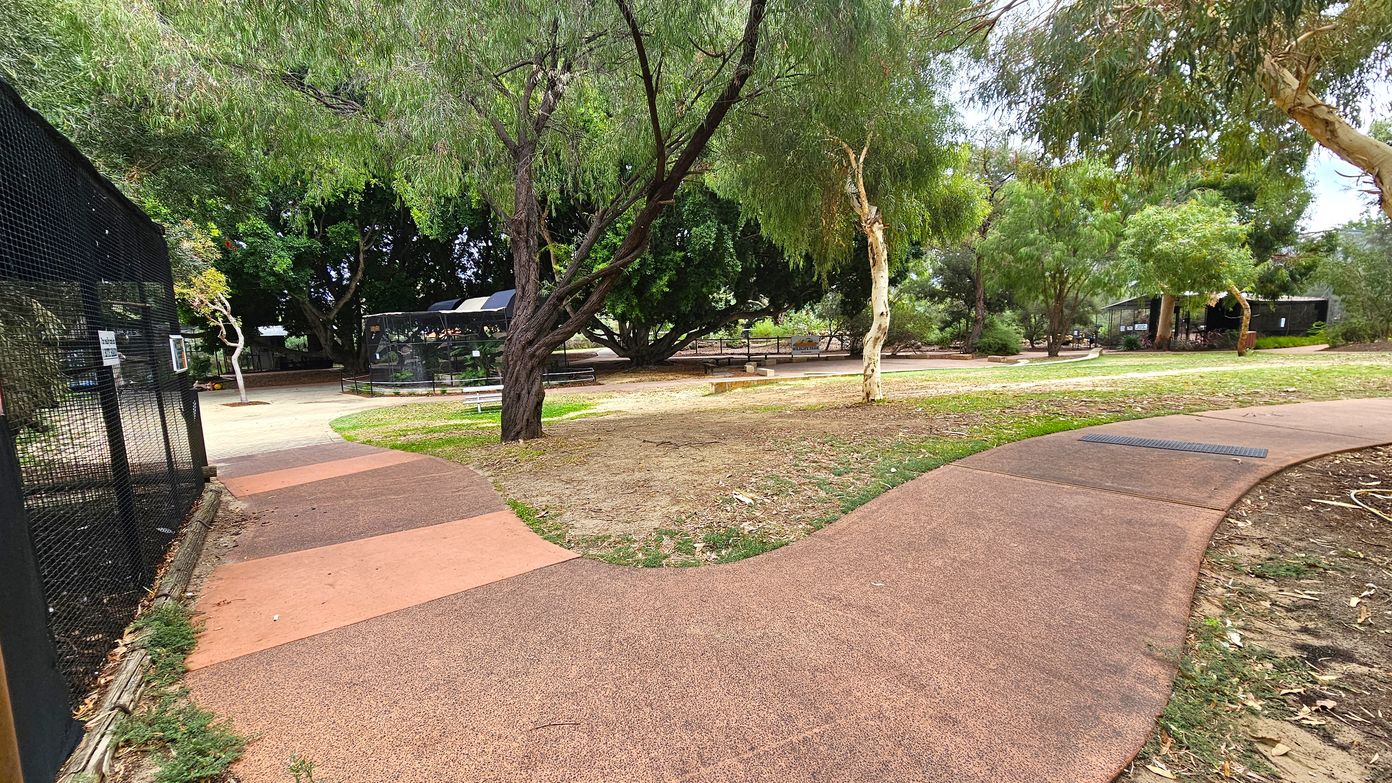
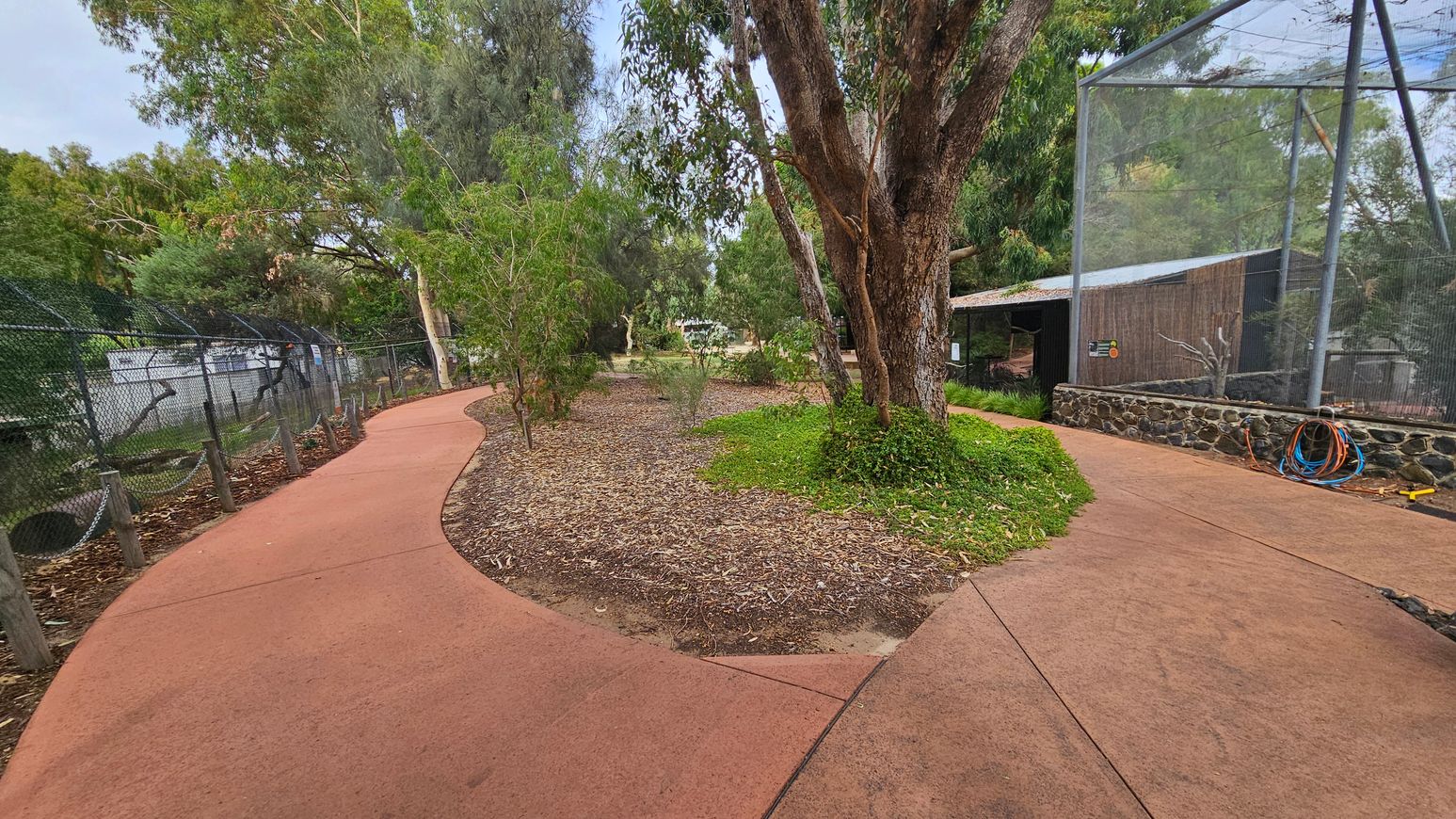
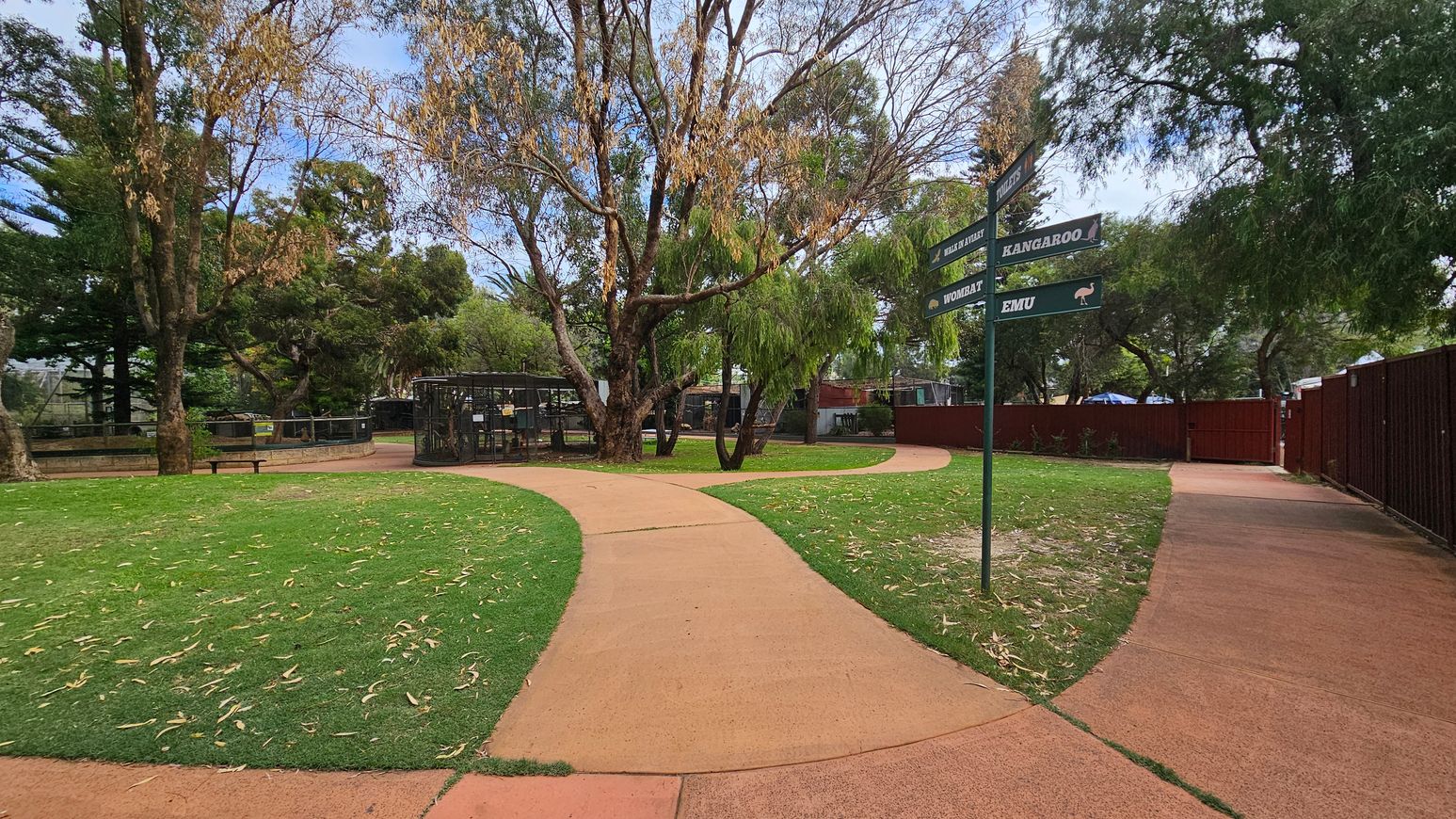
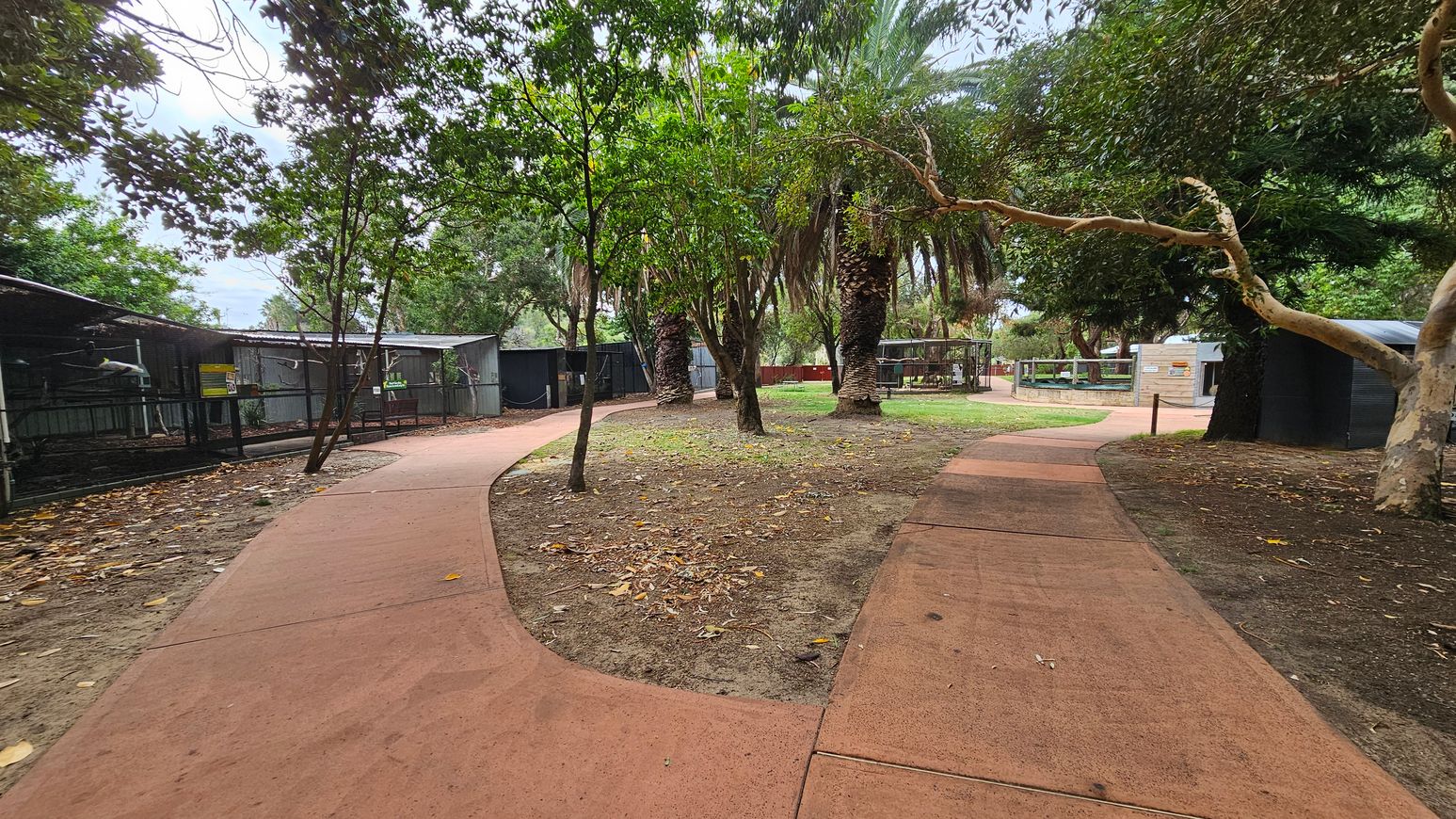
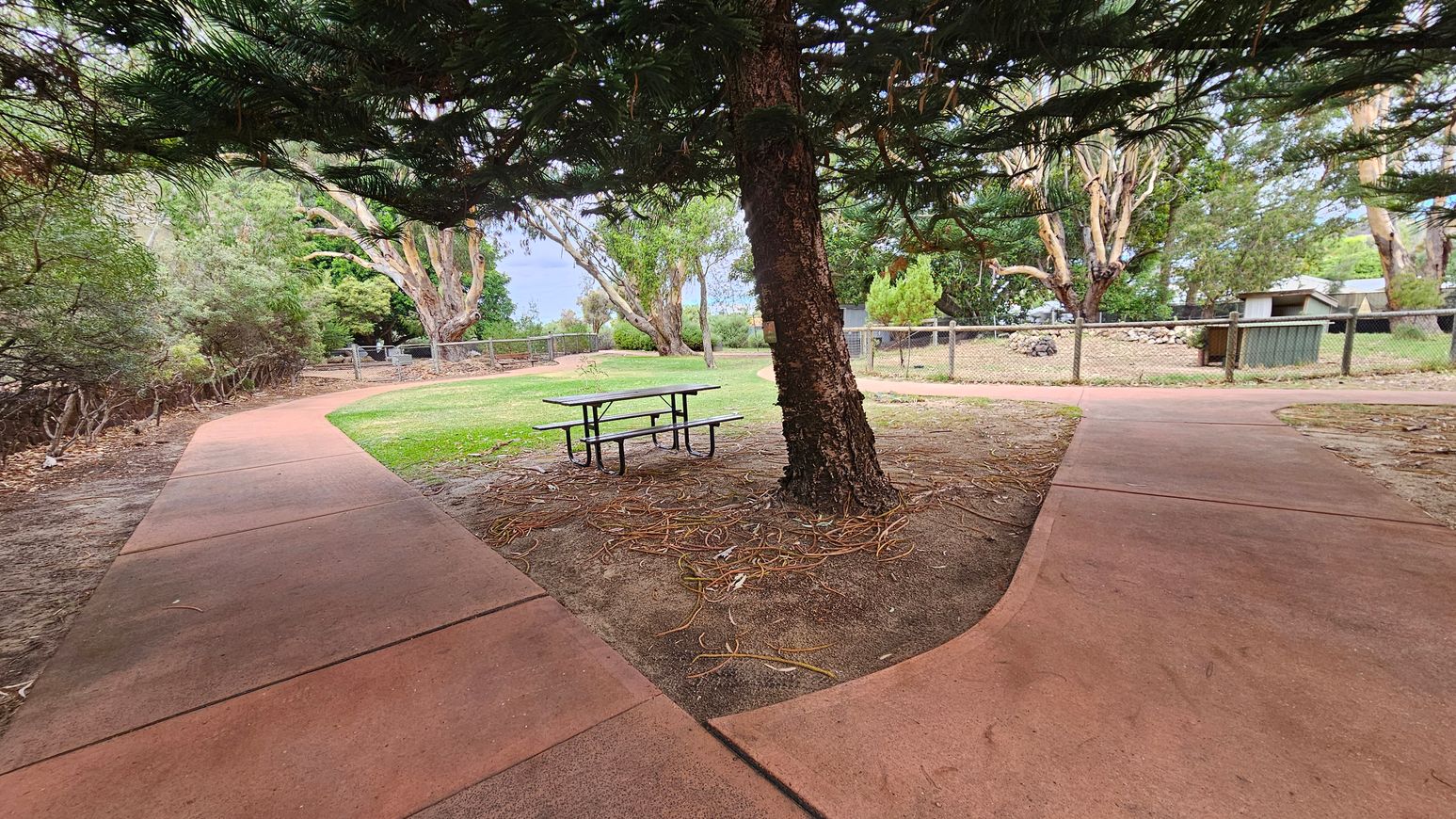
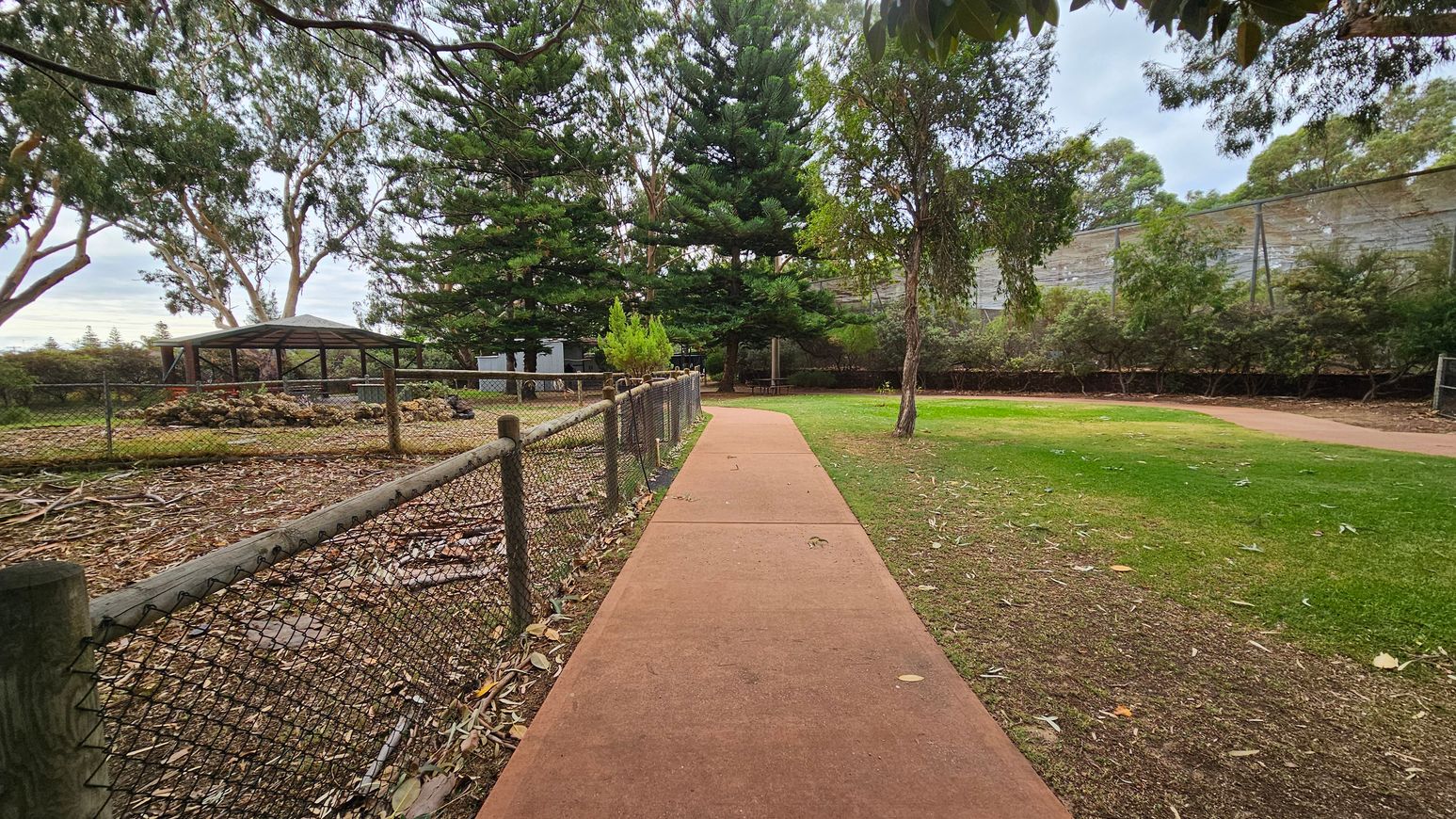
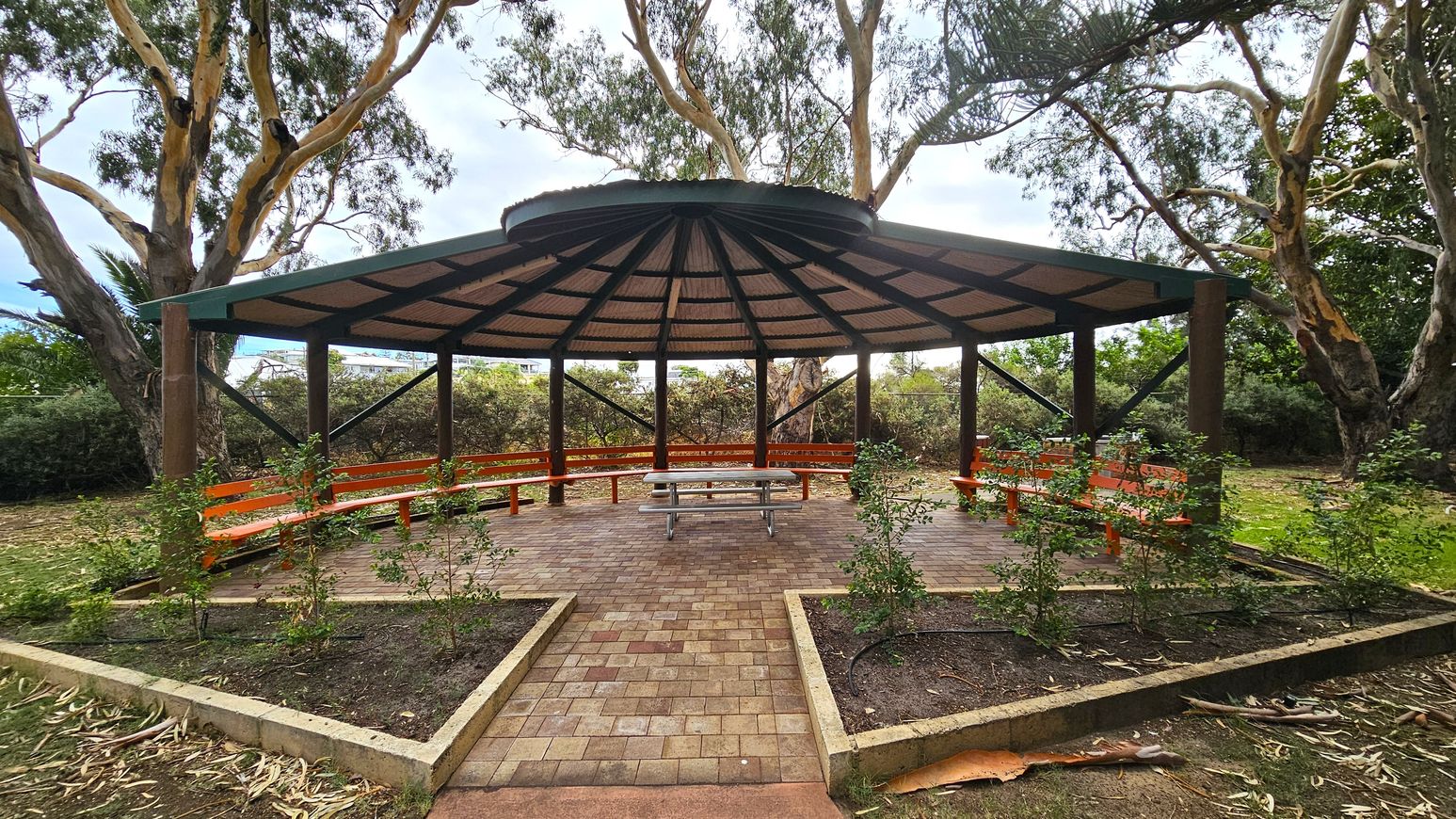
The Bunbury Wildlife Park features wide, flat concrete pathways with a light red tinge. Surfaces are generally smooth and level, with some gentle variations to support movement. The paths meander around large trees, aviaries, and fenced enclosures, providing shaded routes throughout the park. Boundaries include metal mesh aviaries and timber post fencing. A circular seating area with brick paving and benches is located beneath a large tree, and a covered gazebo with brick flooring and bench seating provides additional shelter. Directional and informational signage is positioned throughout to guide visitors between areas.
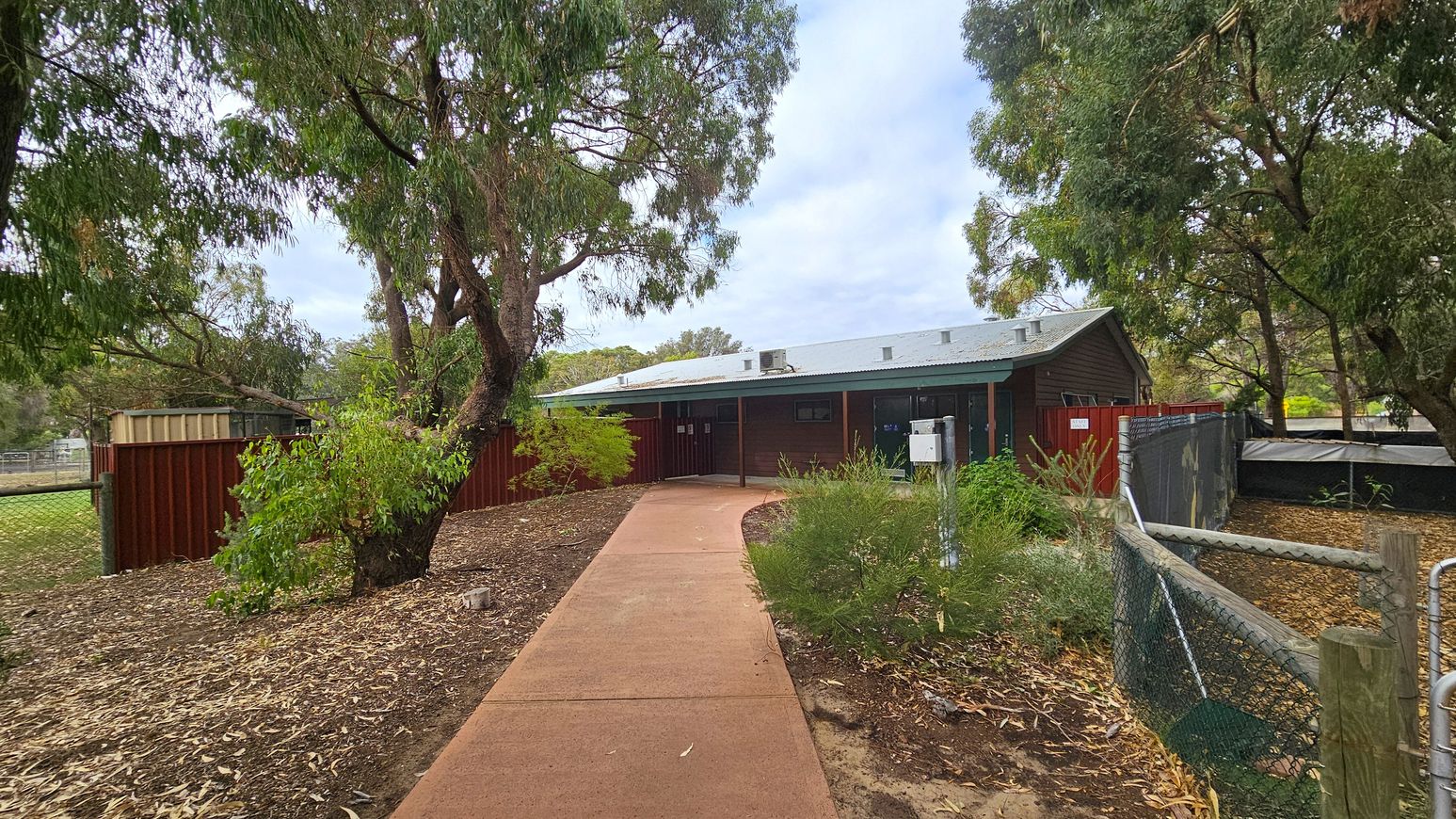
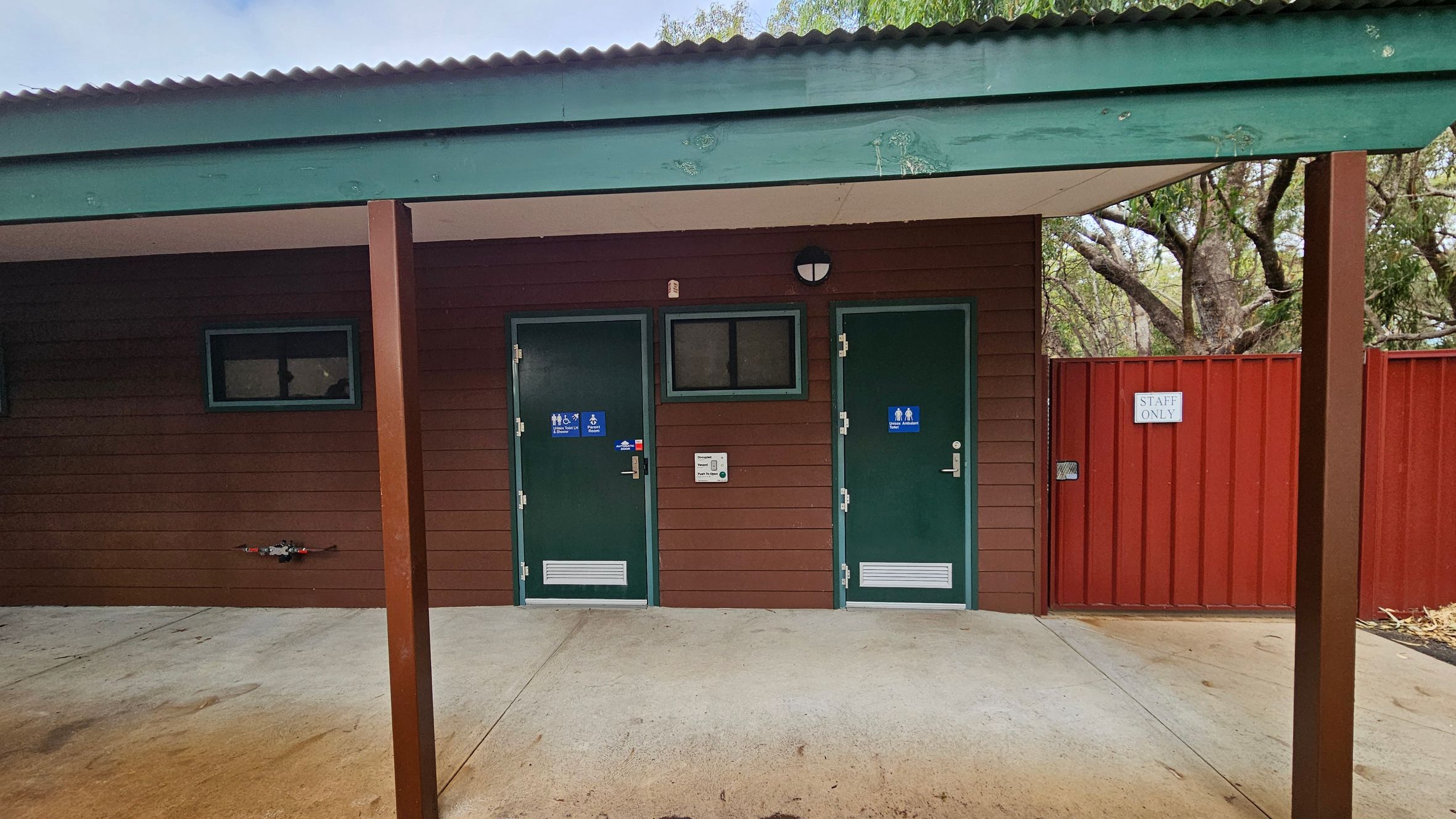
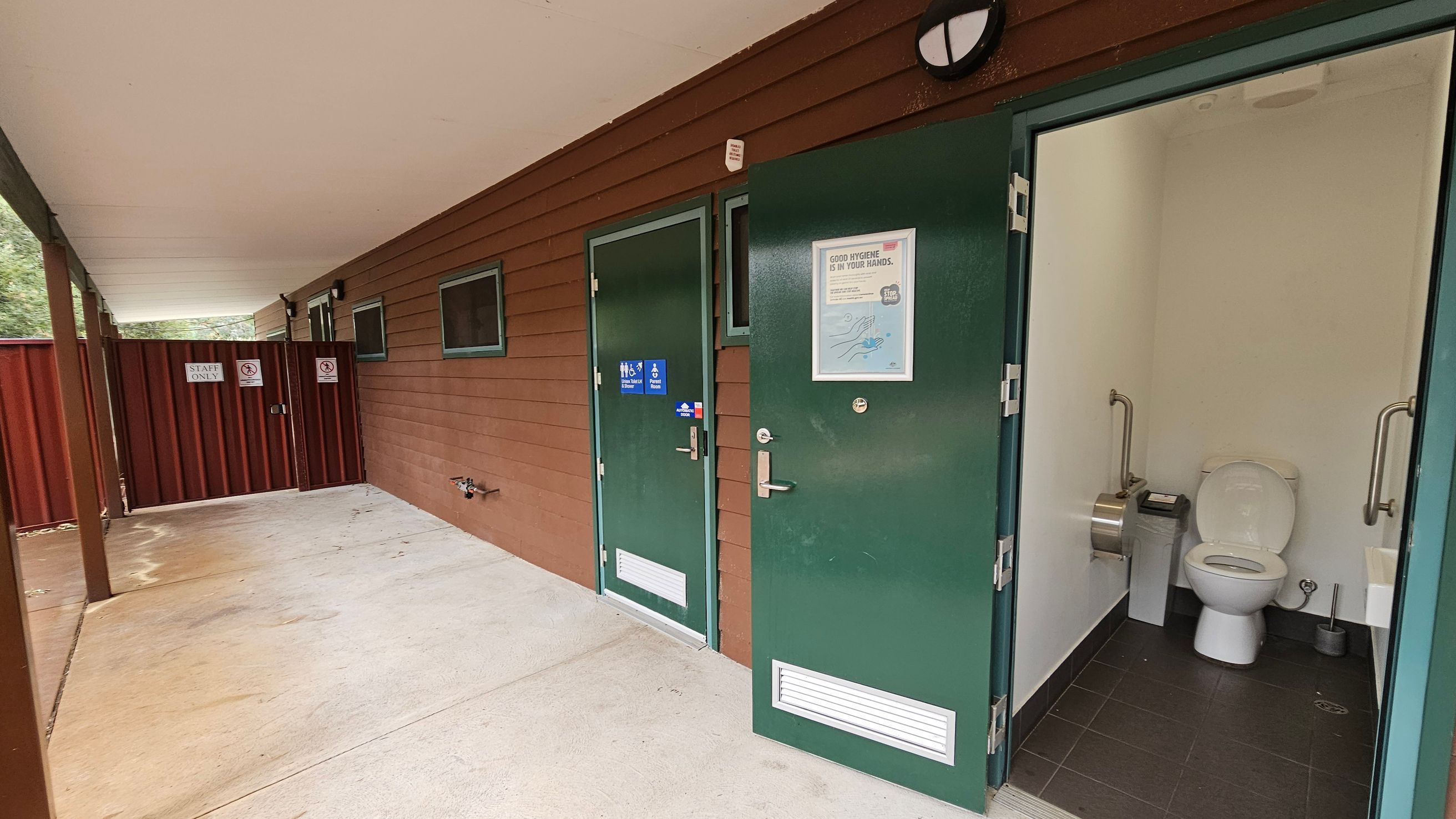
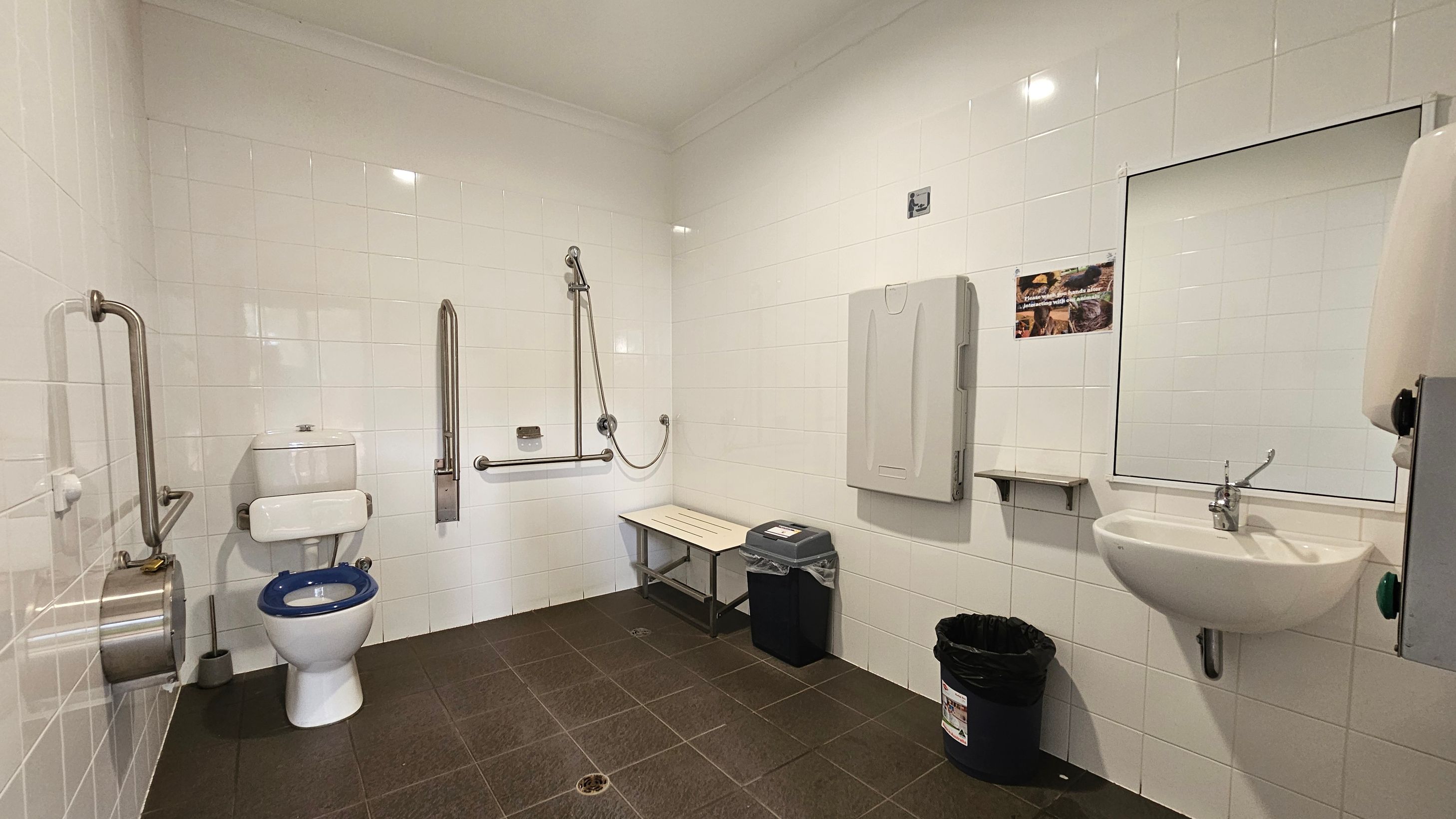
The pathways connect to a building with accessible amenities located near the kangaroo enclosure. This includes an accessible bathroom with an outward opening automatic door, operated by a green push button. Inside, there is a toilet with grab rails, a shower with a bench seat, and a baby change station. An ambulant unisex toilet with grab rails is located alongside. These facilities are positioned along the main pathway network and are connected via step-free access.
Sounds
- Bird calls from aviaries
- Leaves rustling in trees
- Footsteps on concrete paths
- Occasional animal noises
- Wind through foliage
Smells
- Earthy scent from mulch
- Fresh leaves and grass
- Mild outdoor air
- Occasional animal scent
- Wood and bark aroma
Feel
- Smooth concrete underfoot
- Cool shade from trees
- Gentle breeze in open areas
- Textured brick seating area
- Sheltered gazebo seating
Sight
- Light red concrete pathways
- Large trees providing shade
- Metal mesh aviary cages
- Brick-paved seating circle
- Unisex bathroom with grab rails

Thank You
For all suggestions to improve our Visual Stories contact info@cerge.app and join the Facebook community to get involved /cergecommunity.